ECOWAS Monetary Union: Cardoso Demands Fair Representation for Economically Larger Members
By Atlantic Reports
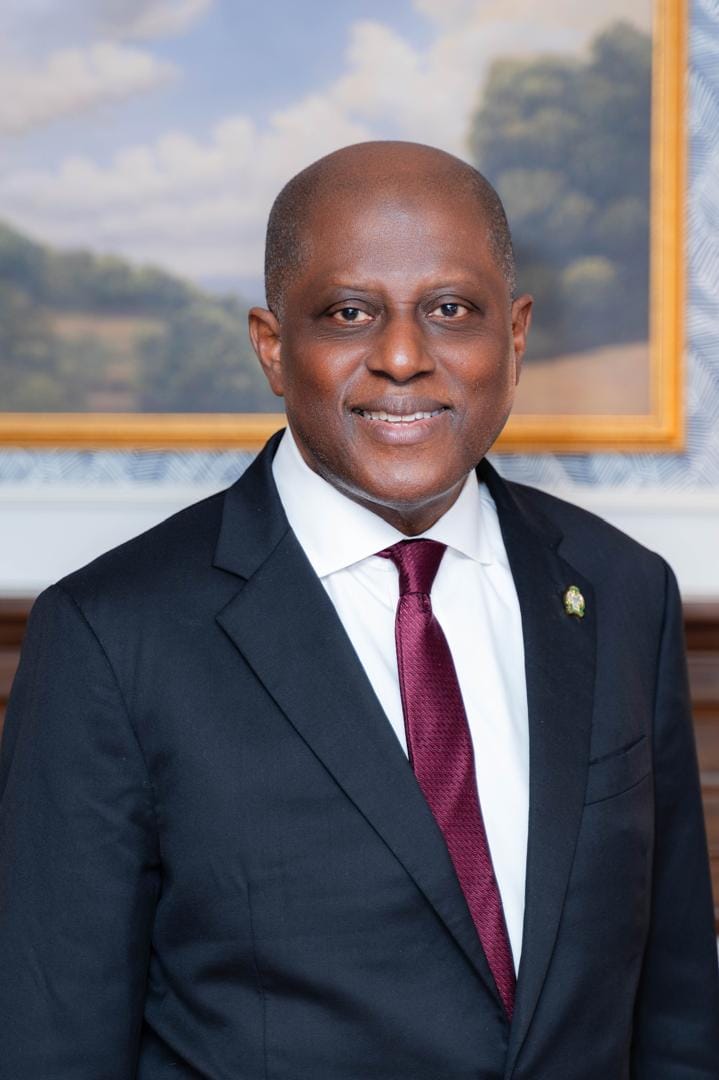
Central Bank of Nigeria (CBN) Governor Olayemi Cardoso has called for equity, fairness and proportional representation in the governance structure of the proposed Economic Community of West African States (ECOWAS) Monetary Union.
Cardoso said regional solidarity and the sovereign equality of member states must remain central to the monetary integration process, but argued that these principles should be balanced against the financial commitments, responsibilities and risks undertaken by individual countries.
He made the position known on Friday in Abidjan, Côte d'Ivoire, while representing Nigeria at the Ministerial Session of the Sixth Presidential Task Force Meeting on the ECOWAS Single Currency Programme.
The CBN disclosed his position in a statement issued by its Corporate Communications Department on Sunday in Abuja.
Nigeria seeks a meaningful role in governance
Cardoso described the meeting as an important stage in preparations for the proposed monetary union, noting that discussions had increasingly focused on its institutional structure.
Key issues under consideration include the location of the union's institutions, leadership appointments and the distribution of decision-making powers and responsibilities among participating countries.
He said the decisions would have long-term implications for the credibility of the proposed union, investor confidence and the willingness of member states to sustain their commitments.
“The decisions we take today will shape the future of the union for decades to come,” he said.
According to him, countries contributing substantial financial resources and assuming greater responsibilities should receive appropriate consideration in determining the union's governance arrangements.
He maintained that Nigeria's position was not based on a desire to dominate other member states but on the need to align financial obligations with accountability and participation in decision-making.
Financial contributions and regional responsibilities
The CBN governor restated Nigeria's commitment to the ECOWAS Monetary Cooperation Programme and the proposed ECO single currency.
He cited the country's financial contributions, technical support and compromises made in pursuit of regional consensus as evidence of its commitment to monetary integration.
Cardoso argued that countries with larger economies and greater financial responsibilities should have a meaningful role in institutions they help finance and sustain.
“Bigger economies continue to take up the burden, they should also be considered to play a significant role because of the risk and systemic importance they have in the sub-region,” he said.
He added that governments making substantial contributions must also be able to justify those commitments before their national parliaments and civil society organisations.
“Where obligations are shared but influence is not, arrangements may be agreed, but their long-term sustainability may be difficult to guarantee,” he said.
Cardoso stressed that responsibility, accountability and participation in governance should reflect the scale of each country's commitments to the proposed union.
Balancing national interests with regional solidarity
Despite Nigeria's position, Cardoso emphasised the importance of respecting the sovereignty of all ECOWAS member states.
He urged delegates to approach the negotiations with openness, mutual respect and a willingness to compromise, expressing confidence that a balanced governance framework could be achieved.
He also insisted that every participating country should have a meaningful stake in the success of the monetary union.
“No country should be left with the burden of obligations without a corresponding voice in governance of the union,” he said.
The position highlights a central challenge facing regional monetary integration: how to reconcile the principle of equal sovereignty among countries with differences in economic size, financial capacity and exposure to shared risks.
ECO preparations and the 2027 target
The ECOWAS Presidential Task Force's Ministerial Committee comprises finance ministers and central bank governors from member states.
According to NAN, the meeting focused on accelerating preparations for the phased introduction of the proposed ECO single currency from 2027.
The discussions also addressed institutional and governance arrangements considered necessary for establishing the monetary union.
However, the proposed 2027 introduction remains a target, and the statement did not provide details of a final agreement on the governance structure, the location of institutions or the distribution of leadership positions.
The negotiations will need to address these outstanding questions while building consensus among member states.
For Nigeria and its regional partners, the challenge is to establish a monetary framework that distributes responsibilities fairly, commands confidence across the region and can be sustained over the long term.
Atlantic Reports: Voices. People. Facts.
Written by
Atlantic Reports Admin
Comments
- Be the first to comment.