High Conversion Costs, Refuelling Queues Slow CNG Adoption Among Lagos Drivers
By Atlantic Reports
The Federal Government's push to expand the use of Compressed Natural Gas (CNG) in Nigeria's transport sector is facing resistance from some commercial drivers in Lagos, who say high conversion costs, inadequate refuelling stations and safety concerns are making adoption difficult.
Although drivers acknowledge that CNG is cheaper than petrol, they argue that the initial investment and challenges in accessing refuelling facilities reduce its practical benefits.
They expressed their concerns in separate interviews with the News Agency of Nigeria (NAN) in Lagos on Sunday.
Conversion costs beyond the reach of many drivers
Mr Abiodun Akintayo, President of the Megacity Driver Welfare Association, Lagos, said converting a 12-seater commercial bus to CNG could cost more than ₦1.2 million.
He estimated that conversion for a commercial bus fitted with two cylinders costs about ₦1.2 million, while converting a tricycle costs approximately ₦350,000.
“Things are not easy. Buying a vehicle in this period is already a challenge, and converting it to CNG is another problem,” he said.
Akintayo, who is also President of the Joint Driver Welfare Association of Nigeria, said the financial burden was discouraging drivers who already faced difficulties maintaining their vehicles and meeting daily operating expenses.
Another commercial driver, Mr Mufutau Adigun, said he had been asked to pay more than ₦400,000 to convert his vehicle, describing the amount as unaffordable.
Adigun, a mini-shuttle bus operator along the Yaba-Constain route, said a neighbour had assisted him with a tricycle after he lost his job in Somolu.
He currently remits ₦90,000 weekly and said finding the money required for conversion would be difficult.
“The initiative is good, but where can I get ₦400,000 to convert my vehicle to CNG?” he asked.
He called for flexible payment arrangements that would allow commercial drivers to spread conversion costs over time.
Limited refuelling stations and long queues
Beyond conversion expenses, drivers said inadequate CNG infrastructure was creating operational difficulties.
Akintayo identified limited access to refuelling stations along the Lagos-Badagry-Seme corridor as a major obstacle.
He said drivers travelling from Seme towards Mile 2 had few opportunities to refuel before reaching CMS.
He urged the Federal Government to establish additional CNG stations along the corridor to make the alternative fuel more accessible.
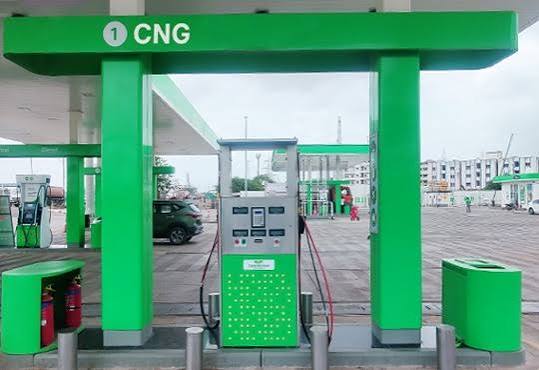
Another driver, Mr Bidemi Akande, described an experience in which he spent more than four hours waiting to refuel at an Ibile Oil and Gas Corporation station in Ikota, Lagos.
According to him, the CNG supply had run out by the time he reached the front of the queue.
Such delays, he said, cost drivers valuable working hours and reduce the economic advantages of switching from petrol.
Safety concerns and need for public education
Akintayo also identified safety concerns as a factor discouraging some commercial drivers from adopting CNG.
He said some drivers remained uncomfortable with installing gas cylinders in their vehicles because they lacked sufficient information about the technology and its safe use.
He called for sustained public education, training for accredited conversion technicians and measures to reduce conversion costs.
The concerns underline the importance of proper vehicle assessment, certified installation, regular inspection and maintenance of CNG systems.
Expanding refuelling infrastructure without ensuring reliable safety standards and public confidence could limit the programme's acceptance among transport operators.
Who benefits from cheaper fuel?
While some drivers reported savings from using CNG, questions are also emerging about how those savings are distributed between vehicle owners, operators and passengers.
Mr Biodun Joseph, who operates along the Lagos-Ibadan Expressway, said he spent approximately ₦10,000 on gas for a trip from Lagos to Ibadan.
Although he described the initiative as beneficial, he argued that vehicle owners were enjoying much of the financial advantage.
Joseph said his employer operated 10 gas-powered commercial buses on the route and had increased the daily amount drivers were required to remit.
He also questioned why passengers continued to pay similar fares in petrol-powered and CNG-powered buses despite the difference in fuel costs.
His account highlights an important issue in the transition to cheaper transport energy: whether lower operating expenses will translate into reduced fares, improved driver earnings or higher profits for vehicle owners.
Making CNG adoption practical for transport workers
The experiences of the drivers suggest that the success of Nigeria's CNG transition will depend on more than the availability of cheaper fuel.
Affordable conversion financing, reliable refuelling infrastructure, transparent safety standards and accessible technical support will be essential to encouraging adoption.
Government and industry stakeholders will also need to address how fuel savings affect drivers' incomes and passenger fares.
For commercial operators working with limited financial resources, the attraction of cheaper fuel may remain theoretical unless the cost of switching and the difficulties of daily refuelling are addressed.
Atlantic Reports: Voices. People. Facts.
Written by
Atlantic Reports Admin
Comments
- Be the first to comment.