ECOWAS Parliament Calls for Stronger Regional Action Against Child Trafficking
By Atlantic Reports
The Parliament of the Economic Community of West African States (ECOWAS) has called for stronger regional action against child trafficking and child labour, urging member states to translate existing laws and commitments into practical measures to protect vulnerable children.
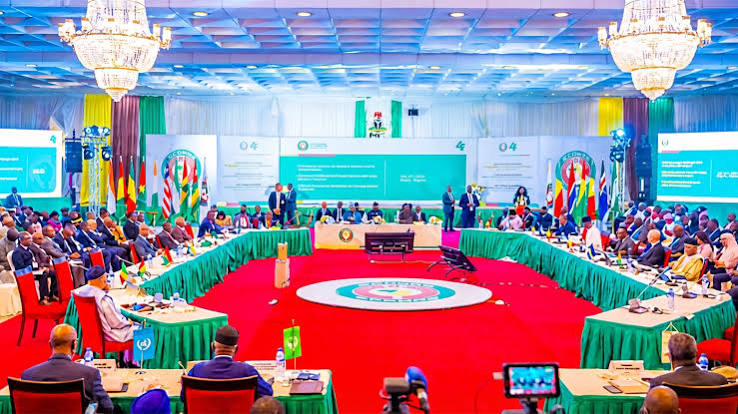
The call was made by the Speaker of the ECOWAS Parliament, Memounatou Ibrahima, during a regional parliamentary workshop on combating child trafficking and child labour held on Saturday, November 28, 2026, in Abuja, as part of the Parliament's 2026 Ordinary Session.
Ibrahima warned that the exploitation of children through trafficking and hazardous labour violated their fundamental rights and threatened their education, health, development and future prospects.
She expressed concern over the gap between governments' commitments to child protection and the realities facing millions of vulnerable children across West Africa.
“When a child is a victim of trafficking or subjected to labour that undermines his health, schooling or development, this means that its most basic human rights are being undermined,” she said.
ECOWAS identifies weaknesses in child protection systems
The Speaker noted that despite existing regional commitments and protective legal frameworks, implementation remained weak due to inadequate funding, poor enforcement of sanctions and ineffective coordination among institutions.
She urged parliamentarians to examine the actual impact of government interventions, particularly the number of children rescued, protected and successfully reintegrated into society.
According to her, national parliaments must strengthen relevant legislation, scrutinise budgetary allocations, monitor government policies and hold responsible institutions accountable.
She also emphasised the ECOWAS Parliament's responsibility to facilitate consultations among member states and promote coordinated regional responses.
Recalling a similar workshop held in May 2023, Ibrahima stressed that previous recommendations must be followed by measurable results.
She urged participants to establish practical recommendations, clearly defined responsibilities and realistic monitoring mechanisms rather than produce another set of general commitments.
Trafficking victims rise by 31 per cent
ECOWAS Commissioner for Human Development and Social Affairs, Prof. Nassirou Bako, disclosed that trafficking victims in the region increased by 31 per cent between 2019 and 2022.
He also said children accounted for 47.9 per cent of 12,959 unidentified persons captured in statistics presented at the workshop.
According to figures attributed to available member-state data, Benin recorded 4,015 identified trafficking victims in 2025, with young women accounting for 84.7 per cent.
Nigeria recorded 1,684 cases, including 46.7 per cent involving children.
Bako, however, cautioned that the available figures remained incomplete because some member states had yet to submit their statistics.
He identified insecurity, terrorism, displacement and political instability as factors increasing children's exposure to trafficking, forced labour and other forms of exploitation.
He said conflicts had disrupted education and weakened family protection systems, citing approximately 8,450 schools affected and 4.1 million people displaced.
The commissioner warned that out-of-school children, those separated from their families and those experiencing poverty and social exclusion faced heightened risks.
He also raised concerns about the recruitment of children by armed groups, including Boko Haram, and their exploitation under the guise of education and religious instruction.
Convictions increase, but rehabilitation remains underfunded
Bako disclosed that convictions for trafficking-related offences across 12 ECOWAS countries increased from 388 in 2024 to 515 in 2025.
He described the increase as evidence of progress in judicial responses but maintained that existing interventions remained inadequate compared with the scale of the problem.
He identified limited resources for victim rehabilitation, reintegration, education and support services as major obstacles.
The commissioner also highlighted weaknesses in social protection systems across West Africa.
According to figures presented at the workshop, only about 10 per cent of the region's population benefited from some form of social protection, compared with 18.5 per cent across Africa and approximately 50 per cent globally.
He urged parliamentarians to support the establishment and strengthening of national social registries to improve data collection and identify vulnerable populations.
He also advocated the creation of national and regional victim support funds, increased investment in rehabilitation and vocational training, and expanded social protection programmes.
Bako called on lawmakers to use their oversight powers through investigations and visits to communities affected by trafficking and child labour.
“We need the parliament,” he said, emphasising the need for stronger legislative backing, adequate funding and effective oversight.
IPU calls for measurable commitments
The Senior Programme Officer of the Inter-Parliamentary Union (IPU), Akiyo Afouda, said nearly 138 million children worldwide remained engaged in child labour, including 46.6 million in sub-Saharan Africa.
Afouda, who represented the IPU Secretary-General, said the figures published in 2025 by the International Labour Organisation (ILO) and UNICEF demonstrated the urgency of stronger interventions.
He warned that millions of children were being denied education, exposed to exploitation and forced into dangerous work, with some abducted from their families and communities.
He described child trafficking and labour as human rights violations that also undermine economic development, social cohesion and West Africa's collective aspirations.
Afouda identified poverty, displacement, insecurity, economic inequality and weak social protection systems as major factors contributing to child exploitation.
He stressed that the cross-border nature of trafficking required coordinated action among ECOWAS member states, supported by stronger national institutions.
He also urged parliamentarians to move beyond passing laws and resolutions to ensure that political commitments were supported by adequate funding and measurable outcomes.
“The true measure of your commitment does not lie in the number of resolutions adopted, but in the number of children effectively protected,” he said.
Afouda advocated a regional parliamentary strategy built around sustained political commitment, stronger coordination among national legislatures, rigorous oversight and effective monitoring mechanisms.
He further called for measurable indicators, clearly assigned responsibilities and the involvement of government agencies, civil society organisations, social partners and local communities.
Stronger border monitoring and community engagement proposed
Participants at the workshop also called for joint parliamentary missions to vulnerable communities, improved border monitoring and stronger engagement with local populations.
They advocated closer cooperation among the ECOWAS Commission, the ILO, national institutions and parliamentarians to strengthen regional responses to child trafficking and labour.
The discussions highlighted the importance of translating previous recommendations into sustained interventions, preventing exploitation and ensuring that rescued children receive adequate support to rebuild their lives.
For West African governments, the challenge extends beyond adopting protective legislation. Effective enforcement, reliable data, adequate funding, accessible rehabilitation services and cross-border cooperation will remain central to protecting children from exploitation.
Atlantic Reports: Voices. People. Facts.
Written by
Atlantic Reports Admin
Comments
- Be the first to comment.