Edo Identifies 129 Gully Erosion Sites Requiring Urgent Intervention
By Atlantic Reports
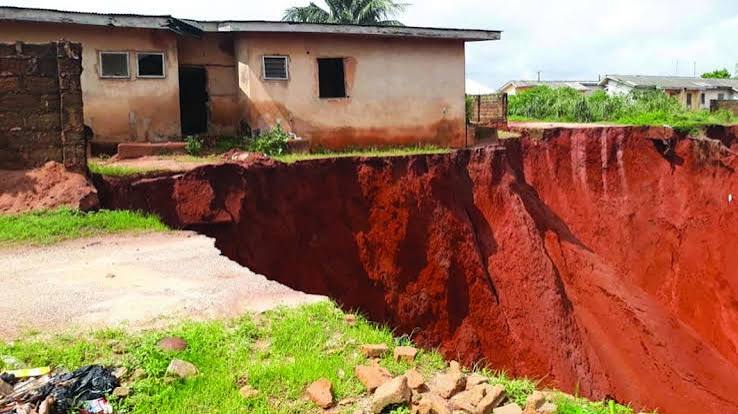
The Edo State Government has identified 129 gully erosion sites requiring urgent intervention across the state, amid growing concerns over environmental degradation, flooding and threats to vulnerable communities.
The Chairman of the Edo Ecological Funding and Management Commission, Mr Terry Igiebor, disclosed this on Friday in an interview in Benin City.
He said the identification of the sites formed part of the government's efforts to address worsening ecological challenges affecting communities across the state.
According to Igiebor, the commission identified the locations during a statewide assessment covering 16 local government areas.
He explained that the exercise was designed to identify communities facing serious environmental challenges and determine the level of intervention required.
The assessment also covered blocked drainage channels, deforestation and environmentally induced road deterioration.
Erosion Threatens Lives and Communities
Igiebor described the environmental situation in some rural communities as alarming, citing instances of residents living dangerously close to deep erosion channels.
He recalled an incident in which a 57-year-old man reportedly lost his life following an erosion-related disaster.
He added that some communities had also experienced incidents involving children being swept away by floodwaters.
The chairman assured residents that locations identified as emergencies would receive attention before the next rainy season.
However, the scale of the identified challenges raises questions about the funding, technical capacity and implementation arrangements required to protect affected communities.
Commission Develops One-Year Intervention Roadmap
Igiebor said the commission was developing a one-year intervention roadmap, with findings from the ongoing assessment expected to inform the state's 2027 budget.
He explained that the assessment would help authorities prioritise projects according to the severity of environmental threats and the vulnerability of affected communities.
The commission is also exploring funding opportunities through the Federal Government's Ecological Project Office, the World Bank, the United Nations and other international development partners.
Igiebor stressed that ecological interventions must be distributed fairly across the state's three senatorial districts.
“The law establishing the commission provides for equitable distribution of ecological intervention across the state’s three senatorial districts to ensure that no area is neglected in the allocation of resources,” he said.
He said particular attention would be given to vulnerable communities whose residents lacked the financial resources or access to government officials needed to draw attention to their environmental challenges.
According to him, the allocation of intervention projects should not depend solely on the ability of communities to lobby for government attention.
Edo Plans Environmental Awareness Campaign
Beyond physical intervention, the commission is planning an environmental education and orientation programme to sensitise residents about the causes of erosion, flooding and other ecological problems.
Igiebor identified indiscriminate waste disposal, blocked drainage channels and poor environmental practices as factors contributing to flooding and other environmental challenges.
He maintained that residents must complement government efforts by taking responsibility for protecting their surroundings.
The chairman also said the commission would unveil its master plan and work schedule to guide communities on their environmental responsibilities.
Funding and Implementation Will Determine Outcomes
The identification of 129 erosion sites represents an important step towards understanding the scale of Edo's ecological challenges. However, the effectiveness of the exercise will depend on how quickly assessments translate into funded and completed interventions.
With emergency locations expected to receive attention before the next rainy season, residents will be looking for clear timelines, transparent project selection and evidence of work at the most threatened locations.
The proposed inclusion of ecological priorities in the 2027 budget will also be significant, particularly in determining whether the identified projects receive adequate funding.
For communities already facing erosion, flooding and deteriorating infrastructure, the immediate priority is protection of lives, homes, roads and livelihoods.
The commission's challenge will be to move beyond identifying environmental threats and deliver sustained interventions that address their underlying causes.
Atlantic Reports: Voices. People. Facts.
Written by
Atlantic Reports Admin
Comments
- Be the first to comment.