Education Experts Urge FG to Expand Internet Access, Scholarships to Boost Knowledge Economy
By Atlantic Reports
Two education experts have urged the Federal Government to increase investment in digital infrastructure, expand scholarship opportunities and strengthen universities to improve access to quality education and develop Nigeria's human capital.
They also called for policies that would encourage private-sector investment in online education, innovation and skills development.
The experts, the Deputy Vice-Chancellor (Research, Innovation and Development) of Obafemi Awolowo University (OAU), Ile-Ife, Prof. Akanni Akinyemi, and the Chief Executive Officer of Astra Learning, Dr Jeff Bordes, made the recommendations on Tuesday in Lagos.
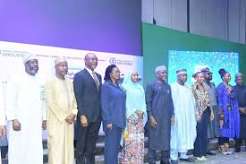
They spoke in separate interviews on the sidelines of an academic workshop organised by OAU in partnership with Astra Learning, an educational technology company.
FG Urged to Expand Digital Infrastructure and Scholarships
Akinyemi said government support was essential to ensuring that the benefits of digital education reached disadvantaged learners, particularly those in rural communities.
He urged the Federal Government to sustain efforts to expand Information and Communication Technology (ICT) infrastructure and internet connectivity while introducing scholarships for people unable to afford online education.
"Government should sustain efforts to expand Information and Communication Technology infrastructure and internet connectivity across the country while introducing scholarship schemes for people unable to afford online education," he said.
According to him, expanding educational access involves more than increasing university enrolment. It also requires taking learning opportunities to people who cannot participate in conventional university programmes.
He said government should support financially disadvantaged learners while creating an environment that allows private organisations to develop partnerships and funding arrangements to widen access to virtual education.
Akinyemi also advocated the localisation of online educational content to accommodate learners from different linguistic backgrounds, including those who prefer instruction in local languages.
He said this would make digital education more inclusive and enable more Nigerians to benefit from global learning opportunities.
Online Education Can Support Economic Transformation
The OAU deputy vice-chancellor described the university's partnership with Astra Learning as an important innovation that could support Nigeria's transition from a labour-intensive economy to a knowledge-driven economy.
He said achieving this transition required universities to review their curricula, teaching methods, learning objectives and expected outcomes to reflect changing global demands.
According to him, the initiative aligns with the Federal Government's emphasis on developing a knowledge economy through creativity, innovation and new approaches to solving societal problems.
He said online education would particularly benefit working professionals, managers and individuals seeking to acquire new skills or update their knowledge without leaving their jobs.
Akinyemi cautioned against viewing online education solely as an alternative to conventional university programmes, explaining that it could serve different categories of learners.
"Learning is not homogeneous. There are people who have been on a job for a long time and want to learn new things. There are people who have learned and want to unlearn and relearn.
"We are focusing on a particular type of people, not just those who are writing JAMB after graduating from secondary school," he said.
He cited the hospitality and tourism industries as examples of sectors where online programmes could help managers and other professionals improve their skills without disrupting their employment.
Astra Learning CEO Identifies Human Capital as Nigeria's Greatest Asset
Bordes, on his part, described Nigeria's human capital as its greatest economic asset, arguing that the country's long-term prosperity depended more on developing its people than relying on oil and mineral resources.
"The biggest asset Nigeria have as a nation is the smart people that proliferate this country.
"The oil will run out, but the people are what make a nation," he said.
He maintained that equipping young Nigerians with relevant knowledge and skills would improve their ability to compete for employment opportunities globally, including positions in international companies.
Bordes urged the government to introduce policies that would encourage educational innovation rather than restrict institutions and private organisations seeking to improve the sector.
"Make policies to make it easy for us to innovate within the space.
"We want to make sure that policies are not holding back those institutions from growing and, of course, ensure that they are well funded," he said.
Experts Call for Greater Confidence in Nigerian Universities
The Astra Learning chief executive also encouraged Nigerians to support local universities and invest in improving their facilities rather than automatically regarding foreign qualifications as superior.
He argued that increased investment in Nigerian institutions would strengthen infrastructure, laboratories and academic capacity, making them more attractive to international students.
"Believe in your own brand. If you don't build your own superiority, nobody is going to do it for you," he said.
Bordes said Astra Learning remained committed to working with universities to expand access to education through technology while maintaining academic standards.
OAU-Astra Partnership Targets Wider Educational Access
The academic workshop brought together the academic, technical and administrative leadership of OAU and Astra Learning to discuss curriculum approval, the establishment of the eCampus and student onboarding.
The collaboration covers online programmes at bachelor's and master's levels, Master of Business Administration (MBA), doctoral programmes and professional certificates, among others.
The initiative is expected to expand digital learning opportunities for Nigerians, including working professionals and learners outside the country who may be unable to attend conventional classroom programmes.
However, the broader success of digital education will depend on affordable internet access, reliable electricity, suitable learning devices, accessible course fees and the ability of universities to maintain recognised academic standards.
For rural and underserved communities, expanding connectivity and providing financial support will remain particularly important in ensuring that the transition to online learning does not deepen existing educational inequalities.
Atlantic Reports: Voices. People. Facts.
Written by
Atlantic Reports Admin
Comments
- Be the first to comment.