Energy Stakeholders Seek Payment Reforms, Better Gas Supply to Improve Nigeria’s Electricity
By Atlantic Reports
Energy sector stakeholders have called for urgent reforms in payment arrangements, gas supply and infrastructure development to address Nigeria's persistent electricity challenges.
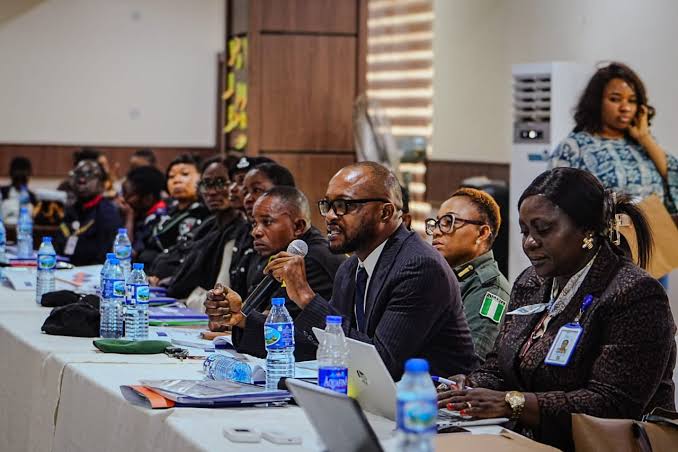
The stakeholders made the call on Monday at a joint seminar organised in Lagos by the Power and Energy Sectoral Group, in collaboration with the Oil and Gas Sectoral Group of the Chartered Institute of Directors Nigeria (CIoD).
The seminar, themed “X-raying the Interconnections Between the Power Sector Value Chain and Efficient Power Supply in Nigeria”, examined challenges affecting gas supply, electricity generation, transmission and distribution.
Participants identified weak commercial arrangements, inadequate gas availability and poor financial liquidity as major obstacles preventing Nigeria from translating its energy resources into reliable electricity.
Payment Challenges Undermine Electricity Generation
The Chief Executive Officer of Quad Gas and Power Ltd., Mr Olayemi Solar, said Nigeria's substantial gas reserves and installed electricity generation capacity had not translated into adequate power supply because of commercial and operational weaknesses.
Solar's presentation indicated that Nigeria had 215 trillion cubic feet of proven and probable gas reserves as of January 1, while installed grid-connected electricity generation capacity stood at 13,625 megawatts.
However, average grid generation was approximately 4,089 megawatts in September.
He highlighted payment difficulties within the electricity market, disclosing that electricity distribution companies (DisCos) remitted ₦307 billion against gross generation invoices of ₦648 billion in the second quarter of 2026.
The amount represented 47 per cent of gross invoices, although the distribution companies reportedly met 93.9 per cent of their adjusted remittance obligations.
Solar said the figures demonstrated the need for sustainable payment mechanisms that would enable generation companies (GenCos) to meet their financial obligations to gas suppliers.
He warned that without reliable payment arrangements, investment in gas infrastructure and electricity generation would remain constrained.
Gas Supply Falls Below Domestic Obligations
The energy expert also highlighted the gap between domestic gas delivery obligations and actual supply.
According to his presentation, average domestic gas delivery stood at 2.05 billion cubic feet per day against an obligation of 3.16 billion cubic feet per day during the first half of 2026.
He called for better coordination of gas supply agreements, transportation agreements and power purchase agreements to ensure that contractual obligations, payment commitments and delivery responsibilities were properly aligned.
Solar also proposed establishing a Gas-to-Power Commercial Sustainability Working Group under CIoD.
The proposed group would develop an industry-wide baseline, standard contractual terms and a funded payment-security mechanism to support the settlement of current invoices.
Nigeria Needs 33 Gigawatts for Reliable Electricity
The First Vice-President of the Nigerian Gas Association, Mr Fisayo Duduyemi, said Nigeria required an estimated 33 gigawatts of electricity generation capacity to achieve reliable supply.
However, he noted that grid electricity delivery frequently remained around four gigawatts.
Duduyemi, who is also Executive Vice-President, Integrated Power, at Axxela Ltd., said unreliable electricity had forced businesses to divert scarce resources towards generators, fuel and maintenance instead of productive investments.
He identified inadequate gas availability, infrastructure constraints and weak financial liquidity as interconnected challenges affecting the gas-to-power value chain.
According to him, insufficient gas supply reduces electricity generation, while transmission limitations prevent available power from reaching consumers.
He added that poor revenue collection and delayed market payments weakened the ability of generation companies to settle their obligations to gas suppliers.
“Energy must move from the wellhead to the customer, and money must move reliably back through the chain,” he said.
Duduyemi called for increased investment in gas exploration, interconnected pipeline infrastructure and electricity transmission, alongside decentralised power solutions.
He stressed that investors needed regulatory certainty, commercially viable pricing and credible payment arrangements before committing funds to large-scale energy infrastructure.
Experts Advocate Smart Metering Investment
The Chief Executive Officer of ADEOCAN Power Services Ltd., Mr Yinka Adelodun, called for increased investment in smart Internet of Things (IoT) metering to improve electricity distribution and revenue collection.
Adelodun argued that smart meters should be regarded as essential digital infrastructure rather than simply instruments for billing consumers.
He explained that real-time electricity consumption data could help distribution companies monitor demand, identify overloaded transformers, detect abnormal consumption patterns and make better decisions about network investments.
He said improved metering could also strengthen revenue assurance and consumer confidence in the electricity market.
CIoD Plans Policy Advocacy Document
In his welcome remarks, the Chairman of CIoD's Power and Energy Sectoral Group, Prof. Felix Amieyeofori, said the institute would use the outcome of the seminar to develop a Governance Advocacy Policy Document addressing major challenges in the power and energy sectors.
He explained that the document would guide the institute's engagement with regulators, policymakers, government institutions and industry stakeholders.
Amieyeofori emphasised the importance of stronger cooperation between the oil and gas and electricity sectors to address persistent supply constraints.
Also speaking, the President and Chairman of Council of CIoD, Chief Adetunji Oyebanji, said Nigeria's ambition of building a one-trillion-dollar economy required a dependable and commercially sustainable energy sector.
Oyebanji, who said he had spent more than 46 years in the energy industry, stressed the importance of effective institutions, infrastructure development, sound commercial arrangements and strategic partnerships.
He urged stakeholders to move beyond identifying problems and develop practical recommendations capable of improving collaboration across the energy value chain.
Financial Sustainability Remains Central to Power Reform
The discussions highlight the interconnected nature of Nigeria's electricity challenges. Increasing installed generation capacity alone may not guarantee improved supply if gas producers remain unpaid, pipelines are inadequate, transmission infrastructure is constrained and distribution companies struggle to recover revenue.
The payment figures presented at the seminar also raise questions about the sustainability of the electricity market and the financial responsibilities of its different participants.
For households and businesses, the consequences extend beyond inconsistent electricity. High spending on alternative power sources increases operating costs, affects productivity and places additional pressure on household finances.
The proposed reforms will therefore require measurable commitments from government institutions, regulators, gas suppliers, generation companies and distribution operators.
Ultimately, Nigeria's electricity challenge will not be resolved by available gas reserves or installed generating capacity alone. Reliable supply will depend on ensuring that electricity, gas, infrastructure and payments function as one commercially sustainable system.
Atlantic Reports: Voices. People. Facts.
Written by
Atlantic Reports Admin
Comments
- Be the first to comment.