Enugu Seminary Seeks Support After Borehole Failure Triggers Water Crisis
By Atlantic Reports
Saint John Cross Seminary in Nsukka, Enugu State, has appealed for financial and material support to restore a reliable water supply after the failure of its borehole forced the institution to depend on privately supplied water.
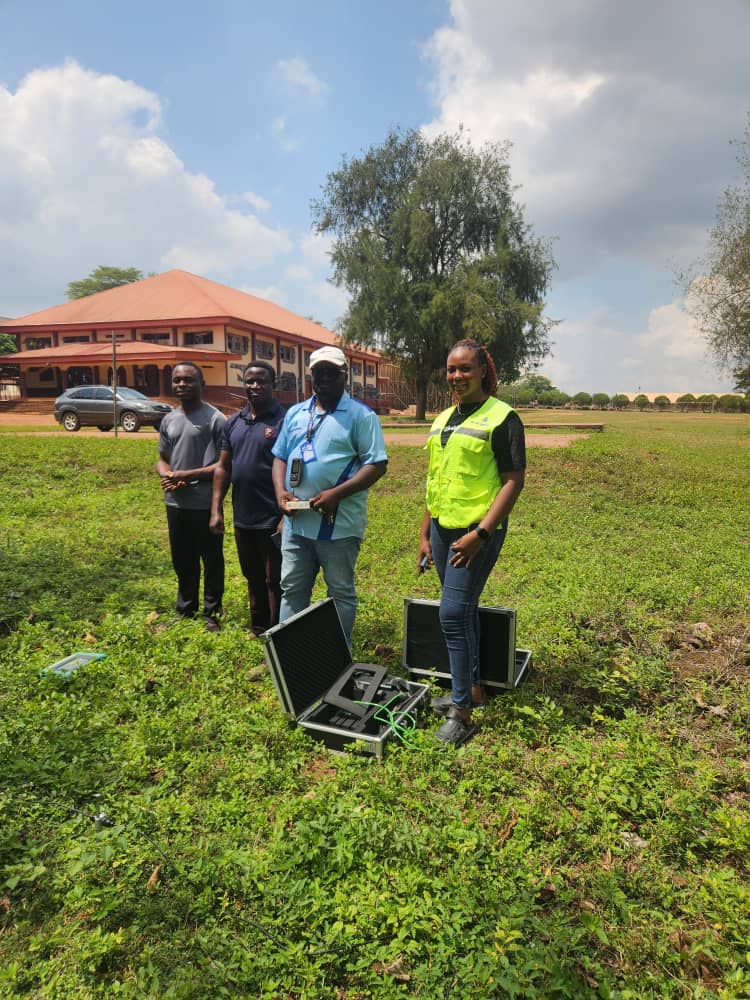
The intervention by Geo Inn Services Limited involved underground water exploration to identify locations with suitable drilling potential. The company said it would submit a technical report to the seminary authorities to guide the next stage of the project.
In a statement made available to the News Agency of Nigeria (NAN) on Tuesday, the company’s Chief Executive Officer, Dr Innocent Ezeugwu, said the initiative was motivated by his personal experience as a former seminarian at the institution.
Ezeugwu explained that his experience of living without a dependable water source influenced his decision to study geology and contribute to addressing water challenges in communities.
He said inadequate investigation of underground conditions was a major reason boreholes failed, stressing that proper exploration was necessary before drilling.
According to him, the company has identified locations with promising prospects for borehole development, but the actual drilling would require additional funding.
He appealed to the seminary’s alumni, organisations and other public-spirited individuals to support efforts to provide a lasting solution.
Seminary spends on daily water supply
The Rector, Rev. Fr Ferdinand Odo, said the institution had struggled with water shortages following the breakdown of its borehole.
He explained that the seminary previously secured a water supply in 2009, but the facility later developed problems. An attempt to retrieve the submersible pump and pipes reportedly ended with the equipment collapsing into the borehole.
Odo said the institution currently purchases four tankers of water daily to sustain its operations.
The shortage has also affected activities beyond students’ domestic needs. According to the rector, the seminary’s agricultural sector requires regular water supply, while its fish farming operation is facing difficulties.
He said the institution was considering selling its fish stock because it could no longer maintain the required conditions.
The situation highlights the wider consequences of unreliable water infrastructure in educational institutions, where shortages can affect sanitation, food production, learning conditions and other essential activities.
Drilling remains the next major challenge
Odo thanked Geo Inn Services for providing the free exploration service, adding that the seminary had benefited from a water exploration opportunity the company extended to communities in Enugu North.
He said the technical exploration had identified potential sites, but drilling remained the next major task because of its financial demands.
The rector called on individuals, groups and organisations to partner with Geo Inn Services to complete the project.
While the exploration represents an initial step towards addressing the crisis, the seminary’s immediate challenge remains securing the resources required to drill and equip a functional borehole.
The project’s success will depend on whether the institution can mobilise the necessary funding and establish a dependable water system capable of meeting the needs of its students, staff and agricultural activities.
For the seminary, access to reliable water is not simply an infrastructure concern. It is essential to maintaining a healthy learning environment and sustaining the wider operations of the institution.
Atlantic Reports: Voices. People. Facts.
Written by
Atlantic Reports Admin
Comments
- Be the first to comment.