Expert Urges FG to Deploy AI in Healthcare, Agriculture, Education and Public Services
By Atlantic Reports
Dr Chidinma Okolo, Manager, Space Sector Research and Development, has urged the Federal Government to deploy Artificial Intelligence (AI) across healthcare, agriculture, education, enterprise and public services to improve the lives of Nigerians.
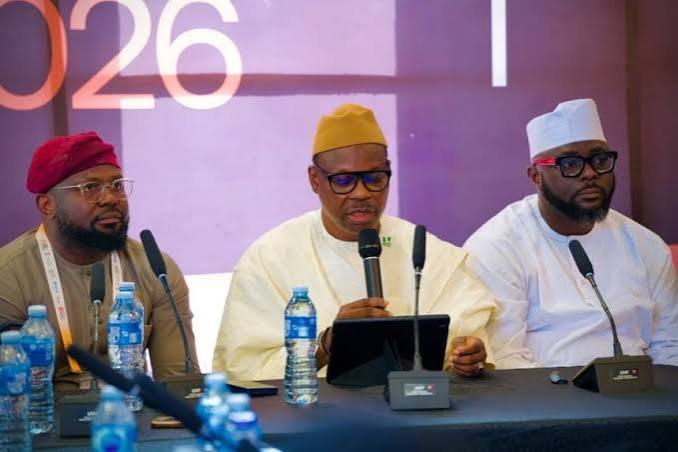
Okolo made the call at the Oxford Global Think Tank 2026 Leadership Conference held in Abuja on Tuesday, with the theme, “Leadership for a Prosperous Future.”
She said AI could help bridge gaps in birth registration by enabling community health workers to register births using simple digital devices.
According to her, the devices could also help clean up and connect fragmented records, allowing governments to plan schools, healthcare facilities and immunisation programmes using accurate data rather than estimates.
“AI can transform public service delivery and accelerate development across Africa if governments invest in locally developed solutions and take ownership of the continent’s digital resources,” she said.
Okolo said Africa must move beyond adopting AI technologies developed elsewhere and concentrate on building systems that address its peculiar challenges, reflect its languages and meet the needs of its people.
She noted that while previous technological revolutions, including electricity and the internet, took decades to reach different parts of the world, Africa had an opportunity to participate in the AI revolution from its early stages.
She, however, stressed that although launching AI projects might be relatively easy, demonstrating their actual impact on people's lives required proper assessment.
AI Could Improve Healthcare and Agricultural Productivity
On healthcare, Okolo highlighted the difficulties faced by rural women who often travel long distances to access specialist services, leading to delays in diagnosis and treatment.
Using breast cancer as an example, she explained that AI-assisted screening at local clinics could help nurses identify warning signs early and refer patients for timely medical attention.
“Same woman, same disease, a different ending,” she said, explaining how early detection supported by AI could improve health outcomes.
On agriculture, she said about 300 million Africans faced hunger in 2025, adding that AI could help farmers identify suitable planting periods, detect crop diseases early and improve productivity.
She stressed that such technologies would only benefit farmers if information reached them in familiar languages, through basic mobile phones and trusted community channels.
Okolo urged African governments to invest in skills development alongside technological infrastructure and AI systems.
She emphasised that Africa must develop, own and retain the value generated by AI for the benefit of its people and future generations.
“The future will not wait for us. So let us build it ourselves, together, and let us begin today,” she said.
Oteh Calls for Greater Investment in Youth
Earlier, the Convener of the Oxford Global Think Tank, Ms Arunma Oteh, said African governments must prioritise young people in their development strategies.
Oteh noted that about 70 per cent of Africa's population, including Nigeria's, was below the age of 30.
According to her, Africa could not achieve meaningful leadership in AI development without involving its youthful population and equipping them with relevant skills.
She warned that failure to adequately prepare young people for present and future economic realities could undermine the continent's ability to compete globally.
“Investment in skills is critical,” she said.
Oteh also emphasised that Africa's development required a coordinated ecosystem involving capital markets, domestic resource mobilisation, inclusive investment strategies and human capital development.
She urged stakeholders to strengthen collaboration and ensure that economic policies created opportunities for wider participation, particularly among young people.
Peterside Urges Stronger Action Against Corruption
Also speaking, the Founder of ANAP Foundation, Mr Atedo Peterside, said Nigeria needed stronger political commitment to fighting corruption, improving transparency and encouraging investment to achieve sustainable economic growth.
Peterside said although Nigeria's economy was currently growing at about four per cent, sustaining existing economic policies without addressing structural challenges would limit growth to between 3.5 and 4.2 per cent.
He expressed concern over what he described as harassment by rogue regulators, noting that many small businesses were forced to close within their first three years of operation because of regulatory challenges.
Citing Abia as an example of improved public resource management, he attributed the state's recent development to the effective deployment of government resources for public benefit.
He stressed that corruption and the mismanagement of public funds must be addressed, warning that economic growth would remain limited if public resources continued to be diverted.
Peterside urged governments at all levels to strengthen accountability in public spending and ensure that infrastructure projects delivered value for money.
Atlantic Reports: Voices. People. Facts.
Written by
Atlantic Reports Admin
Comments
- Be the first to comment.