FAO, KOICA and FG Launch Four-Year Green Jobs Initiative for Nigerian Youths
By Atlantic Reports
The Federal Government has partnered with the Food and Agriculture Organisation of the United Nations (FAO) and the Korea International Cooperation Agency (KOICA) to create green employment opportunities for Nigerian youths through sustainable and climate-resilient agricultural systems.
The initiative, known as the Green Jobs for Youth in Resilient Agrifood Systems Project, will run for four years and initially cover Nasarawa, Cross River and Bayelsa states.
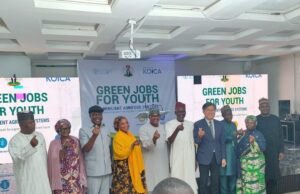
The Minister of Agriculture and Food Security, Senator Abubakar Kyari, announced the programme on Tuesday in Lafia, Nasarawa State, during the inaugural meeting and workshop of its Federal, State and Community Project Steering Committees.
Represented by the ministry's Deputy Director of Planning and Policy Coordination, Maimuna Mustapha-Yahuza, Kyari said the project was designed to strengthen agricultural resilience, improve food security and address youth unemployment.
Project targets rural youths and agribusiness development
Kyari said the initiative would equip young people, particularly those in rural communities, with relevant skills, technology and entrepreneurial opportunities to establish sustainable agricultural businesses.
He explained that the project built on existing cooperation between Nigeria, the Republic of Korea and FAO, following the signing of a Memorandum of Understanding in August in Abuja.
The minister said the initiative aligned with the Federal Government's Renewed Hope Agenda, particularly its focus on skills development, digitalisation and opportunities within the green economy.
“Our most important participants here are the youths in agriculture. With the youths, you can never go wrong because investing in the youths guarantees sustainability,” he said.
He added that Nasarawa, Cross River and Bayelsa were selected as pilot states to ensure that young people and smallholder farmers benefited from the programme at the grassroots.
Kyari expressed optimism that the initiative could be extended to other states after the first phase.
Nasarawa government pledges support
Declaring the event open, Nasarawa State Governor Abdullahi Sule reaffirmed his administration's commitment to the successful implementation of the project.
Represented by the Commissioner for Livestock Development, Umar Tanko-Tunga, the governor described the initiative as timely, saying it could help address youth unemployment, improve livelihoods, strengthen food systems and promote environmental sustainability.
He said the programme offered an opportunity to transform young people from job seekers into entrepreneurs and contributors to sustainable agricultural development.
Sule urged members of the national, state and local government steering committees to discharge their responsibilities with transparency, dedication and professionalism.
FAO emphasises measurable employment outcomes
The FAO Country Representative in Nigeria and the Economic Community of West African States (ECOWAS), Dr Hussein Gadain, described the initiative as a joint commitment to investing in young people and strengthening agricultural systems.
He said the project would provide young women and men with relevant skills, technologies and entrepreneurial support to participate productively in climate-resilient agriculture.
Gadain stressed that the programme's success should be measured by tangible outcomes rather than the number of meetings, training sessions or activities conducted.
“Our success must be measured by the young people who acquire productive skills, the sustainable green enterprises established and strengthened, the decent employment opportunities created and the increased participation of women,” he said.
He called on the steering committees to take ownership of the initiative, address implementation challenges and ensure that beneficiaries remained central to project activities.
Gadain also reaffirmed FAO's commitment to providing technical expertise in youth employment, sustainable agriculture, climate resilience and agrifood systems transformation.
KOICA highlights Nigeria-Korea partnership
The KOICA representative, Kim Ennsub, described the initiative as an important milestone in development cooperation between Nigeria and the Republic of Korea.
He said its success would depend on translating the programme's objectives into practical opportunities for young people.
Ennsub identified skills development, youth entrepreneurship, green jobs, innovation platforms and collaboration among stakeholders as essential components of the initiative.
He reaffirmed KOICA's commitment to supporting sustainable development, expanding economic opportunities and building climate-resilient communities.
Youth council promises grassroots mobilisation
The Nasarawa State Chairman of the National Youth Council of Nigeria, Damina Solomon-John, welcomed the selection of the state as one of the beneficiaries.
He said the programme came at a time when many young Nigerians were seeking employment while farmers were struggling with the effects of climate change.
Solomon-John pledged that the youth council would extend the knowledge gained through the initiative to local government areas, wards, farms and youth groups to encourage participation in green businesses.
The event also featured the inauguration of national, state and local government project steering committees to oversee coordination, monitoring and implementation.
Implementation will determine impact
The initiative offers an opportunity to connect youth employment with agricultural development and climate adaptation, particularly in rural communities where access to finance, technology and formal employment remains limited.
However, its impact will depend on the number of young people reached, the quality of training provided, access to start-up support and the ability of beneficiaries to establish viable businesses.
The inclusion of Bayelsa and Cross River also creates an opportunity to explore sustainable agribusiness activities suited to coastal and riverine communities, alongside opportunities in other agricultural value chains.
For the four-year programme to deliver lasting results, its partners will need to demonstrate that training translates into sustainable enterprises, decent jobs and improved livelihoods for participating young people.
Atlantic Reports: Voices. People. Facts.
Written by
Atlantic Reports Admin
Comments
- Be the first to comment.