FAO Trains Stakeholders in Borno on Flood and Drought Preparedness
By Atlantic Reports
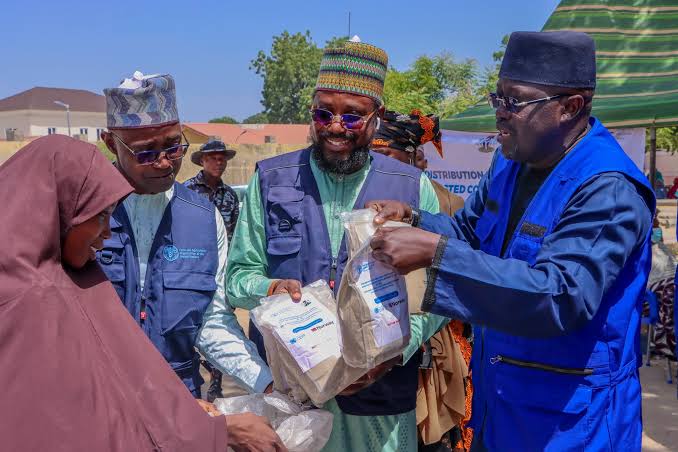
The Food and Agriculture Organisation of the United Nations (FAO) has trained government officials, community leaders and other stakeholders on flood and drought preparedness, as part of efforts to strengthen disaster risk management in Borno and neighbouring states.
The four-day training, which ended in Maiduguri on Thursday, focused on Early Warning Systems, Disaster Risk Reduction (DRR) and Climate Risk Preparedness. It also involved participants from Adamawa and Yobe states.
FAO Natural Resources and Environmental Energy Specialist, Dr Yakaka Maina, said the initiative was designed to strengthen the capacity of government institutions and community structures to anticipate climate-related hazards and take preventive action before disasters occur.
She identified flooding, drought and excessive heat as major threats, observing that many communities tended to respond only after disasters had happened rather than preparing in advance.
Vulnerable Communities Targeted
Maina said 22 participants from Borno attended the programme, including representatives of the Agricultural Development Programme (ADP), community leaders, State Emergency Management Agency (SEMA) officials, a representative of the National Emergency Management Agency (NEMA) and two persons with disabilities.
The participants included five ADP representatives, five community leaders and six SEMA officials.
She explained that some participants were drawn from vulnerable communities, including Mobar and Kukawa, based on the 2026 flood outlook.
The inclusion of community leaders and persons with disabilities was intended to strengthen local preparedness and ensure that disaster risk information reached people who could face particular challenges during emergencies.
Maina said FAO had also supported Borno, Adamawa and Yobe through capacity-building activities, the provision of drought-resistant seeds and fertiliser, and livestock restocking.
She added that the training would equip farmers and agricultural extension workers with climate-smart practices, including adjusting planting calendars to reduce potential losses during drought.
Borno Plans Wider Disaster Preparedness Training
Also speaking, Mr Idris Abubakar, Senior Technical Assistant to the Director-General of Borno SEMA, said preparedness was essential to reducing casualties and property losses during emergencies.
He disclosed that the agency had trained stakeholders from eight local government areas and planned to extend the exercise to nine additional councils, with the ultimate goal of covering all 27 local government areas in the state.
Abubakar said the programme would also strengthen the capacity of SEMA personnel deployed across the local government areas to respond to flooding, fire outbreaks and human-induced disasters.
The proposed expansion would increase the reach of preparedness activities, although its effectiveness will depend on sustained training, resources and coordination between emergency agencies and communities.
NEMA Urges Communities to Act on Early Warnings
Mohammed Gujubawo, Principal Disaster Risk Reduction Officer at NEMA, described the training as interactive and beneficial.
He urged residents to take early warnings and weather advisories issued by NEMA, the Nigerian Meteorological Agency (NiMet) and other relevant institutions seriously.
He said timely attention to such information could help communities protect lives and property by allowing residents to prepare for possible emergencies.
Participants Take Preparedness Lessons to Communities
A participant, Yakubu Ali from Kirawa community in Gwoza Local Government Area, said the training had equipped him with knowledge to educate residents on emergency preparedness.
He identified evacuation routes, safe locations, essential food supplies and medical items as important considerations for households preparing for emergencies.
Another participant, Mrs Adama Balla, said she planned to organise awareness discussions involving between five and 10 people to educate community members on climate change, proper waste disposal and environmental protection.
Balla also encouraged persons with disabilities to remain vigilant and familiarise themselves with their surroundings to reduce their vulnerability during emergencies.
She urged FAO and other development partners to sustain the programme and extend it to more grassroots communities.
Sustaining Preparedness Beyond Training
The programme highlights the importance of linking early warning information with practical action at community level. Training local leaders, farmers and emergency personnel can improve preparedness, but lasting results require regular public awareness, accessible warnings, evacuation arrangements and adequate emergency resources.
For communities exposed to flooding and drought, climate preparedness also has direct implications for food security, livelihoods and household income. Farmers need timely weather information and practical support to adjust agricultural activities before extreme conditions cause losses.
Borno's plan to extend the exercise across all 27 local government areas will therefore be an important test of how far the training can translate into wider community protection.
Atlantic Reports: Voices. People. Facts.
Written by
Atlantic Reports Admin
Comments
- Be the first to comment.