FCT Traditional Rulers’ Wives Seek Stronger Community Justice to Protect Women and Girls
By Atlantic Reports
The Association of Wives of FCT Traditional Rulers (WOFCTTRA) has called for stronger community-based justice mechanisms to tackle sexual and gender-based violence, early child marriage and discrimination against women and girls in the Federal Capital Territory (FCT).
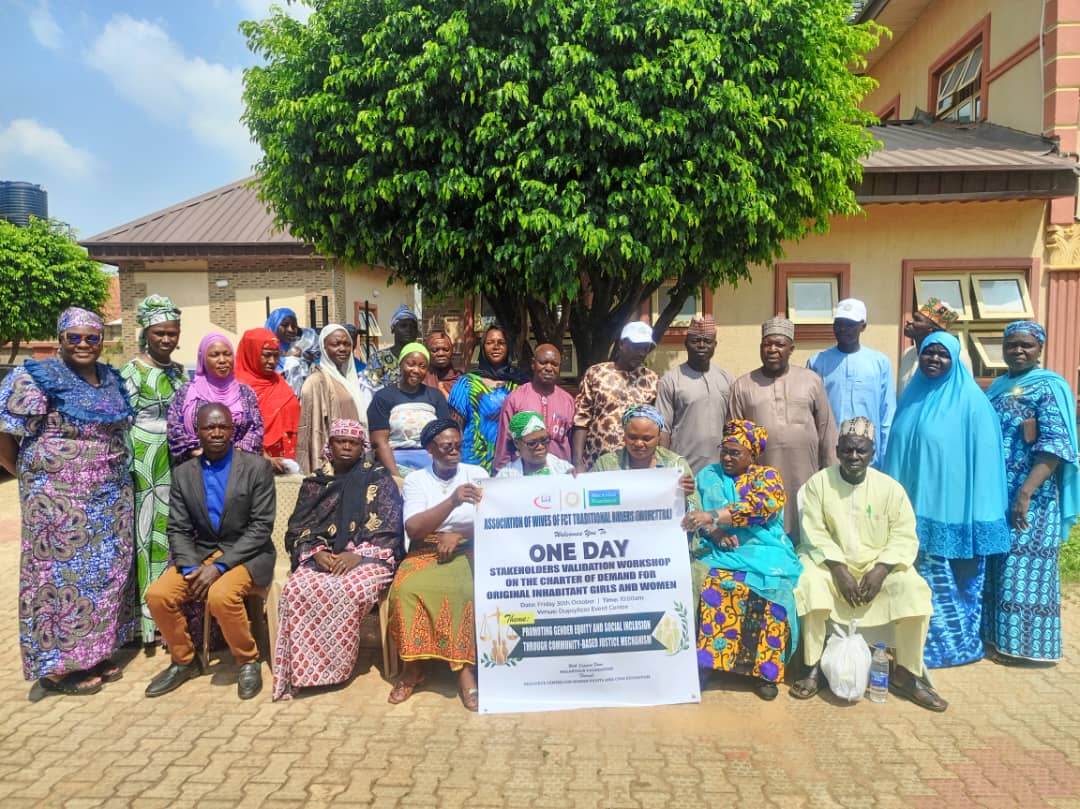
The President of the association, Hajiya Hauwa Adamu, made the appeal on Friday during a stakeholders' meeting to validate the Charter of Demands for Original Inhabitants' Women and Girls in Abuja.
The meeting was organised under the theme, “Promoting Gender Equity and Social Inclusion through Community-Based Justice Mechanisms”.
Adamu stressed that traditional institutions had important roles to play in protecting women and girls, particularly in communities where family and cultural interventions could undermine efforts to secure justice for victims.
She warned that some cases of sexual and gender-based violence were concealed or withdrawn following pressure from relatives, allowing alleged perpetrators to escape accountability.
“Sometimes, when cases are taken to the police, relatives intervene and persuade victims to withdraw them, allowing perpetrators to escape accountability.
“We must ensure that such cases are not treated as ordinary family matters,” she said.
Traditional Institutions Urged to Strengthen Protection
Adamu explained that WOFCTTRA provides women associated with traditional institutions with a platform to address challenges affecting women and children across their communities.
According to her, the association brings together women from the 17 traditional chiefdoms in the FCT to promote girls' education, protection and equal opportunities.
She called for greater commitment from traditional rulers and community leaders to ensure that harmful practices did not prevent women and girls from accessing justice and exercising their rights.
Adamu also commended the MacArthur Foundation for supporting the initiative through the Resource Centre for Human Rights and Civic Education (CHRICED).
She described the Charter of Demands as an important document capturing the concerns and expectations of Original Inhabitants' women and girls while providing a framework for engagement with traditional institutions, government and other stakeholders.
“We are not fighting the government; we are only appealing that what belongs to our people should not be taken away from them,” she said.
Charter Identifies Seven Priority Areas
The Charter of Demands outlines seven priority areas for improving the protection and inclusion of women and girls in the FCT.
They include:
-
Strengthening traditional justice systems.
-
Preventing and addressing gender-based violence.
-
Ending early and forced child marriage.
-
Eliminating gender discrimination.
-
Promoting the inclusion of persons with disabilities.
-
Strengthening government and institutional accountability.
-
Encouraging sustainable community ownership.
The document also advocates confidential reporting and referral mechanisms to protect victims and improve access to justice.
Other recommendations include capacity-building for traditional rulers and community leaders, as well as stronger collaboration between traditional institutions and statutory justice agencies.
Community Stakeholders Participate in Validation Meeting
The meeting attracted community leaders from Kuje and Gwagwalada Area Councils, royal mothers, women and youth representatives, alongside other stakeholders.
The project is supported by the MacArthur Foundation through CHRICED, with WOFCTTRA and other community stakeholders participating in its implementation.
The proposed framework places traditional institutions at the centre of community-level efforts to address violence and discrimination while encouraging stronger links with formal justice institutions.
Its effectiveness will depend on how the recommendations are adopted, the protection available to victims who report abuse and the willingness of community leaders and relevant authorities to ensure that allegations receive appropriate attention.
Atlantic Reports: Voices. People. Facts.
Written by
Atlantic Reports Admin
Comments
- Be the first to comment.