FG Calls for Stronger Agricultural Value Chains to Improve Food Security
By Atlantic Reports
Government pushes commercial agriculture
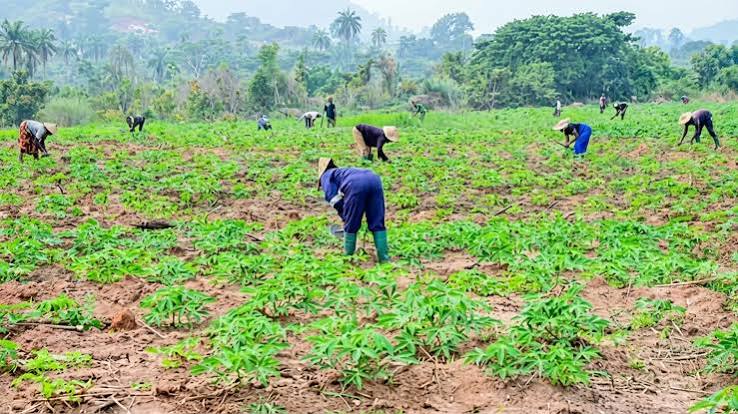
The Federal Government has called for stronger agricultural value chains, increased agro-industrialisation and improved market access as part of efforts to strengthen food security and expand economic opportunities in Nigeria.
The Permanent Secretary of the Federal Ministry of Agriculture and Food Security, Dr Marcus Ogunbiyi, made the call on Monday in Enugu during the technical session of the National Council on Agriculture and Food Security.
The session was held under the theme, “Enhancing Agricultural Value Chains, Agro-Industrialisation and Market Access for Economic Growth.”
Ogunbiyi, who chaired the technical session, said Nigeria needed to move beyond subsistence farming and develop a commercially driven agricultural system capable of supplying industries, improving farmers’ earnings and expanding export opportunities.
He said the country's agricultural strategy should focus not only on increasing food production but also on creating wealth, generating employment, supporting manufacturing and improving rural livelihoods.
“Our task goes beyond increasing the volume of food produced.
“We must build an agricultural economy that creates wealth, supports industries, generates decent employment, expands exports, improves rural livelihoods and contributes meaningfully to national economic growth,” he said.
Infrastructure and financing remain major obstacles
Ogunbiyi identified inadequate storage and processing facilities, limited access to finance, poor logistics and weak connections between farmers and processors as major challenges affecting the competitiveness of Nigerian agricultural products.
He called for increased investment in agro-processing facilities, rural roads, irrigation systems, electricity, cold-chain infrastructure and modern agricultural technologies.
Such investments, he said, would help reduce post-harvest losses and encourage local processing instead of relying mainly on the sale of unprocessed agricultural produce.
He described agro-industrialisation as the link between agricultural production and manufacturing, arguing that stronger connections between the two sectors would create more reliable supplies of raw materials for industries.
Ogunbiyi also urged state governments to identify priority commodities, establish measurable production and processing targets, attract private investment and strengthen partnerships with research institutions and development organisations.
He said the success of the council's deliberations would depend on the quality of its resolutions and their implementation.
Enugu seeks stronger federal and private-sector partnerships
The Enugu State Commissioner for Agriculture and Agro-Industrialisation, Mr Patrick Uburu, said the state government was committed to using agro-industrialisation to improve farmers’ incomes, create jobs and generate wealth.
Uburu described the technical session as an opportunity to translate policy discussions into practical solutions.
He urged delegates to place farmers and agribusiness operators at the centre of their recommendations, while strengthening cooperation among federal and state governments, relevant agencies and development partners.
He also called for measurable and implementable recommendations that would improve productivity and expand markets for agricultural produce.
GIZ highlights storage, markets and soil health
The Technical Lead for Policy Advisory at GIZ ECOWAS and Nigeria, Dr Abiodun Ihebuzor, advocated stronger partnerships and increased investment across agricultural value chains.
He said improved storage systems and more efficient markets were necessary to reduce post-harvest losses and strengthen food security.
Ihebuzor also identified healthy soils as an important foundation for sustainable agricultural production.
Reflecting on previous engagements at the 46th National Council on Agriculture in Calabar and the 47th in Kaduna, he expressed optimism that the Enugu meeting would deepen cooperation among government institutions, development partners and private-sector operators.
Enugu outlines agricultural investment plans
The Deputy Director of Administration and Supply at the Enugu State Ministry of Agriculture and Agro-Industrialisation, Mrs Geraldine Onu, said the state was intensifying efforts to move agriculture from subsistence production towards commercial and mechanised farming.
She said investments in irrigation, storage, processing and agricultural infrastructure were intended to increase production, attract private investment, reduce post-harvest losses and improve farmers’ livelihoods.
Onu listed several initiatives under Governor Peter Mbah's administration, including a 300,000-hectare agricultural land bank, the development of Smart Farm Estates across the state's 17 local government areas, a 260 Farm Estate Programme and plans for a tractor assembly plant.
The statement did not provide details on the implementation status, funding or operational capacity of the listed initiatives.
Implementation will determine impact
The discussions in Enugu highlight the importance of connecting agricultural production with processing, transportation, storage and reliable markets.
However, achieving the proposed transition will require more than policy resolutions. Farmers and agribusinesses will need access to affordable financing, dependable infrastructure, appropriate technology and buyers for their produce.
The practical test for the council will be whether its recommendations lead to measurable improvements in productivity, reduced post-harvest losses, stronger rural enterprises and more affordable food supplies.
Atlantic Reports: Voices. People. Facts.
Written by
Atlantic Reports Admin
Comments
- Be the first to comment.