FG Equips 38 Technical Colleges to Expand Free Vocational Training, Tackle Youth Unemployment
By Atlantic Reports
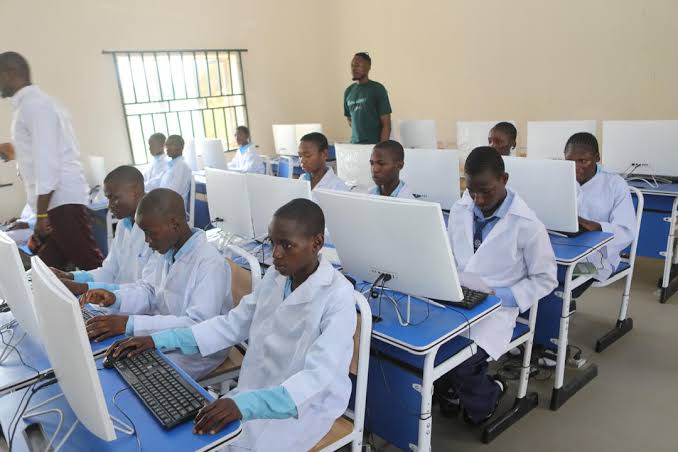
The Federal Government has equipped 38 federal and state technical colleges across Nigeria as part of efforts to expand access to technical and vocational education and address youth unemployment.
The National Project Coordinator of the Innovation Development for Effective Acquisition of Skills (IDEAS) Project, Blessing Ogwu, disclosed this on Wednesday during an inspection of the IDEAS Project Centre at the Federal Science and Technical College (FSTC), Orozo, Abuja.
Ogwu said the 38 institutions comprised 20 federal technical colleges and 18 state-owned colleges.
She explained that the intervention was designed to improve practical skills acquisition and prepare more young Nigerians for employment and self-employment.
According to her, the investment reflects the Federal Government's commitment to strengthening Technical and Vocational Education and Training (TVET).
She identified FSTC Orozo as the designated federal technical college for the Federal Capital Territory.
Free training, stipends and starter packs
The National Project Monitoring Officer in the Office of the Minister of Education, Olatunji Odewunmi, said Nigeria had more than 1,000 TVET centres, including approximately 140 skills training centres in the FCT.
He described the IDEAS Project and the government's broader TVET initiative as complementary programmes aimed at expanding access to practical training.
Odewunmi said beneficiaries received free tuition, training fees, instructional materials and accommodation where applicable for boarding students.
He added that participants were entitled to monthly stipends and starter packs to support the establishment of businesses after completing their training.
According to him, the government had also introduced biometric attendance monitoring to track participation.
Trainees who failed to meet the required attendance threshold would lose their eligibility for stipends and starter packs.
Colleges adopt practical-focused curriculum
The Principal of FSTC Orozo, Dr Stella Uhuegbu, said the college had adopted a training structure based on the revised national TVET curriculum.
She explained that the curriculum prescribed a 70 per cent practical and 30 per cent theoretical training approach to ensure that students acquired hands-on experience.
Uhuegbu said the college had provided instructional materials, equipment and technical instructors to support the programme.
She disclosed that FSTC Orozo had more than 1,000 regular students, while its six-month short-term skills programme accommodated over 1,000 trainees across six vocational trades.
The trades include information and communication technology, automobile mechanics, auto-electrical repairs, catering, garment making and GSM repairs.
She said the IDEAS Project had strengthened practical training through newly constructed and equipped workshops.
Uhuegbu added that graduates would receive certificates and starter packs from the Federal Government to help them establish businesses.
Trainees report early income opportunities
Some beneficiaries expressed satisfaction with the training, saying the practical knowledge acquired had begun creating opportunities for income generation.
A catering trainee, Modupe Osundeyi, said she had learnt baking and food production, including the preparation of buns, egg rolls and doughnuts.
She disclosed that her newly acquired skills had helped her secure a supply contract with a nearby school.
Similarly, Joy Genesis, a trainee at the Zenou TVET Centre in Orozo, said she had started earning income from baking about four months after enrolling in the programme.
Genesis said her training covered cake production and decoration, pastries, bread-making and confectionery.
Their experiences illustrate how vocational training can create opportunities for self-employment, although the long-term impact will depend on sustained access to customers, equipment, finance and business support.
World Bank-supported programme targets skills development
The IDEAS Project, supported by the World Bank, provides free vocational training, stipends and starter packs to promote skills acquisition and youth empowerment.
The expansion of equipped technical colleges is intended to strengthen the country's vocational education infrastructure and improve the transition from training to employment.
However, the programme's wider success will depend on the number of trainees who complete their courses, receive their promised starter packs and establish sustainable businesses or secure employment.
Consistent funding, qualified instructors, functional equipment and links between training centres and employers will also be important in ensuring that the investment produces lasting benefits for young Nigerians.
Atlantic Reports: Voices. People. Facts.
Written by
Atlantic Reports Admin
Comments
- Be the first to comment.