FG Moves to Cut $1.5bn Dairy Import Bill Through Increased Local Milk Production
By Atlantic Reports
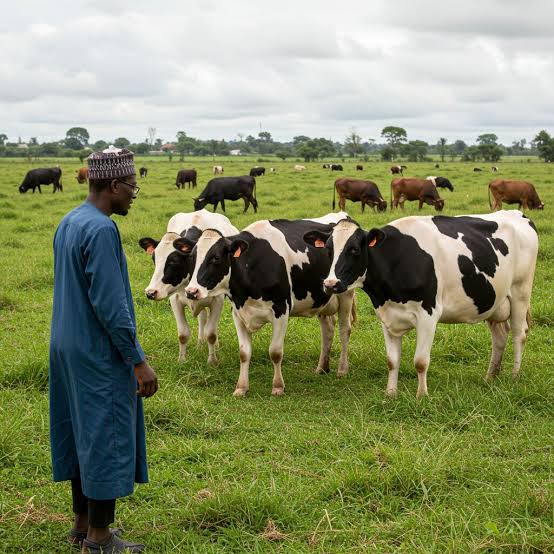
The Federal Government has commenced efforts to validate a National Action Plan for the Promotion of Local Milk Production as part of its strategy to reduce dependence on imported dairy products and strengthen Nigeria's livestock industry.
The Minister of Livestock Development, Idi Maiha, disclosed this on Monday at a validation workshop held in Abuja.
The workshop was organised by the Federal Ministry of Livestock Development in collaboration with the Economic Community of West African States (ECOWAS).
Maiha said reducing the country's annual dairy import expenditure would require a practical and implementable strategy capable of developing a modern, competitive and inclusive dairy sector.
He explained that the proposed action plan was anchored on existing government policies, including the Nigeria Livestock Growth Acceleration Strategy (NLGAS 2025–2035), National Dairy Policy 2023–2028 and its implementation framework, as well as the Nigeria Livestock Master Plan and Livestock Sector Strategy 2026–2040.
FG demands action beyond workshops
The minister said the government was determined to move beyond repeated discussions and workshops towards practical interventions that would increase domestic milk production.
He stressed that meaningful progress required direct engagement with farmers, processors and other operators to identify challenges and develop workable solutions.
Maiha expressed concern over the absence of reliable national data on daily milk production, functional dairy cooperatives, relationships between farmers and processors, and challenges affecting milk collection and storage.
“How much have we done to reduce that $1.5 billion annual figure? How much milk are we making every day all over the country? That data is unavailable.
“So, whether import is going up or coming down, we do not know, because we have no evidence-based argument,” he said.
He insisted that the action plan must establish clear priorities, identify responsible institutions, provide funding for proposed activities and introduce measurable performance targets.
Three priorities for developing local dairy production
Maiha outlined three major areas requiring attention to strengthen Nigeria's dairy industry.
1. Investment in commercially viable dairy-producing areas
He said investments should be directed towards locations with favourable conditions, including adequate feed and water, farmers' capacity, security, road accessibility and proximity to milk processors.
2. Addressing constraints to local milk supply
The minister identified year-round access to fodder and water, improved dairy breeds, animal healthcare, agricultural extension services and quality control as essential requirements for increasing reliable milk production.
3. Connecting infrastructure to viable markets
He emphasised the importance of establishing functional milk collection and cooling centres supported by capable operators and reliable purchasing arrangements.
Maiha warned against investing in facilities without sustainable business models, noting that several dairy facilities established before Nigeria's independence had become non-functional.
“We should invest in viable dairy businesses, not facilities that stand idle, because many dairy facilities built before independence are now moribund,” he said.
Private-sector operators identified as key partners
The minister identified existing private-sector initiatives as potential foundations for expanding domestic milk production.
These included FrieslandCampina WAMCO's farmer-centred programme, Nestlé Nigeria's dairy development activities and private dairy farms operated by Arla, Integrated Dairies Ltd. and L&Z Integrated Dairy Farms.
He also encouraged Nigeria to learn from dairy development experiences in Kenya and Uganda.
According to him, Kenya's cooperative system provides farmers with extension services covering animal feeding, breeding, healthcare and record-keeping.
He said Uganda's experience demonstrated how private processors could support smallholder farmers through milk collection, cooling facilities and technical assistance.
“The lesson is straightforward: Connect farmers to advisory services, quality-based markets, and reliable buyers.
“Ensure the inclusion of women and youths in training, finance, technology and leadership,” he said.
FG promises monitoring and investment support
Maiha assured stakeholders that the Ministry of Livestock Development would provide policy guidance, regulation and standardisation to support the implementation of the action plan.
He said the ministry would also collaborate with investors and producers across the states, using quarterly performance reviews to monitor progress.
The proposed monitoring framework will cover local milk procurement, milk quality, farmers' incomes, private-sector investment and the participation of women and young people.
The minister added that 21 states now had ministries of livestock, describing the development as an opportunity for coordinated implementation of livestock development policies.
He urged participants to produce an action plan that would strengthen livelihoods, expand access to safe milk and improve the competitiveness of Nigeria's dairy industry.
Nigeria spends over $1.5bn annually on dairy imports
Earlier, the ministry's Permanent Secretary, Dr Chinyere Akunjobi, said Nigeria spends more than $1.5 billion annually on dairy imports despite its considerable livestock resources.
Akunjobi, represented by Dr Victor Egbon, Director of the Ruminant and Monogastric Department, identified inadequate access to improved dairy breeds, quality animal feed, veterinary services, milk collection facilities and processing infrastructure as major obstacles to domestic production.
She called for increased private-sector investment and stronger capacity-building programmes to improve farmers' productivity.
Also speaking, Dr Soule Goura, Coordinator of the Milk Offensive Project in the ECOWAS Commission's Agriculture and Rural Development Directorate, commended Nigeria's efforts to develop the national action plan.
He described Nigeria as a major dairy producer in West Africa and emphasised its importance to regional dairy development.
Implementation remains the critical test
Nigeria's ambition to reduce dairy imports will depend on more than policy formulation. Reliable production data, improved livestock breeds, affordable feed, veterinary services, functioning collection centres and dependable markets will be essential to achieving sustained growth.
The proposed quarterly monitoring system could help establish whether investments are translating into increased milk procurement, improved farmer incomes and greater private-sector participation.
For livestock farmers, particularly smallholder producers, the success of the initiative will ultimately depend on whether they gain better access to financing, technical support, processing facilities and markets that offer sustainable returns.
Atlantic Reports: Voices. People. Facts.
Written by
Atlantic Reports Admin
Comments
- Be the first to comment.