FG Moves to Regulate Scrap Metal Trade, Curb Infrastructure Theft and Boost Steel Production
By Atlantic Reports
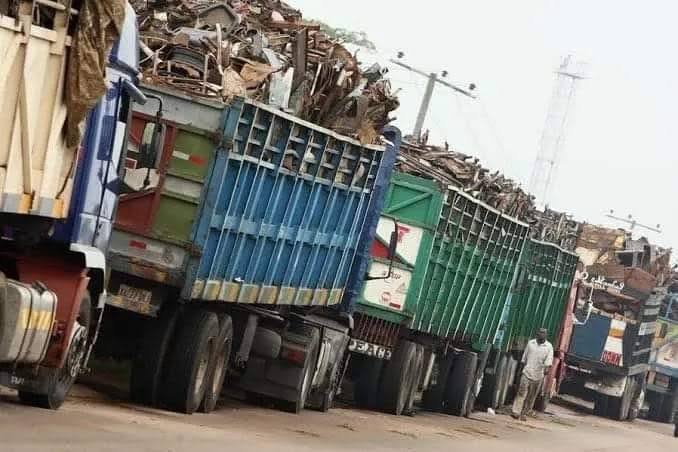
The Federal Government is working to introduce stricter regulation of Nigeria’s scrap metal industry in a bid to curb infrastructure theft, protect public assets and improve the supply of raw materials for local steel production.
The Minister of Steel Development, Shuaibu Audu, disclosed this at a two-day stakeholders’ engagement in Lagos on the validation of the proposed 2026 Scrap Metal (Collection, Trading, Recycling and Regulation) Regulations.
The engagement, which began on Monday, has the theme, “Sustainable Scrap Metal Management through Effective Metallurgical Regulation: From Policy to Real Impact”.
Represented by Ime Eprikpo, Director of the Metallurgical Raw Material Development and Investment Promotion Department, Audu said the proposed regulations were intended to promote transparency and sustainability across the scrap metal value chain.
Proposed Rules Target Illegal Trade and Infrastructure Vandalism
Audu described scrap metal as an important raw material for steel production and other manufacturing activities, with the potential to create employment and reduce material waste.
However, he warned that inadequate regulation could encourage the theft and vandalism of public and private infrastructure, unsafe dismantling practices and environmental degradation.
He said the proposed framework would establish licensing requirements for operators, regulate collection and aggregation facilities, and introduce proper documentation of transactions.
It would also strengthen environmental and occupational safety standards and help prevent the trading of stolen metallic materials.
“Our objective is not to suppress legitimate commercial activity; rather, it is to establish a system in which lawful businesses can operate with greater clarity and confidence,” Audu said.
He added that activities involving stolen materials, unsafe practices and environmental damage would be addressed through appropriate regulatory and legal measures.
The minister said the framework would also recognise the importance of small-scale collectors and traders whose livelihoods depend on the industry.
According to him, licensing requirements would reflect the scale and risks associated with different operations, while large recycling facilities would be expected to meet appropriate standards.
Government Raises Concern Over Theft of Public Assets
The minister identified the theft and vandalism of electrical cables, railway components, manhole covers and other metallic infrastructure as major concerns.
Such activities, he said, disrupt public services, compromise safety and increase government expenditure on maintenance and replacement.
He called for stronger supplier identification, verification of material sources, reliable transaction records and closer collaboration with security agencies to prevent stolen metals from entering the recycling market.
These measures are expected to make it easier to trace materials and identify operators involved in illegal transactions.
Stakeholders Asked to Review Draft Regulations
Audu said the validation exercise was designed to gather input from industry operators, government institutions, environmental and security agencies, professional bodies and other relevant stakeholders.
He urged participants to examine the proposed provisions carefully, identify areas requiring clarification and highlight practical challenges that could affect enforcement.
The ministry, he said, would consider the submissions and work with relevant agencies and industry operators to develop an effective implementation framework.
He also identified institutional capacity building, public awareness, improved data collection and stronger enforcement as priorities for the ministry.
Ministry Links Regulation to Domestic Steel Development
The Permanent Secretary of the Ministry of Steel Development, Ambassador Nura Rimi, also reaffirmed the Federal Government’s commitment to developing Nigeria’s steel industry in line with President Bola Tinubu’s Renewed Hope Agenda.
Represented by Christopher Wanje, Director of the Metallurgical Inspectorate and Environmental Protection Department, Rimi said effective regulation of scrap metal was essential to strengthening local steel production.
He said the proposed rules would help sanitise the industry, curb the illegal trade in stolen metals and protect critical infrastructure.
Rimi stressed that the objective was not to discourage legitimate businesses or investment but to establish a transparent and accountable operating environment.
He added that reliable access to scrap metal would help steel manufacturers increase domestic production and value addition.
Industry and Environmental Stakeholders Back Regulation
The National President of the National Association of Scrap and Waste Dealers Employers of Nigeria, Ogbu Uchechukwu, described the validation exercise as an important step towards building an organised and economically viable industry.
Similarly, the Director-General of the National Environmental Standards and Regulations Enforcement Agency (NESREA), Dr Innocent Bariko, commended the ministry for initiating the proposed regulations.
Represented by Walter Okoye, Deputy Director of the agency’s Base Metal Sector, Bariko said effective regulation was necessary to protect the environment and public health.
He noted that scrap metal was both an economic resource and a source of livelihood for many Nigerians, as well as an important raw material for the steel industry.
Busari Olanrewaju, Business Manager and representative of Kam Steel Integrated Company Ltd., described scrap metal as central to Nigeria’s steel production.
He expressed the company’s readiness to collaborate with the ministry through training for scrap collectors and the introduction of standardised grading procedures.
Olanrewaju also called for investment in modern sorting and shredding technologies to improve the utilisation of locally sourced scrap metal.
Enforcement Will Determine the Impact
The proposed regulations seek to address a difficult balance between protecting infrastructure and preserving legitimate economic activities in the scrap metal trade.
Their effectiveness will depend on clear licensing procedures, accessible compliance requirements for small operators, reliable monitoring and consistent enforcement against illegal transactions.
The validation process is an important step towards establishing the rules, but the practical impact will become clearer when the final regulations are adopted and implemented.
For Nigeria’s steel industry, the broader objective is to secure a dependable supply of locally sourced raw materials while ensuring that recycling does not become a channel for infrastructure theft and environmental harm.
Atlantic Reports: Voices. People. Facts.
Written by
Atlantic Reports Admin
Comments
- Be the first to comment.