FG Moves to Regulate Scrap Metal Trade, Targets Infrastructure Vandalism
By Atlantic Reports
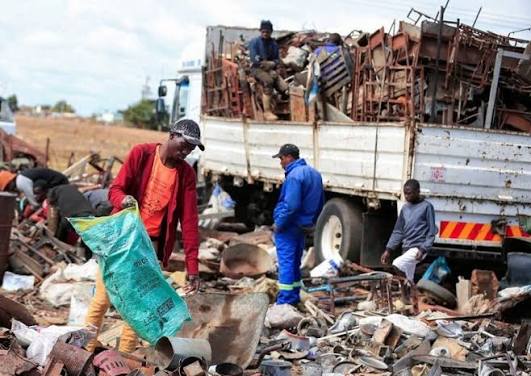
The Federal Government is developing a regulatory framework for Nigeria’s scrap metal industry as part of efforts to tackle infrastructure vandalism, improve recycling practices and strengthen the country’s steel production capacity.
The Minister of Steel Development, Shuaibu Audu, disclosed this during the second phase of a stakeholders’ engagement on the proposed Scrap Metal (Collection, Trading, Recycling and Regulation) Regulations in Kano.
A statement issued by the ministry’s Head of Press and Public Relations, M.A. Tine-Iulun, said the engagement was organised to obtain industry contributions before the proposed regulations are finalised.
Represented by the Director of Steel and Non-ferrous Metals Department, Umar Tsoho, Audu said scrap metal remained an important raw material for industrial development, but warned that weak regulation could encourage the theft of public assets and cause economic losses.
Licensing and transaction tracking proposed
The proposed framework is expected to introduce licensing requirements for operators, monitoring of collection centres, transaction tracking and compliance with environmental and occupational safety standards.
It will also address the illegal acquisition and sale of metals taken from public infrastructure, industrial facilities and other protected assets.
The minister identified electrical cables, railway components and manhole covers among the public assets frequently targeted by vandals.
Such thefts, he said, disrupt essential services and increase the cost of maintaining public infrastructure.
The government believes that a more organised scrap metal value chain could support domestic steel production, create employment opportunities and encourage sustainable industrial growth.
However, the proposed regulations are not intended to undermine legitimate businesses or eliminate the livelihoods of collectors and traders.
Audu said the framework would provide practical arrangements for formalising small-scale operators, while requiring larger recycling and processing facilities to meet appropriate operational and safety standards.
Government seeks industry input
The Kano consultation followed an earlier engagement held in Lagos from November 9 to 10, where stakeholders examined proposals covering licensing, operator classification, traceability, environmental protection and enforcement.
Audu said contributions from both engagements would be reviewed and harmonised to improve the draft regulations.
The Permanent Secretary of the ministry, Nura Rimi, represented by Christopher Wange, Director of the Metallurgical Inspectorate and Environmental Protection Department, said the consultations were intended to ensure that the proposed framework reflected industry realities.
He identified licensing, traceability, safety standards and enforcement as areas requiring attention.
Rimi also urged participants to submit practical recommendations on operator classification, security, environmental protection and cooperation among relevant government agencies.
NSCDC pledges support for infrastructure protection
The National Steel Council reaffirmed its support for the proposed regulations, describing an organised scrap metal industry as important to economic growth and employment generation.
The council's Acting Executive Secretary, Aminu Shehu, communicated the position through Nana-Firdausi Muhammad, Head of its Planning, Research and Statistics Department.
The Nigeria Security and Civil Defence Corps (NSCDC) also pledged to work with the Ministry of Steel Development and other stakeholders to protect critical national infrastructure.
The Kano State Commandant, Mohammed Agalama, who represented the NSCDC Commandant-General, Ahmed Audi, said effective regulation was necessary to prevent the theft of electrical installations, pipelines and railway facilities.
Implementation will determine the impact
The proposed regulations could help address a persistent challenge facing infrastructure protection and the recycling industry. However, their effectiveness will depend on how licensing, monitoring and enforcement work in practice.
Important questions include how small-scale collectors will be registered, how stolen materials will be identified, how collection centres will be monitored and how agencies will coordinate enforcement.
The government has yet to provide a final implementation timetable or detailed information on the proposed penalties and compliance costs in the statement announcing the consultations.
For legitimate traders, clear and affordable registration procedures will be important to prevent regulation from becoming an additional burden on small businesses.
For the wider economy, the central test will be whether the framework can reduce infrastructure theft while developing a transparent and commercially viable recycling industry.
Atlantic Reports: Voices. People. Facts.
Written by
Atlantic Reports Admin
Comments
- Be the first to comment.