FG Pushes for 18 to 24-Month Completion of New Carter Bridge in Lagos
By Atlantic Reports
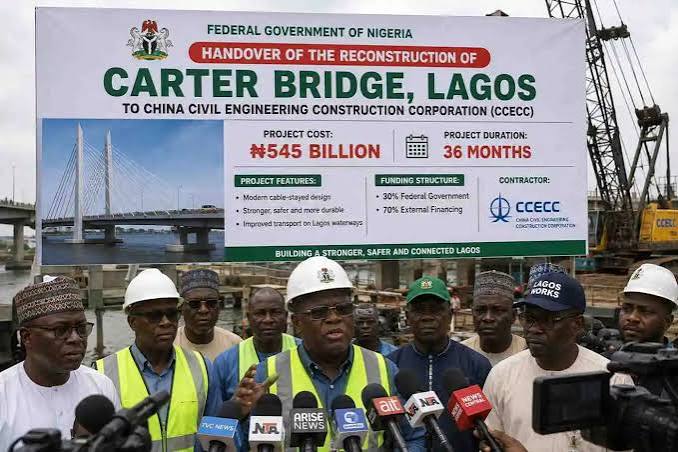
The Federal Government is seeking to accelerate construction of the proposed new Carter Bridge in Lagos, with the Minister of Works, Sen. Dave Umahi, asking the contractor to consider completing the project within 18 to 24 months instead of the original 36-month schedule.
Umahi made the request on Monday, November 23, 2026, during an inspection of the project being handled by China Civil Engineering Construction Corporation (CCECC).
He said reducing the construction period would help limit costs and ensure that the replacement bridge becomes operational before the existing structure deteriorates to the point of failure.
The proposed bridge is expected to stretch 1.9 kilometres.
Contractor records five per cent progress
Umahi disclosed that CCECC had completed five per cent of the project despite not receiving a mobilisation payment.
He said the Federal Government planned to release a 30 per cent mobilisation fee to the contractor within the week.
The minister explained that the government was also considering an additional financing arrangement to help accelerate construction.
Under the proposed arrangement, CCECC could receive a further 20 per cent as a loan to establish two additional sections of piling, provided the contractor agreed to shorten the project timeline.
However, he said the arrangement would require an Advance Payment Guarantee (APG) to protect government funds.
Umahi noted that the government already had the required guarantee for the proposed 30 per cent mobilisation payment.
He explained that although regulations did not permit the government to pay more than 30 per cent as mobilisation, additional financing could be considered through a separate agreement.
Government insists on technical specifications
The minister also emphasised the need to maintain construction standards, particularly in the bridge's foundation work.
He said the piling must use steel piles with a minimum thickness specification of Schedule 60, adding that the contractor was meeting the requirement.
Umahi further directed that protective concrete structures be installed around the piles at the seabed once piling begins.
He said the measures were intended to protect the foundation components and support the bridge's durability.
Completion timeline and funding remain key issues
The proposed reduction in construction time reflects the government's concern about the condition of the existing Carter Bridge and the importance of ensuring that a replacement is ready before any serious structural failure occurs.
However, the 18 to 24-month timeline remains a proposal under negotiation, not a confirmed construction deadline.
The government is also yet to provide a detailed revised schedule showing how additional piling sections, financing arrangements and construction activities would be coordinated to meet the shorter target.
The release of mobilisation funds, the proposed loan arrangement and the contractor's ability to accelerate work will be important factors in determining whether the revised timeline is achievable.
For Lagos residents and businesses that depend on the bridge, timely delivery will be critical to transport movement and economic activity. The priority, however, must remain a safe and durable structure rather than speed at the expense of engineering standards.
Atlantic Reports: Voices. People. Facts.
Written by
Atlantic Reports Admin
Comments
- Be the first to comment.