FG Seeks Increased Investment to Build Resilient Agrifood System
By Atlantic Reports
The Federal Government has urged governments, farmers, private investors and research institutions to strengthen collaboration and investment in building a resilient Nigerian agrifood system.
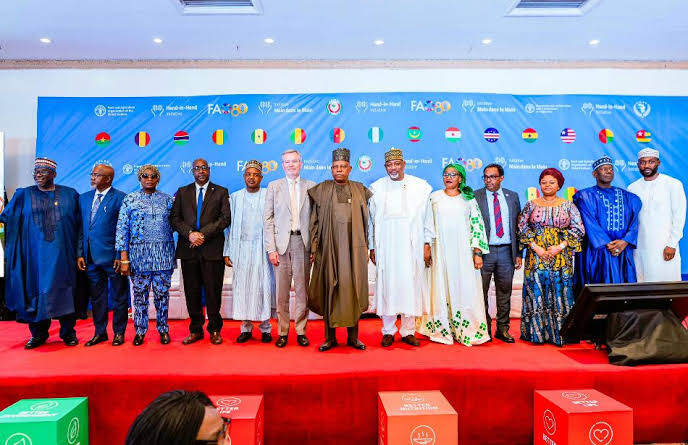
The Minister of Agriculture and Food Security, Senator Abubakar Kyari, made the call on Tuesday at the opening of the 2026 National Agricultural Show in Nasarawa State.
The annual event, organised by the National Agricultural Foundation of Nigeria (NAFN) in collaboration with the Federal Ministry of Agriculture and Food Security and the All Farmers Association of Nigeria (AFAN), has the theme, “Building a Resilient Nigerian Agrifood System: Empowering Farmers, Mobilising Investment and Driving Innovation for Food Security and Shared Prosperity”.
Represented by the Director of the Federal Department of Agriculture, Bukar Musa, Kyari said agricultural transformation required coordinated efforts and adequate support for farmers.
Government targets productivity and affordable food
The minister said the success of agricultural policies should be measured by increased productivity, improved farmers' incomes, reduced post-harvest losses, job creation and access to affordable food.
He noted that agriculture remained central to Nigeria's economy, employment, rural development and food security.
However, he argued that the country needed to look beyond increasing food production to ensuring that Nigerians could access nutritious and affordable food while farmers earned better returns from their investments.
Kyari said the government was prioritising agricultural transformation, food sovereignty, productivity improvements and stronger agricultural value chains.
He identified access to quality inputs, machinery, irrigation, extension services, financing, storage facilities and markets as essential to improving the performance of smallholder farmers.
Mechanisation and climate-smart agriculture
The minister said the ministry was strengthening interventions in agricultural mechanisation, improved input delivery, soil health, irrigation and climate-smart farming practices.
He identified the National Agricultural Mechanisation Policy and its Investment Strategy as important frameworks for developing a sustainable mechanisation system.
According to him, the strategy covers equipment services, maintenance, financing and the development of local technical capacity.
He also highlighted the importance of improved seeds and livestock breeds, digital extension services, modern irrigation, precision agriculture and climate-smart technologies.
These interventions, he said, could help farmers improve yields and strengthen their ability to withstand changing weather patterns and other agricultural risks.
FG seeks private sector investment
Kyari acknowledged that government funding alone could not meet the agricultural sector's investment requirements.
He therefore called for greater participation by financial institutions, agribusinesses, cooperatives and development partners.
He identified rural infrastructure, storage facilities, food processing, logistics, agricultural insurance and market systems as areas requiring increased investment.
According to him, strengthening these components would help reduce post-harvest losses, create employment and improve the efficiency of agricultural value chains.
For farmers, particularly smallholders, improved access to finance, equipment and markets remains essential to increasing production and earning sustainable incomes.
Research institutions urged to work with farmers
The minister also called for stronger collaboration among research institutions, universities, agricultural extension agencies and farmers to ensure that scientific discoveries translated into practical solutions.
He said innovation should address the everyday challenges facing agricultural producers rather than remain confined to research institutions.
Kyari described the National Agricultural Show as an opportunity to showcase new technologies, establish partnerships and attract investment into the sector.
He urged participants to move beyond exhibitions and discussions by developing practical commitments capable of improving agricultural productivity and farmers' livelihoods.
The minister commended the National Agricultural Foundation of Nigeria and its National Coordinator, Aishatu Ibrahim, for organising the event.
Investment must translate into measurable results
The government's call for increased agricultural investment comes amid the need to strengthen food production, reduce losses and improve the affordability of food.
However, achieving these objectives will depend on how effectively proposed policies and investments are implemented, particularly in rural communities where farmers face constraints involving infrastructure, financing, irrigation, storage and market access.
The ultimate test of a resilient agrifood system will be whether farmers experience higher productivity and better incomes while consumers gain more reliable access to nutritious and affordable food.
Atlantic Reports: Voices. People. Facts.
Written by
Atlantic Reports Admin
Comments
- Be the first to comment.