FG Seeks Stronger State Collaboration to Accelerate Livestock Sector Development
By Atlantic Reports
The Federal Government has called for stronger collaboration among state governments, private sector operators and other stakeholders to accelerate the development of Nigeria’s livestock industry.
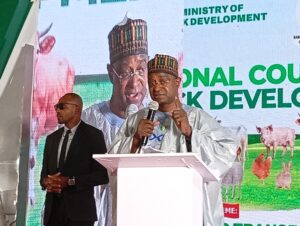
The Minister of Livestock Development, Idi Maiha, made the call on Thursday, November 26, 2026, at the Second National Council on Livestock Development in Lagos.
The meeting, themed “From Rebirth to Transformation: Advancing Livestock Development for National Prosperity”, reviewed developments in the sector over the past two years and examined priorities following the establishment of a dedicated ministry in 2024.
Maiha said the government’s transformation agenda, tagged “Renewed Hope for Hooves, Prosperity for the Nation”, was designed to improve food safety, strengthen livestock businesses, create jobs and promote peaceful coexistence.
He stressed that no single government, ministry or institution could transform the sector without coordinated action.
Government outlines policy and pasture development gains
The minister identified the National Livestock Growth Acceleration Strategy as a major policy framework guiding the ministry’s interventions.
The strategy prioritises feed and fodder development, value-chain transformation, improved animal breeds, animal health, access to finance and greater participation by women and young people.
Maiha also disclosed that eight pasture species had been registered, describing the development as the first of its kind in 48 years.
He said the ministry had further advanced the National Strategy and Action Plan on Animal Genetic Resources to improve livestock productivity across Nigeria’s different climatic conditions and production systems.
The effectiveness of these initiatives will depend on their implementation, availability of resources and adoption by livestock producers across the country.
Dairy production target set at 1.4 million tonnes
On dairy development, Maiha said partnerships with private companies had supported improvements in milk production through better livestock breeds, nutrition, extension services and market access.
Companies involved include Arla Foods, Nestlé, Promasidor, Danone, Ikun Dairy, Cway Dairy, L&Z Integrated Dairies and Integrated Dairies Ltd.
According to the minister, some farms and farmer-supplier groups have recorded daily milk production or aggregation exceeding 6,000 litres.
He said the government was targeting an increase in Nigeria’s annual milk production from approximately 700,000 metric tonnes to 1.4 million metric tonnes within five years.
The proposed increase is expected to reduce dependence on imported dairy products and strengthen domestic food and nutritional security.
However, the minister did not provide a breakdown of current production by state or explain the specific interventions, funding arrangements and monitoring mechanisms required to achieve the target.
States urged to adopt common national standards
Maiha disclosed that 21 states had established dedicated ministries or agencies for livestock development, while 30 states had enrolled in the World Bank-assisted Livestock Productivity and Resilience Support Project (LPRES).
He said the developments reflected growing recognition of livestock as an important contributor to economic growth, food security and peace-building.
Despite the progress, the minister warned that fragmented policies and inconsistent standards could undermine sector-wide development.
He urged federal and state authorities to harmonise approaches to animal identification and traceability, veterinary public health, disease reporting and livestock movement control.
Maiha said states should operate within a common national framework while designing programmes suited to their ecological conditions, cultures, markets and economic strengths.
The call is particularly significant in a sector where livestock movement, animal disease surveillance, access to grazing resources and market regulation often require coordination across state boundaries.
House committee pledges legislative support
The Chairman of the House of Representatives Committee on Livestock Development, Tasir Raji, commended the ministry’s efforts and described its establishment in 2024 as an important step towards making livestock a stronger contributor to employment, economic growth and food security.
Raji said the number of states with dedicated livestock institutions had increased from three to 20 as of August 2026.
His figure differs from the minister’s reference to 21 states, although the two statements may reflect different reporting dates or institutional classifications. The distinction was not explained at the meeting.
The lawmaker pledged the committee’s support for legislative and policy reforms, alongside continued oversight to ensure that government programmes produced tangible benefits.
Veterinary Council calls for measurable results
In his keynote address, the National President of the Veterinary Council of Nigeria, Prof. Matthew Adamu, urged stakeholders to move beyond discussions about the industry’s potential and focus on measurable improvements.
Adamu said the livestock sector had supported millions of livelihoods over the years, supplied animal-source foods and provided raw materials for industries.
However, he noted that the industry had yet to achieve the productivity, competitiveness and industrial development expected of a sector with such economic potential.
He called for clear targets and measurable indicators to assess progress over the next decade, stressing that institutional reforms and investment must translate into practical outcomes.
Implementation remains the key test
Nigeria’s livestock development agenda covers several interconnected priorities, including animal health, dairy production, feed supply, breeding, market access and the regulation of livestock movement.
The figures presented at the council meeting indicate policy activity and growing state-level institutional involvement. However, the long-term impact will depend on whether these initiatives improve productivity, increase farmers’ incomes, strengthen food supply and create sustainable employment.
The proposed doubling of milk production, in particular, will require sustained investment, reliable infrastructure, effective extension services and stronger links between producers and markets.
For the federal and state governments, the challenge is to turn policy commitments into measurable improvements for livestock farmers, businesses and consumers across Nigeria.
Atlantic Reports: Voices. People. Facts.
Written by
Atlantic Reports Admin
Comments
- Be the first to comment.