FG Targets Livestock Sector to Rival Crude Oil as Major Revenue Earner
By Atlantic Reports
The Federal Government has announced plans to reposition Nigeria’s livestock sector as a major source of national revenue, with an ambition to make it competitive with the oil industry.
The Minister of Livestock Development, Dr Idi Mukhtar Maiha, disclosed this on Tuesday at a stakeholders’ engagement in Abeokuta, Ogun State, themed “Raising Livestock, Sustaining Lives”.
Maiha urged Nigerians to invest in livestock production, describing the industry as an emerging economic opportunity with considerable potential for domestic and regional markets.
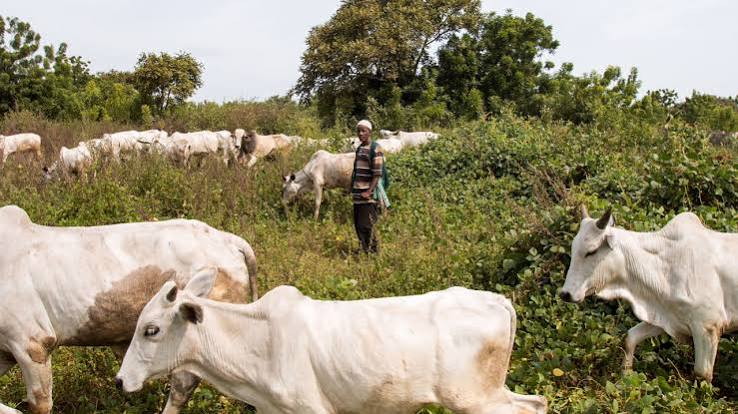
He identified poultry, rabbit farming, piggery, sheep and goat rearing, cattle production and other animal-related businesses as areas capable of attracting investment.
According to the minister, Nigeria’s population, estimated at 245 million, provides a substantial market for meat, milk and other animal products.
“We will organise the livestock sector to rival oil; to rival crude oil. That is our aim,” he said.
Government seeks private-sector investment
Maiha said the government intended to harness the country's animal resources through partnerships with state governments and private investors.
He said a better-organised livestock industry could strengthen food security, create employment and stimulate economic activities in rural communities.
The minister also encouraged farmers and prospective investors to regard livestock production as a commercial enterprise rather than an activity restricted by cultural or ethnic identity.
He maintained that Nigerians could engage in animal production across different parts of the country, provided appropriate production systems and management practices were adopted.
However, achieving the government's ambition will require investment in breeding, animal health, feed production, processing facilities, transportation, storage and access to markets.
Modern farming needed to address farmer-herder conflicts
Addressing recurring conflicts between farmers and herders, Maiha argued that human actions, rather than animals themselves, were responsible for violence.
He called for a shift towards modern livestock production methods, including systems that keep animals within designated facilities instead of allowing uncontrolled movement.
His remarks came as livestock farmers continue to face challenges associated with shrinking grazing areas, climate change and tensions between farming and pastoral communities.
Alhaji Mohammed Labar, Sarkin Fulani of Abeokuta and Chairman of the Miyetti Allah Cattle Breeders Association of Nigeria in the South-West, identified these issues as major obstacles to livestock development.
Labar said the association was sensitising its members to embrace modern production methods.
The transition, however, will require practical support, including access to land, water, veterinary services, affordable feed and investment in livestock infrastructure.
Ogun seeks stronger standards and rural infrastructure
Earlier, Ogun State Governor Dapo Abiodun described the state as a strategic gateway to southern Nigeria and welcomed the engagement as an opportunity for direct interaction between the Federal Government and livestock farmers.
The governor, represented by his Special Adviser on Agriculture and Food Security, Dr Angel Adelaja-Kuye, urged farmers to prioritise biosecurity, traceability and meat quality standards.
These measures, he said, were important for improving the quality and safety of animal products.
The Ogun State Chairman of the All Farmers Association of Nigeria, Mrs Ganiat Kushiimo, called for improved rural access roads to make it easier for farmers to transport livestock and agricultural produce.
She also urged farmers to repay previously disbursed agricultural loans to support the sustainability of agricultural financing schemes.
Ambition requires measurable investment and delivery
The Federal Government's ambition to make livestock a major revenue earner presents an opportunity to diversify Nigeria's economy beyond crude oil.
Yet the sector's potential will depend on more than population size and the availability of animals. Farmers need reliable infrastructure, affordable financing, improved animal health services, processing capacity and secure access to production areas.
The government will also need to demonstrate how its proposed reforms will address longstanding challenges, particularly farmer-herder conflicts, land access, animal disease control and weak value chains.
The stakeholders' engagement brought together livestock farmers, government officials and industry representatives to discuss the sector's development.
Whether livestock can become a major contributor to national revenue will ultimately depend on how effectively policy commitments translate into higher productivity, investment, jobs and sustainable market opportunities.
Atlantic Reports: Voices. People. Facts.
Written by
Atlantic Reports Admin
Comments
- Be the first to comment.