FG Unveils Executive Order to Achieve Open Defecation-Free Nigeria by 2030
By Atlantic Reports
The Federal Government has unveiled the Presidential Executive Order on Open Defecation-Free (ODF) Nigeria by 2030, in a renewed effort to strengthen the legal and institutional framework for ending open defecation nationwide.
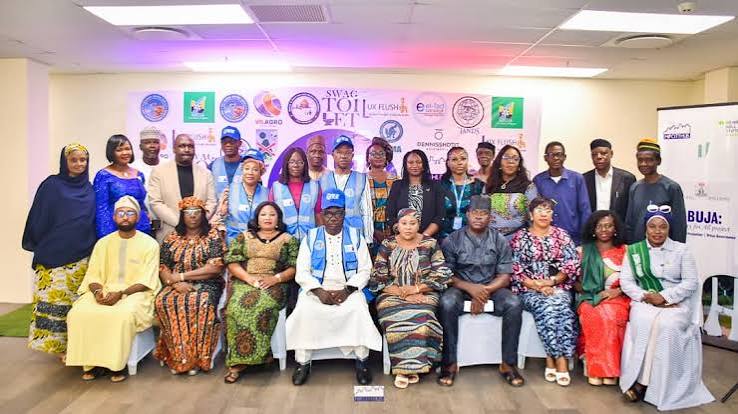
Vice-President Kashim Shettima, represented by the Senior Special Assistant to the President on Delivery and Coordination, Office of the Vice-President, Mr Akubo Adegbe, performed the unveiling in Abuja on Thursday.
The event coincided with the 2026 World Toilet Day and the seventh anniversary of the Clean Nigeria: Use the Toilet Campaign.
Shettima said the executive order, signed by President Bola Tinubu, reaffirmed the Federal Government's commitment to eliminating open defecation and strengthening coordination among governments and other stakeholders.
He disclosed that Nigeria had achieved open defecation-free status in 185 Local Government Areas (LGAs), while Jigawa and Katsina states had attained statewide ODF status since the campaign began in 2019.
However, he acknowledged that considerable challenges remained, given that the country has 774 LGAs.
He stressed the need to accelerate implementation, improve accountability and prevent communities that had attained ODF status from reverting to open defecation.
Government seeks stronger sanitation financing
The Vice-President called for increased sanitation financing, reliable data, stronger institutions, effective service delivery and sustained behavioural change.
He urged state and local governments to take greater ownership of the campaign by providing adequate resources and strengthening institutions responsible for sanitation delivery.
Shettima also called on development partners, traditional rulers, community leaders, civil society organisations and the private sector to sustain their involvement, describing the campaign as a shared national responsibility.
Revised strategy introduces six implementation pillars
Earlier, the Minister of Water Resources and Sanitation, Prof. Joseph Utsev, said the Clean Nigeria campaign had evolved over seven years into a platform for policy coordination, institutional engagement, community mobilisation and performance monitoring.
He said the government had strengthened its implementation framework through the Revised Clean Nigeria Strategy 2025–2030, which is built around six strategic pillars.
They include an enabling environment, partnerships and coordination, public finance, service delivery, advocacy and communication, as well as monitoring, evaluation, learning and accountability.
Utsev also identified the Clean Nigeria Real-Time Monitoring and Information System (CNC-RTMIS) as a major development expected to improve data management, performance tracking and accountability.
According to him, the revised Presidential Executive Order 009, signed by Tinubu following the extension of the national ODF target to 2030, is expected to reinforce stakeholder participation, private sector engagement, monitoring and accountability.
He identified adequate financing, community ownership, sustained behavioural change, multi-sectoral collaboration and reliable data as essential to achieving and maintaining ODF status.
UNICEF urges accelerated action
Also speaking, UNICEF Chief of Water, Sanitation and Hygiene (WASH), Emily Rand, called for stronger efforts to eliminate open defecation.
She urged governments and other stakeholders to improve sanitation financing, planning and coordination.
Rand challenged participants to examine their level of commitment by asking how many lived in ODF local government areas, whether their institutions had dedicated sanitation budgets and how regularly they coordinated with finance and planning departments.
She also highlighted the importance of collaboration with non-governmental organisations, private businesses and other stakeholders.
“We have a big goal before us. We cannot continue doing what we are doing; we really need to accelerate our efforts,” she said.
Rand stressed that access to sanitation was essential for every child, adding that the responsibility extended beyond the present generation.
She further warned that flooding and drought made it necessary for Nigeria to invest in durable and climate-resilient sanitation facilities.
She called for sustainable household sanitation infrastructure as the country intensifies efforts to achieve its 2030 target.
ODF certificates presented to qualifying LGAs
Goodwill messages were delivered by representatives of the Ministry of Youth Development, the Clean Nigeria Campaign WASH Ambassador and the Society for Water and Sanitation (NEWSAN), among others.
Highlights included the presentation of ODF certificates to qualifying local government areas and the decoration of First Ladies as Clean Nigeria Campaign Ambassadors to promote sanitation advocacy and community mobilisation.
The 2026 World Toilet Day was commemorated under the theme, “Sanitation and Gender Equality”.
The challenge beyond the executive order
While the new executive order provides an institutional framework for accelerating Nigeria's sanitation campaign, achieving the 2030 target will depend on effective implementation across federal, state and local governments.
The reported 185 ODF local government areas represent progress, but the scale of the remaining challenge makes sustained investment in household toilets, sanitation infrastructure, public education and monitoring essential.
Equally important will be ensuring that communities which have achieved ODF status can maintain those gains through accessible and sustainable sanitation services.
Atlantic Reports: Voices. People. Facts.
Written by
Atlantic Reports Admin
Comments
- Be the first to comment.