From Ife to Rio: Ooni's Delegation Champions Global Recognition for African Traditional Medicine
By Atlantic Reports
For centuries, Africa's traditional healers have relied on medicinal plants, ancestral knowledge and generations of accumulated wisdom to treat illnesses long before the arrival of modern hospitals.
Now, that knowledge is taking a significant step onto the global scientific stage.
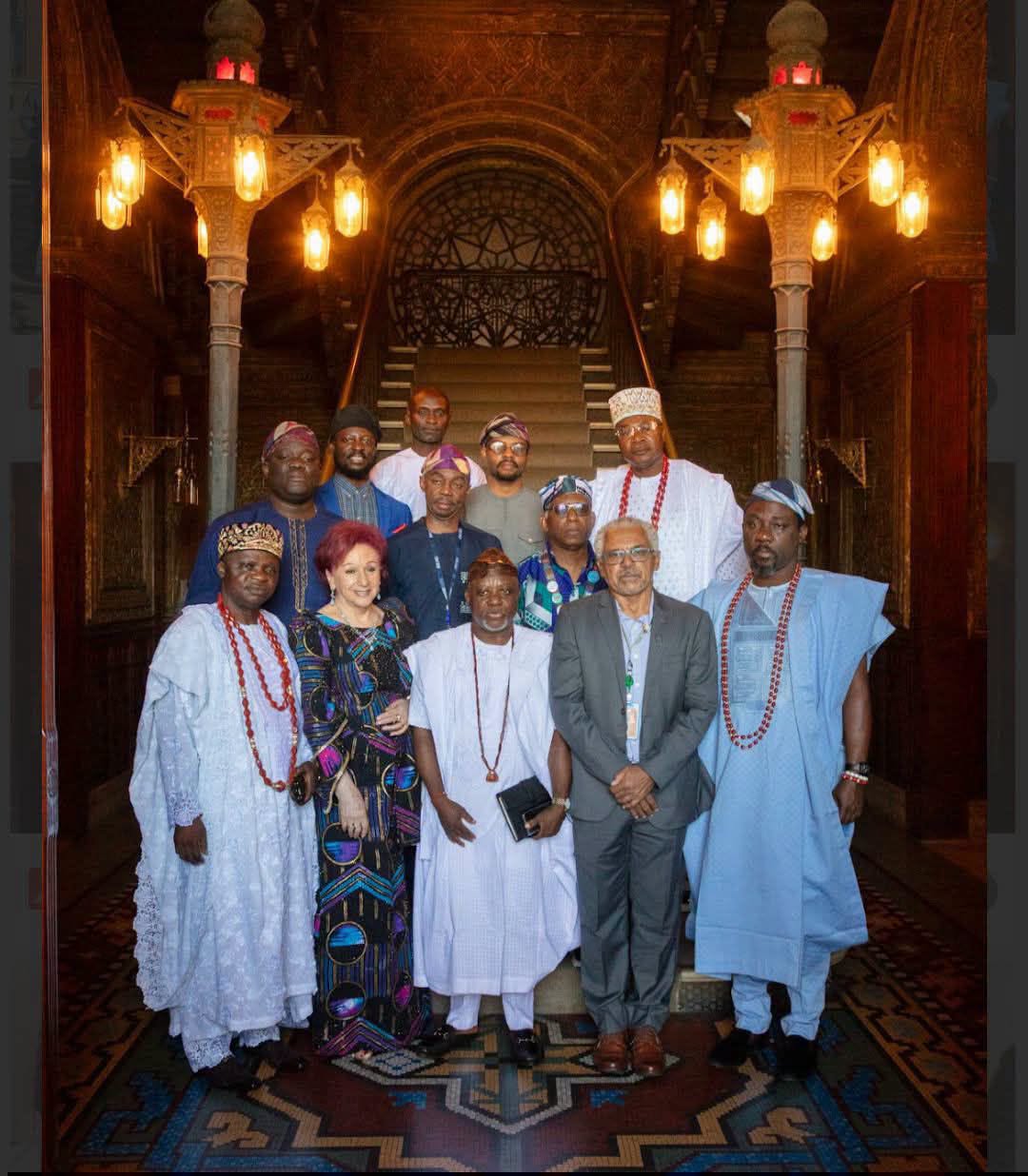
In what many observers describe as a landmark moment for indigenous healthcare, representatives of the Ooni of Ife, His Imperial Majesty Ooni Adeyeye Enitan Ogunwusi, CFR, Ojaja II, joined a high-level Nigerian delegation in Rio de Janeiro, Brazil, to advocate for the global recognition and scientific validation of African traditional medicine.
More importantly, it signals growing international recognition that indigenous knowledge deserves a place alongside modern scientific research.
Where Ancient Knowledge Meets Modern Science
The bilateral meeting brought together an impressive coalition of institutions, including the Federal Government of Nigeria, the Royal Palace of the Ooni of Ife, Afe Babalola University (ABUAD), Harvard University, Brazil's Ministry of Racial Equality, Fiocruz and other research organisations committed to strengthening cooperation between the Global South.
At the heart of the discussions was a simple but transformative idea:
Traditional medicine should not merely survive as cultural heritage—it should be scientifically studied, validated and responsibly integrated into modern healthcare systems.
Representing the Ooni, Otunba Moses Olafare, Director of Media and Public Affairs at the Ooni's Palace, said the proposed partnership must rest on three inseparable pillars:
"Indigenous wisdom, traditional medicinal plants and scientific research.
"Our purpose is not merely to preserve traditional knowledge, but to combine the wisdom safeguarded by our communities over generations with rigorous scientific research capable of validating, improving and responsibly applying that knowledge for the benefit of humanity."
He said such collaboration could transform Africa's biodiversity and indigenous knowledge into safe, effective and evidence-based healthcare innovations that benefit people across the world.
Beyond Herbs: Understanding African Healing Traditions
The Ooni's delegation stressed that African traditional medicine is far more than the use of herbs, roots and medicinal plants.
It is a holistic healthcare system built over centuries through observation, oral tradition, spirituality and community experience.
Within Yoruba civilisation, they noted, healing often combines medicinal plants with prayers, sacred knowledge and cultural practices passed down through generations.
The delegation argued that these intangible dimensions deserve careful documentation and respectful consideration alongside scientific validation as global conversations around traditional medicine continue to evolve.
Scientific Collaboration Already Underway
Discussions also highlighted ongoing international research involving 68 medicinal plants traditionally used in treating diabetes through a collaborative metabolomics project linking researchers in Nigeria, Brazil and Harvard University.
Participants explored expanding the research to include additional therapeutic products with proven medical potential.
Brazil also shared findings from approximately 500 medicinal plants that have already undergone scientific evaluation, creating a valuable foundation for future joint research with Nigerian institutions.
For universities and research centres in both countries, the partnership offers opportunities to translate indigenous knowledge into globally recognised scientific innovation.
A New Partnership for Public Health
Beyond medicinal plants, both countries agreed to cooperate on establishing a Human Milk Bank in Nigeria, drawing on Fiocruz's internationally recognised expertise and technical support from the Pan American Health Organisation/World Health Organisation Collaborating Centre.
The initiative is expected to strengthen maternal and child healthcare while expanding scientific cooperation between both nations.
The partnership will also extend into postgraduate education, technology transfer, joint scientific publications and institutional capacity building.
Nigeria's Research Capacity Takes Centre Stage
Representing Afe Babalola University, Vice-Chancellor Professor Elisabeth Smaranda Olarinde said the university has already moved beyond laboratory research, developing and manufacturing several medicinal products based on scientific investigations.
She described the achievement as evidence that Nigerian institutions possess the expertise to convert indigenous medical knowledge into practical healthcare solutions capable of improving lives.
A Roadmap Towards Global Recognition
One of the meeting's most significant outcomes was the adoption of a detailed implementation timetable.
Participating institutions will immediately validate the resolutions and formalise the existing Letter of Intent before establishing a Joint Working Group in August 2026.
The group will coordinate the drafting of a comprehensive Memorandum of Understanding involving Fiocruz, the Federal Government of Nigeria, the Royal Palace of the Ooni of Ife and Afe Babalola University, with participation from Brazil's Ministries of Health and Racial Equality.
The proposed agreement will cover:
-
Traditional medicine research.
-
Medicinal plant development.
-
Human milk banking.
-
Technology transfer.
-
Academic exchange.
-
Postgraduate training.
-
Joint scientific publications.
-
Institutional collaboration.
The partnership will be presented at the International Savanna Forum and COP31 in Goiânia, Brazil, in September 2026 as a Global South model for addressing health, biodiversity and sustainable development challenges.
Formal signing of the agreement is expected in November 2026, with pilot research projects, certification programmes and academic exchanges scheduled to begin between December 2026 and January 2027.
Why This Matters
For generations, African traditional medicine has served millions of people, particularly in rural communities where medicinal plants and indigenous healers remain an important part of primary healthcare.
Yet much of this knowledge has remained under-researched, undocumented or excluded from mainstream scientific discourse.
The Brazil–Nigeria partnership represents more than a diplomatic agreement.
It is an opportunity to bridge ancestral wisdom and modern science, ensuring that centuries of indigenous knowledge are preserved, rigorously evaluated and responsibly applied for future generations.
Voices. People. Facts.
Written by
Atlantic Reports Admin
Comments
- Be the first to comment.