Gates Foundation Urges African Countries to Link Instant Payment Systems to Boost Cross-Border Trade
By Atlantic Reports
The Gates Foundation has urged African governments and financial regulators to accelerate the integration of national instant payment systems to make cross-border transactions faster, cheaper and more accessible to businesses and individuals.
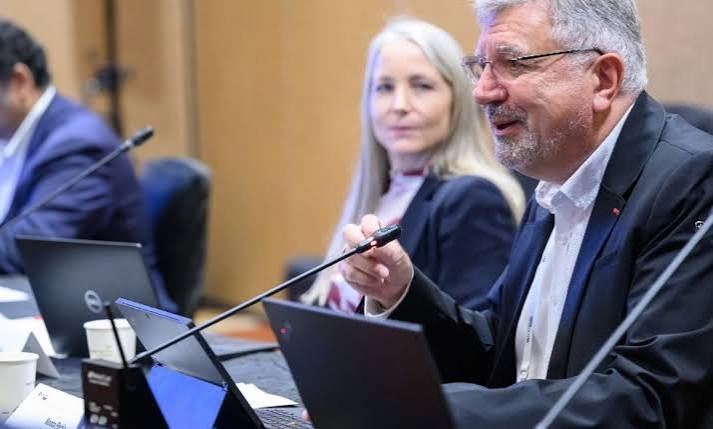
The Director of Economic Opportunity at the Gates Foundation, Enock Chikava, made the call on Thursday at the launch of the 2026 State of Inclusive Instant Payment Systems in Africa Report by the AfricaNenda Foundation in Balaclava, Mauritius.
Delivering the keynote address, Chikava said the growing movement of goods and people across African countries required payment infrastructure capable of supporting seamless financial transactions across national borders.
“Goods and people are beginning to move freely across this continent, and the money must move with them.
“This is the promise of the Africa Continental Free Trade Area, as we all know,” he said.
He argued that connecting national payment platforms would help translate the objectives of the African Continental Free Trade Area (AfCFTA) into practical economic opportunities for businesses, farmers and consumers.
Interoperable payments could reduce trade barriers
Chikava illustrated the potential benefits with the example of a Zambian farmer selling maize to a buyer in Kenya and receiving payment instantly in her local currency.
He said interoperable payment systems, digital identity infrastructure and secure data-sharing arrangements could reduce the cost of transferring money and information while connecting businesses across national borders.
However, he stressed that the value of instant payments should not be measured only by the speed of transactions but also by the economic opportunities they create.
“But being paid instantly is not the end goal. It is the beginning.
“The goal is what this woman, Fatima, does next. Maybe it is to invest in a second stall. Maybe it is to buy cold storage.
“Maybe it is the young people she hires, or the school fees she pays without selling a goat or a cow,” he said.
According to him, digital transaction records could help small businesses establish financial histories, demonstrate their economic activities and improve their chances of accessing loans.
“A payment system is the foundation. It speeds up cash. It builds the financial records that can become a first loan. It lowers the cost of trade. These are the building blocks of income growth and business expansion,” he added.
Agriculture identified as major beneficiary
Chikava identified agriculture as a critical sector for digital financial transformation, arguing that improved access to markets, credit and information could strengthen smallholder farmers' livelihoods.
He said digital public infrastructure could help farmers access financial services and market information, while artificial intelligence could provide guidance on seeds, weather conditions, prices and credit in local languages.
Such services, he noted, could help address information gaps that often limit the productivity and commercial opportunities of small-scale farmers.
He also emphasised the importance of connecting digital payment services to credit facilities, insurance products and wider markets so that farmers and small businesses could use their transaction histories to expand their operations.
AfricaNenda explores digital credit access for farmers
Earlier, the Chief Executive Officer of AfricaNenda, Dr Robert Ochola, said the organisation was exploring ways to use digital payment records to improve access to finance for agricultural producers.
Ochola disclosed that AfricaNenda had begun working with an African university on a pilot project involving cotton farmers, with the aim of using instant payment systems to facilitate access to credit.
He also said the organisation was exploring behavioural credit-scoring models in Rwanda using digital transaction records involving more than two million farmers.
“This is only possible when you have robust digital public infrastructure stack embedded within an IPS,” he said.
Ochola added that digital payment infrastructure could help governments pay community health workers more efficiently and enable small businesses to demonstrate their financial activities to potential lenders.
The initiatives highlight the potential of payment data to support financial inclusion, although their effectiveness will depend on responsible data use, reliable systems and fair access to credit.
Gates Foundation targets inclusive payment systems by 2030
Chikava said Africa's digital transformation required cooperation among governments, central banks, regulators, financial institutions and payment service providers.
He called for payment systems that were affordable, accessible, trusted and interoperable across countries.
“Our shared ambition is that every country in Africa has an inclusive instant payment system live or in development by 2030,” he said.
He maintained that the success of digital financial infrastructure should ultimately be measured by improvements in household incomes, business growth and economic opportunities, particularly for women and underserved communities.
Mauritius calls for stronger continental payment integration
The Governor of the Bank of Mauritius, Dr Priscilla Thakoor, also called for greater connectivity among African payment systems, saying the next phase of digital financial development should focus on regional and continental integration.
In her welcome address, she identified meaningful use of financial services, cross-border connectivity and integration of national systems with regional and continental infrastructure as three priorities.
She said consumers and businesses should be able to make payments reliably, affordably and securely without needing to understand the technical systems supporting the transactions.
“Without that alignment, there is a risk that the fragmentation of our markets will simply be reproduced in digital form,” she said.
Thakoor stressed that effective cross-border payment connectivity required common technical standards, sound governance, reliable settlement arrangements, consumer protection and closer cooperation among regulators.
She identified existing regional and continental platforms, including the Common Market for Eastern and Southern Africa's Regional Payment and Settlement System, the Southern African Development Community's real-time gross settlement system and Afreximbank's Pan-African Payment and Settlement System.
She said these infrastructures should complement one another rather than operate as competing or disconnected platforms.
Experts seek practical results within two to three years
Thakoor called for measurable progress within the next two to three years, including faster and cheaper cross-border payment corridors, greater convergence of technical and regulatory standards and stronger connections between existing payment infrastructures.
She said the ultimate measure of success should be whether individuals and businesses could make payments across African borders with the same confidence and convenience they experienced in domestic transactions.
Her position highlights a major challenge facing Africa's digital economy: establishing systems that can communicate across different regulatory environments, currencies, financial institutions and national infrastructures.
Infrastructure integration must deliver benefits to ordinary Africans
The push to connect instant payment systems comes as African countries seek to expand intra-continental trade under AfCFTA.
While digital payments can reduce transaction delays and improve access to financial services, successful integration will require more than connecting technology platforms.
Countries will need to address differences in financial regulations, exchange-rate arrangements, settlement procedures, cybersecurity standards and consumer protection.
There will also be a need to ensure that rural businesses, informal traders, women-owned enterprises and people without access to conventional banking services are not excluded.
For Africa's smaller businesses and agricultural producers, the real value of payment integration will depend on whether it reduces the cost of doing business, improves access to financing and opens markets beyond national borders.
The 2030 ambition outlined at the conference therefore presents an important test of whether the continent can turn digital financial infrastructure into practical opportunities for inclusive economic growth.
Atlantic Reports: Voices. People. Facts.
Written by
Atlantic Reports Admin
Comments
- Be the first to comment.