Guinea Inaugurates First Gold Refinery as Government Targets Domestic Processing
By Atlantic Reports
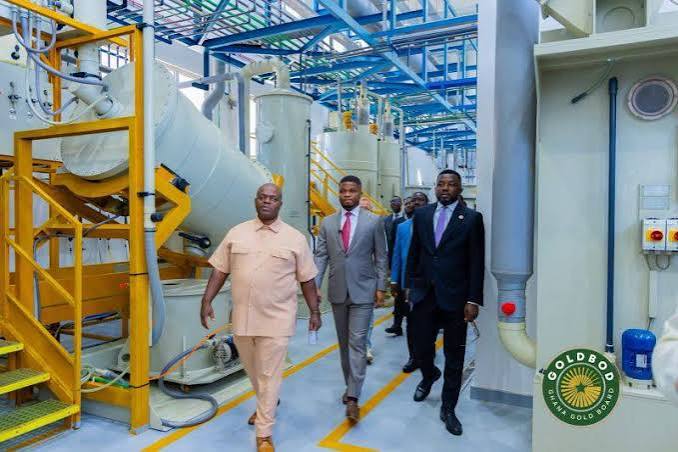
Guinea has inaugurated its first gold refinery in Conakry as the government steps up efforts to process more of the country’s gold domestically and increase the economic value retained from mineral production.
The inauguration comes months after authorities announced a ban on exporting raw gold and introduced a requirement for the mineral to be processed within the country.
Speaking at the ceremony, Minister of Mines and Geology, Bouna Sylla, said Guinea had extracted and exported gold in its raw form for centuries without adequately benefiting from the additional value generated through refining.
He said the government was now targeting domestic processing of 30 per cent of the country's gold production.
Refinery Targets Certified Gold Production
The Conakry facility is designed to process hundreds of tonnes of gold annually and produce certified gold bars bearing the “Made in Guinea” designation.
The government expects domestic refining to strengthen the country's position in the gold value chain, rather than limiting its role to mineral extraction and the export of unprocessed resources.
However, details of the refinery's actual operating capacity, expected output, ownership structure and production timeline were not provided in the announcement.
Guinea Expands State Involvement in Gold Sector
The government is also deepening direct participation in the gold industry through a 50-50 joint venture between state-owned Nimba Mining Company and Australian gold producer Resolute Mining.
The arrangement forms part of broader efforts to increase local participation in the country's mineral sector.
Meanwhile, large-scale commercial gold producers operating in Guinea have been engaged in compliance discussions and transition arrangements with the Ministry of Mines and Geology following the government's policy changes.
Questions Around Implementation and Economic Benefits
The refinery's inauguration marks a new phase in Guinea's efforts to capture more value from its mineral resources. Its long-term impact will depend on whether the facility can operate at commercial scale and whether producers can meet the new domestic processing requirements.
Important details, including how the raw gold export restrictions will be enforced, the arrangements for supplying the refinery and the mechanisms for certifying locally refined gold, will shape the policy's effectiveness.
For Guinea, the central challenge will be translating the new refining capacity into increased domestic value addition, employment, government revenue and wider economic benefits.
Atlantic Reports: Voices. People. Facts.
Written by
Atlantic Reports Admin
Comments
- Be the first to comment.