Guterres Urges Governments to Tax Fossil Fuel Windfall Profits to Fund Climate Recovery
.
By Atlantic Reports
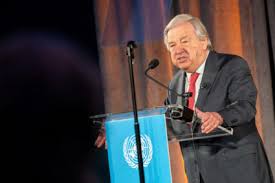
Guterres made the appeal at the COP31 Leaders’ Summit in Antalya, Türkiye, where he warned that the climate crisis was intensifying faster than global efforts to address it.
He said greenhouse gas emissions reached record levels in 2025, while extreme weather events continued to threaten livelihoods, national economies and development gains.
The UN chief warned that exceeding the 1.5-degree Celsius global warming threshold set under the Paris Agreement was now inevitable, although governments could still limit the severity and duration of the overshoot.
“The brutal truth is that the climate crisis is outrunning us,” Guterres declared.
He identified four priorities requiring urgent international action: accelerating the transition away from fossil fuels, protecting vulnerable populations, expanding climate finance and strengthening international cooperation.
Developing Countries Face Climate Financing Gap
Guterres expressed concern over the unequal distribution of global clean-energy investment, noting that developing economies outside China accounted for nearly two-thirds of the world's population but received less than one-fifth of clean-energy investments.
He also highlighted the financial difficulties confronting developing countries, many of which face borrowing costs two to three times higher than those available to wealthier economies.
According to the UN secretary-general, these financing disparities make it harder for vulnerable countries to invest in renewable energy, strengthen infrastructure and prepare for climate-related emergencies.
“We need an extraordinary acceleration,” he said, calling for more ambitious emissions reductions and increased investment in renewable energy.
He urged developed countries to provide at least 300 billion dollars annually in climate finance by 2035 and establish credible plans to increase funding for climate adaptation.
Guterres further insisted that the broader 1.3 trillion dollars climate-financing target must translate into accessible financial resources for developing countries.
Guterres Targets Fossil Fuel Profits
The UN chief made a strong case for making major polluters contribute more towards addressing the consequences of climate change.
He said the nine largest oil companies recorded approximately 95 billion dollars in profits during the previous quarter, while the Loss and Damage Fund had received around 600 million dollars.
“Polluters must pay,” Guterres declared.
He urged governments to introduce taxes on exceptional profits earned by fossil fuel companies and direct the proceeds towards communities experiencing climate-related destruction and economic losses.
The proposed approach is intended to strengthen the financial capacity of vulnerable countries to recover from climate disasters without placing additional pressure on already constrained public budgets.
Guterres also called on multilateral development banks to expand lending, mobilise private-sector investment and introduce financing instruments better suited to the economic circumstances of vulnerable countries.
UN Climate Chief Warns Against Fossil Fuel Dependence
UN Climate Change Executive Secretary Simon Stiell also warned that volatile energy markets and increasingly destructive climate events were contributing to inflation and placing additional pressure on government finances.
“The political costs of fossil fuel dependency are unforgiving,” Stiell said.
He urged world leaders to translate national climate commitments into practical investments capable of improving electricity access, strengthening adaptation measures and making financing more affordable.
His remarks highlighted the economic risks associated with continued dependence on fossil fuels, particularly for countries exposed to international energy price fluctuations and climate-related disruptions.
Implications for Africa and Developing Economies
The financing proposals carry particular significance for African countries facing overlapping challenges, including energy poverty, climate vulnerability, infrastructure deficits and rising debt-servicing costs.
For many developing economies, the challenge extends beyond securing commitments at international climate conferences. It also involves accessing affordable funding, implementing adaptation programmes and ensuring that climate investments deliver measurable benefits to affected communities.
Agriculture, fishing, coastal livelihoods, water resources and public infrastructure remain among the areas exposed to climate-related risks across vulnerable regions.
The proposed Climate Justice Compact therefore places renewed attention on the question of who should bear the financial burden of climate damage and how resources can reach the communities most affected.
COP31, hosted by Türkiye from November 9 to 20, is bringing governments and other stakeholders together for discussions on emissions reductions, climate resilience and the implementation of previous international commitments.
Whether the proposed financing measures translate into enforceable commitments, accessible funding and measurable support for vulnerable communities remains a central issue for the summit.
Atlantic Reports: Voices. People. Facts.
Written by
Atlantic Reports Admin
Comments
- Be the first to comment.