Housing Stakeholders Urge Nigeria to Embrace Local Building Materials to Cut Construction Costs
By Atlantic Reports
Housing sector stakeholders have called on the Federal Government, property developers and investors to increase the use of locally available building materials as part of efforts to reduce construction costs and expand affordable housing delivery in Nigeria.
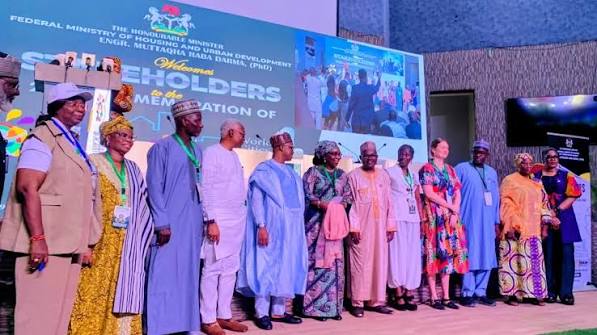
The stakeholders made the appeal on Wednesday at the ninth Affordable Housing Finance and Investment Summit and Expo (AHFIS 9.0) in Abuja.
The summit, themed “Housing is Finance: From Financing to Homeownership”, brought together industry participants to examine financing models, construction methods and strategies for improving access to homeownership.
Speaking during a panel session, Patrick Ogunleye, Assistant Director at the Federal Ministry of Housing and Urban Development, said Nigeria could not achieve affordable housing while depending heavily on imported construction materials.
He argued that developers needed to identify and maximise locally available resources to reduce building expenses, strengthen domestic markets and stimulate economic activity.
“You cannot talk about affordable housing when we are importing everything that we need to build,” he said.
Ogunleye also stressed that housing designs should reflect the needs, preferences and financial circumstances of prospective occupants.
According to him, greater use of indigenous materials would promote sustainability and reduce pressure on construction costs.
“We must look into our indigenous materials; it will build our market, it will promote sustainability, and it will make the economy thrive,” he said.
He cited Jordan and Israel, where limestone is widely used in construction, as examples of countries that have incorporated locally available resources into their building industries.
He encouraged Nigerian developers to adopt similar approaches by exploring materials suited to the country's different geographical and environmental conditions.
Bamboo emerges as alternative construction material
Also speaking, Ezekiel Olakanmi, an architect and founder of Global Bamboo Nigeria, advocated wider adoption of bamboo as an alternative building material.
He said bamboo offered opportunities to support affordable housing, industrial development, environmental sustainability and employment generation.
Olakanmi disclosed that his organisation had spent the past four years promoting bamboo through public education, exhibitions and strategic partnerships.
He described bamboo as a resource with applications beyond construction, including textiles, paper, furniture and household products.
“Bamboo is an industrial zone that can create jobs across textiles, paper, furniture, and houseware, while providing safe and sustainable housing solutions,” he said.
He explained that his organisation had proposed developing a bamboo beach house for resort operators to allow prospective users to experience the material's safety, comfort and durability.
Such demonstration projects, he suggested, could help improve public acceptance of bamboo-based construction.
However, wider adoption would also depend on appropriate engineering standards, treatment methods, building regulations and reliable supply chains to ensure the safety and durability of structures.
Infrastructure must form part of affordable housing plans
Founder and Chief Executive Officer of Pirano Energy, Bola Ogidan, said affordable housing should not be considered solely in terms of the cost of constructing a building.
He identified electricity, water supply and road networks as essential infrastructure that must be incorporated into housing development plans.
Ogidan, whose company provides solar energy solutions to homes and businesses across 25 states, said alternative energy technologies could help reduce the overall cost of making residential properties habitable.
He also questioned whether affordable housing should be measured exclusively by access to private ownership.
According to him, properties initially provided at affordable prices could become inaccessible to other low-income households if subsequent owners resold them at significantly higher prices.
He therefore urged stakeholders to consider housing models capable of preserving affordability beyond the first sale.
His position raises the question of how government and developers can protect the long-term affordability of housing developments while allowing owners reasonable property rights.
Financing remains a major barrier to homeownership
Meanwhile, Ola-Jacobs Ipinmoroti, Vice-President, Business Development and Operations at The Affordable Housing Company Ltd., identified access to affordable financing as a major factor affecting homeownership among low-income earners.
He said his company offered housing units with an initial deposit of ₦3.5 million through a financing arrangement carrying a seven per cent interest rate over four years.
Under the arrangement, prospective homeowners could pay 25 per cent upfront and spread the outstanding balance across the repayment period.
Ipinmoroti also emphasised the importance of cost-efficient architectural designs, effective financial management and strong corporate governance in housing delivery.
He urged developers to adopt building layouts that reduce construction and maintenance expenses, minimise material wastage and make homes more accessible to prospective buyers.
Turning affordability proposals into practical solutions
The discussions at the summit highlighted several interconnected challenges facing Nigeria's housing sector.
Reducing dependence on imported materials could support local industries, but the availability, quality, processing capacity and cost of indigenous alternatives would determine how much they could contribute to affordable construction.
Similarly, innovative materials such as bamboo would require appropriate technical standards, professional certification and regulatory acceptance before they could be adopted widely in residential developments.
Financing also remains central to the challenge. Even where construction costs are reduced, many households may still struggle to meet initial deposits, interest payments and other expenses associated with acquiring property.
The emphasis on infrastructure further underlines the need to measure affordability beyond the purchase price of a house. Access to electricity, water, roads and other essential services can significantly influence the actual cost of living in a housing development.
For Nigeria to expand access to decent homes, stakeholders will need to move beyond discussions and translate these proposals into scalable construction methods, sustainable financing arrangements and developments that remain affordable over time.
Atlantic Reports: Voices. People. Facts.
Written by
Atlantic Reports Admin
Comments
- Be the first to comment.