Hypertension Among Young Nigerians Raises Concern Over Awareness, Screening and Treatment Costs
By Atlantic Reports
For Mr Muhammed Usman-Vulegbo, a civil servant diagnosed with hypertension in his mid-30s, the experience challenged his belief that high blood pressure was a condition associated mainly with old age.
He sought medical attention after experiencing numbness in his hands and legs, which became severe enough to require emergency care.
“My father used to warn me because he had high blood pressure, but I thought it was something that would come in my 50s or 60s. Instead, it came without warning while I was still young.
“We need more awareness because hypertension can affect people even in their late 20s,” he said.
Beyond the shock of the diagnosis, Usman-Vulegbo said managing the condition required regular medication and dietary adjustments, placing additional pressure on his finances.
“It wasn’t just about buying drugs. The doctors also told me what to eat and what to avoid. In this economy, maintaining the recommended diet is another challenge entirely,” he said.
His experience reflects a growing public health concern: the detection and management of hypertension among younger adults, many of whom may not consider themselves at risk.
Research Highlights Hypertension Among Younger Nigerians
Research published in September 2026 in the Bratislava Medical Journal examined eight studies involving 5,455 participants and reported hypertension prevalence estimates ranging from 8.1 to 35.9 per cent.
The review also cited national estimates of 6.8 per cent among Nigerians aged 18 to 30 years and 18.1 per cent among those aged 30 to 39 years.
“National estimates demonstrated a four-to-five-fold increase in hypertension among adults aged 20–39 years between 1995 and 2020,” the researchers stated.
The figures suggest a significant health concern, although variations in study populations, diagnostic thresholds and research methods mean the estimates should not be treated as directly comparable.
A separate study published in May 2025 in BMC Cardiovascular Disorders examined 346 clinical students at the University of Ibadan, with a mean age of 23.9 years.
It found that eight per cent had hypertension, while 33 per cent were classified as having prehypertension under the study's criteria.
Of the 28 students identified with hypertension, only four already knew their status, and none was taking medication.
Another study, published in March 2026, examined 941 sexually active adults aged 18 to 45 years in Ibadan.
Using the American College of Cardiology and American Heart Association classification, the researchers identified 19.9 per cent of participants as having stage one hypertension and nine per cent as having stage two hypertension.
However, the study used a lower threshold for stage one hypertension than the 140/90 millimetres of mercury (mmHg) threshold applied in the World Health Organisation's definition.
Taken together, the studies demonstrate that hypertension is present among younger adults in the populations examined. They also point to gaps in awareness and diagnosis, although they do not establish a nationwide prevalence rate or explain the causes of individual cases.
A Global Health Challenge Often Without Symptoms
The World Health Organisation (WHO) estimates that 1.4 billion adults aged 30 to 79 years were living with hypertension globally in 2024.
Its 2025 fact sheet reported that 44 per cent of adults with the condition were unaware of it, while only 23 per cent had their blood pressure under control.
This lack of awareness is particularly concerning because hypertension often develops without obvious symptoms.
The WHO defines hypertension as blood pressure persistently measuring 140/90 mmHg or higher. Diagnosis generally requires elevated readings on two different days.
Routine blood pressure checks therefore remain important, as people may feel healthy while living with the condition.
Uncontrolled hypertension can damage the heart, brain and kidneys, increasing the risk of stroke, heart disease and kidney failure.
Doctors Warn Against the Belief That Young Age Offers Protection
Health professionals say the assumption that hypertension mainly affects older people may discourage younger adults from undergoing routine medical checks.
Dr Adisa Adams, a consultant cardiologist at the Lagos University Teaching Hospital (LUTH), said he was seeing younger patients with hypertension more frequently in his clinical practice.
“In my earlier years of practice, high blood pressure is mostly an issue of the mature and old folk starting from 50 years, but now we see 28 years to 35-year-old hypertensive patients,” he said.
Adams identified the belief that young people are naturally protected from cardiovascular conditions as one of the challenges affecting early detection.
“The first issue with the younger generation is the false and unwise belief that they are young and thus, do not need to regularly check themselves.
“The second is the fact that they are not taking preventive measures, well as lack of public information and sensitisation about the dangers associated with hypertension,” he said.
He advised adults to undergo medical assessments even when they felt healthy, stressing that the absence of symptoms did not rule out hypertension or other cardiovascular problems.
Similarly, Dr Marvelous Idemudia of the Economic and Financial Crimes Commission Clinic identified unhealthy diets, stress, physical inactivity and poor health habits as concerns among younger adults.
“The increasing prevalence of hypertension and diabetes among young adults should not be ignored.
“Unhealthy diets, stress, sedentary lifestyles, and poor health habits are among the major factors driving this trend,” she said.
Idemudia advised young people to undergo regular blood pressure and blood sugar screening, maintain balanced diets, exercise and get adequate sleep.
Diet, Physical Inactivity and Other Risk Factors
Dr Ukoma ChiKadibia, Vice-President of the Nigerian Cancer Society, also expressed concern about changing dietary habits and reduced physical activity among young people.
“Young people today are no longer eating the traditional foods our parents grew up with.
“They prefer fast foods, shawarma and other processed meals that are heavily loaded with sodium, which puts stress on the heart and increases blood pressure,” he said.
ChiKadibia also raised concerns about prolonged sitting and excessive screen time, which could reduce opportunities for physical activity. He added that late-night internet use could interfere with healthy sleeping patterns.
The WHO identifies excessive salt consumption, unhealthy diets, physical inactivity, tobacco use, excessive alcohol consumption and overweight or obesity as modifiable risk factors for hypertension.
It recommends reducing salt intake, eating more fruits and vegetables, exercising regularly and maintaining a healthy weight.
Adults are advised to undertake at least 150 minutes of moderate-intensity aerobic physical activity each week.
Family history is another important consideration, making routine screening particularly relevant for people whose relatives have hypertension.
However, lifestyle changes alone cannot replace medical assessment or prescribed treatment for people already diagnosed with the condition.
Cost of Treatment Creates Additional Burden
For many patients, the challenge extends beyond discovering their blood pressure status to affording the medication, consultations and dietary changes required for long-term management.
The Advocacy Partnership for Hypertension Financing and Patient Voice (APH-FiP), implemented by the Legislative Initiative for Sustainable Development (LISDEL), with support from the Global Health Advocacy Incubator and in partnership with Resolve to Save Lives, has highlighted gaps in hypertension financing in Nigeria.
According to its factsheet, fewer than five per cent of patients receiving hypertension care at primary healthcare facilities have prepaid health insurance coverage, leaving many to pay out of pocket.
The document estimates that affected households spend between 20 and 55 US dollars or more monthly on care, while 48.2 per cent face a risk of impoverishment.
It also puts minimum annual productivity losses from hypertension and other non-communicable diseases at 400 million US dollars.
The factsheet further states that 0.05 per cent of Nigeria's 2025 health budget was allocated to hypertension, while approximately six per cent of the total health budget went to non-communicable diseases.
Against this background, the partnership recommends timely release of allocated funds, dedicated budget lines for non-communicable diseases and expansion of the WHO HEARTS programme to primary healthcare facilities nationwide.
It estimates that an annual investment of 113 million US dollars over 15 years could avert up to 77,500 deaths during the period.
The figures highlight the financial pressures facing patients and the wider economy, while raising questions about the adequacy of public funding for prevention, diagnosis and long-term treatment.
Primary Healthcare Centres Key to Early Detection
Health professionals say strengthening screening and treatment at the primary healthcare level could help identify more people with hypertension before complications develop.
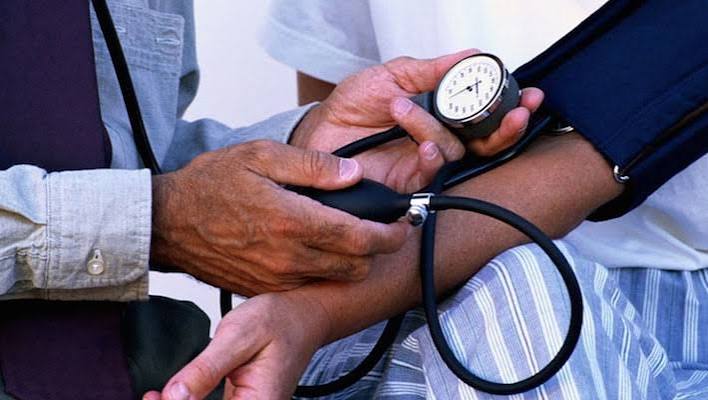
Dr Ifeoluwa Odedina, a public health physician at the University College Hospital (UCH), Ibadan, said primary healthcare facilities could provide accessible blood pressure screening using relatively simple equipment.
“Screening for hypertension at the primary level is very effective.
“It requires only simple tools like a manual blood pressure machine, and most nurses or community health extension workers can be trained on how to use one,” he said.
Odedina attributed low screening uptake partly to the absence of obvious symptoms, which could leave the condition undetected until complications developed.
He urged adults to check their blood pressure regularly and advised those diagnosed with hypertension to attend clinic appointments and take prescribed medication consistently.
He also recommended reducing salt consumption, exercising regularly, avoiding tobacco and limiting alcohol intake.
Prof. Basden Onwubere, former President of the Nigerian Hypertension Society, similarly called for routine blood pressure checks and increased public awareness.
“Young people are now coming down with hypertension which is a disturbing trend compared to the past where older adults in their 50’s and above were affected by the disease.
“We should pay more attention to this because many people in this age group are unaware that they have the condition,” he said.
The Need to Move from Awareness to Action
The experiences of younger Nigerians diagnosed with hypertension, alongside findings from studies conducted in different populations, underline the importance of early detection.
But awareness alone will not be enough. Patients also need affordable medicines, accessible health facilities, consistent medical follow-up and support to manage the condition over time.
For Nigeria, stronger primary healthcare services could provide an important foundation for routine screening and early intervention, particularly among people who rarely seek medical attention because they feel healthy.
The challenge is to ensure that young adults do not wait for a medical emergency before discovering that they have high blood pressure.
Atlantic Reports: Voices. People. Facts.
Written by
Atlantic Reports Admin
Comments
- Be the first to comment.