ICMCA Urges Mediators to Champion Peace, Tackle Religious and Political Conflicts Across Africa
By Atlantic Reports
The Institute of Chartered Mediators and Crabologists of Africa (ICMCA) has called on professional mediators and conflict management practitioners to take a more active role in resolving disputes, particularly within religious institutions, political organisations and communities where disagreements threaten peaceful coexistence.
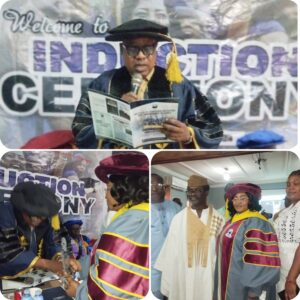
The institute's President and Founder, Prof. Faith Adelana, made the call during its sixth Membership Induction Ceremony and Awards, held in Lagos on Friday.
Adelana urged newly inducted members to demonstrate integrity, impartiality and professional competence while promoting dialogue as an alternative to prolonged litigation, hostility and violence.
The ceremony also featured the investiture of Dr Adebisi Osoba as the institute's Patroness-in-Chief, alongside the presentation of awards recognising members' contributions and achievements.
Religious and Political Disputes Require Early Intervention
Addressing participants, Adelana expressed concern over recurring conflicts within religious organisations and political institutions, warning that unresolved leadership disagreements, rivalries and competing interests could escalate into costly legal battles and violence.
The institute's president maintained that many disputes could be addressed through timely intervention, structured dialogue, negotiation and reconciliation before relationships deteriorate.
Adelana encouraged mediators to engage religious leaders, political actors and community stakeholders in developing peaceful approaches to conflict resolution.
According to the president, professional mediation offers disputing parties an opportunity to communicate their grievances, identify common interests and explore mutually acceptable solutions without necessarily resorting to adversarial legal proceedings.
The institute plans to strengthen its advocacy programmes across its operational zones and countries to promote the wider adoption of alternative dispute resolution mechanisms.
Understanding Human Behaviour Through Crabology
Explaining the philosophy behind the institute, Adelana said personal experience in mediation and conflict management had drawn attention to behavioural patterns that frequently contribute to disagreements.
“As a peace mediator, negotiator and member of the Institute of Mediators and Conciliators of Nigeria, I observed recurring patterns of human behaviour that often fuel conflict,” Adelana said.
The president identified envy, sabotage, unhealthy competition and the tendency to undermine others as behaviours capable of damaging relationships and intensifying disputes.
Adelana explained that these observations informed the development of crabology as an additional approach to understanding interpersonal conflict.
“It became clear that integrating crabology into mediation would provide a stronger framework for understanding and resolving conflicts. That vision gave birth to ICMCA,” the president stated.
Within the institute's framework, crabology examines what it describes as crab-like behavioural tendencies, particularly situations in which individuals attempt to obstruct the progress or achievements of others.
Although the institute presents crabology as a tool for understanding conflict, its effectiveness as a distinct professional or scientific methodology was not independently established in the information presented at the ceremony.
Adelana said the institute had expanded its activities to at least eight countries, reflecting what the president described as growing interest in professional mediation and peacebuilding.
Institute Introduces Compulsory Professional Training
Beyond membership recognition, Adelana announced the introduction of compulsory professional development programmes for fully registered and inducted members.
The programmes include the Professional Foundation Course, Professional Advanced Course and Professional Institutional Course.
According to the institute, the training structure is intended to equip practitioners with practical mediation skills, ethical discipline and the competence required to handle sensitive disputes responsibly.
Adelana emphasised that professional titles must be supported by knowledge, continuous learning and responsible conduct.
The initiative also raises the importance of ensuring that mediators possess the necessary skills to recognise situations involving threats, coercion or criminal conduct, where mediation alone may be inappropriate and formal legal protection is required.
Peacebuilding Must Begin in Communities, Says Lawal
Delivering a lecture at the ceremony, Prof. Olufemi Lawal challenged members to extend their peacebuilding activities beyond formal mediation centres into everyday community settings.
Lawal identified churches, mosques, schools and local communities as important environments where peaceful relationships could be cultivated and disputes addressed constructively.
He urged mediators to demonstrate honesty, integrity, competence, impartiality and respect for human dignity.
“Wherever conflict exists, let your presence contribute to peace rather than escalation,” he said.
His remarks highlighted the importance of preventive peacebuilding, particularly in institutions where unresolved disagreements can affect families, congregations, students and wider communities.
Effective mediation, he suggested, should not merely focus on settling existing disputes but should also encourage communication and mutual respect capable of reducing future tensions.
Osoba Pledges Support for Peace Initiatives
The newly invested Patroness-in-Chief, Dr Adebisi Osoba, pledged to support the institute's efforts to expand its peacebuilding activities and strengthen engagement with religious organisations and other influential groups.
Osoba said she would use her position to facilitate platforms for dialogue and encourage partnerships capable of advancing the institute's objectives.
“I do not take this honour for granted. I accept this responsibility with a strong sense of commitment, and I see this not just as a title but as a call to service, support and partnership,” she said.
She reaffirmed her willingness to contribute to the institute's institutional development and promote its vision of peaceful conflict resolution across Africa.
Her appointment is expected to support the organisation's outreach efforts, although specific programmes, implementation timelines and partnership commitments were not disclosed during the ceremony.
Building Public Confidence in Professional Mediation
The induction ceremony provided an opportunity for ICMCA to reaffirm its ambition to strengthen professional mediation and promote non-violent approaches to resolving disagreements.
As the institute seeks to expand its influence, the credibility of its work will depend on the quality of its training, professional accountability and the measurable outcomes of its interventions.
Clear ethical standards, confidentiality safeguards, impartiality and respect for the rights of disputing parties remain essential to effective mediation.
For communities affected by religious disagreements, political rivalries and interpersonal disputes, access to competent and trustworthy mediators could provide opportunities for resolving tensions before they escalate.
However, mediation cannot replace criminal accountability, judicial protection or appropriate institutional intervention where serious violence, intimidation or abuse is involved.
The institute's challenge will be to translate its advocacy and professional development programmes into practical interventions that strengthen peaceful coexistence while respecting justice, fairness and human dignity.
Atlantic Reports: Voices. People. Facts.
Written by
Atlantic Reports Admin
Comments
- Be the first to comment.