Kaduna Markets Record Drop in Grain Prices as Harvest Season Peaks
By Atlantic Reports
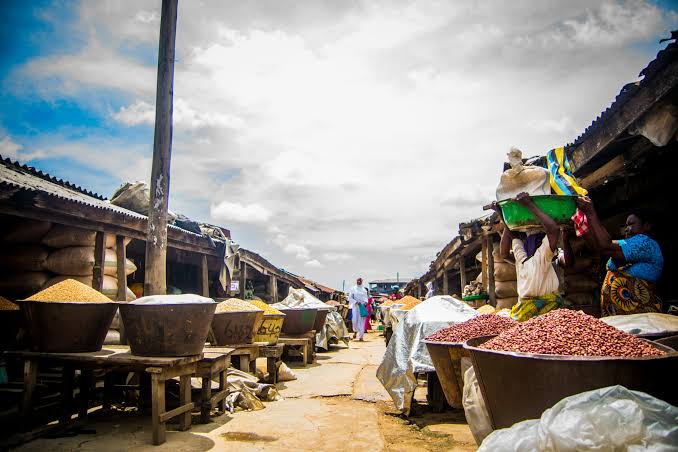
Food prices in parts of Kaduna State have started easing as increased supplies from the ongoing harvest season enter local markets.
A market survey by traders and farmers indicated reductions in the prices of several staple grains, offering some relief to consumers after months of elevated food costs.
The commodities recording price declines include local rice, maize, millet, guinea corn, beans, soya beans, groundnuts and pepper.
Grain prices fall in Kaduna markets
A grain seller in Rigasa, Aminu Abdullahi, said a large measuring bowl of local rice, known as a loka, which sold for ₦1,800 about two months ago, now costs between ₦1,400 and ₦1,600.
He said the same measure of millet and sorghum had dropped from ₦800 to ₦700, while groundnuts declined from ₦1,700 to ₦1,500.
Another trader, Daluta Mika’il, reported a significant reduction in the price of beans.
According to him, a bag of beans that previously sold for ₦120,000 now costs about ₦80,000.
The price movements suggest that increased harvest supplies are beginning to influence market prices, although the extent of the reductions varies across commodities.
Export demand pushes ginger prices higher
Despite the general decline in grain prices, dried ginger has recorded an increase.
A dealer in the commodity, Hauwa Abdullahi, said a bag that sold for between ₦30,000 and ₦40,000 last month now costs between ₦42,000 and ₦45,000.
She attributed the increase to sustained demand from exporters, which has placed upward pressure on prices.
The development highlights how export demand can influence local commodity prices even during periods of increased agricultural supply.
Farmers raise concerns over production costs
While welcoming improved crop yields, farmer Gloria Bulus said rising operational expenses continued to affect profitability.
She explained that maize, millet and beans had recorded better yields following previous weather-related setbacks.
However, the increasing costs of land preparation, chemicals, fertilisers and hired mechanical labour had reduced farmers’ profit margins.
Her concerns suggest that lower market prices do not necessarily translate into improved financial conditions for producers, particularly when the cost of cultivation remains high.
Traders seek security and logistical support
Mika’il appealed to the government to strengthen security and provide logistical support for farmers and traders to improve food supply and maintain price stability across the region.
Such interventions, he said, would help agricultural producers move their commodities to markets and support the wider food distribution system.
Will lower prices continue?
The reductions recorded in Kaduna markets offer some relief to consumers, but sustaining the trend will depend on harvest output, transportation costs, security, storage facilities and the availability of farm inputs.
For farmers, the challenge is to benefit from improved yields without being undermined by rising production expenses. For consumers, the priority remains whether the lower prices will be sustained beyond the peak harvest period.
The latest market movements indicate some easing in grain prices, but a lasting improvement in food affordability will require progress across the entire agricultural value chain.
Atlantic Reports: Voices. People. Facts.
Written by
Atlantic Reports Admin
Comments
- Be the first to comment.