Kaduna Tailor Says Solar Power Doubles Production, Urges Small Businesses to Adopt Renewable Energy
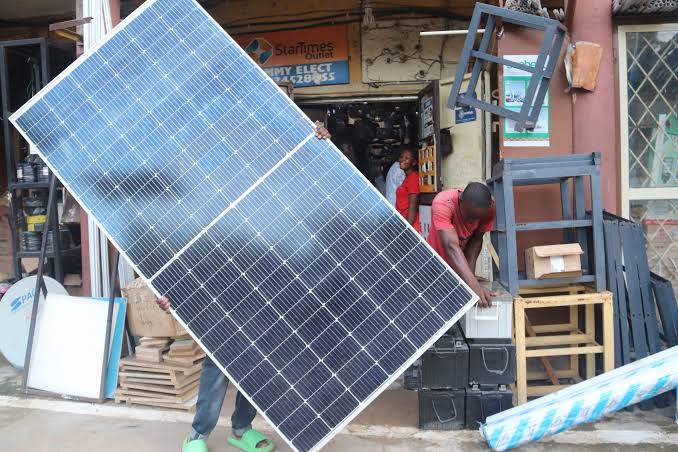
By Atlantic Reports
A 27-year-old fashion designer in Kaduna, Zulkiflu Ibrahim, has encouraged artisans and small business owners to consider solar energy as an alternative power source, saying it can improve productivity and reduce operating expenses.
Ibrahim, who runs a tailoring business with his brother at Kasuwan Barci, said the transition to solar power had enabled the shop to work for longer hours and fulfil more customer orders with fewer interruptions.
He explained that the business previously depended on public electricity and generators, particularly when power supply was unavailable.
According to him, the cost of petrol and generator maintenance placed additional pressure on the business.
Solar power increases production
Ibrahim said the introduction of solar energy had significantly improved the shop’s production capacity.
“Before, we could produce about 10 to 20 hijabs daily, but now we can make as many as 50 because of the improvements we have experienced with solar energy,” he said.
He added that reduced dependence on generators had lowered fuel expenses, allowing the business to operate more efficiently.
The designer also identified a quieter working environment as another benefit of the transition.
He said generator noise had previously affected the shop's working conditions, while the use of solar power had made the environment more comfortable for workers and customers.
High installation costs remain a barrier
Despite the benefits, Ibrahim identified the initial cost of installing solar systems as a major obstacle for small-scale entrepreneurs.
He said many artisans and traders lacked the financial capacity to purchase and install individual solar systems, despite the potential long-term savings.
He therefore called on government to introduce measures that would make renewable energy more affordable for small businesses.
Among his suggestions were subsidised solar installations and centralised solar power facilities that could supply electricity to businesses within markets.
Such arrangements, he said, would allow more traders and artisans to access reliable electricity without bearing the full cost of individual installations.
Weather and battery capacity pose challenges
Ibrahim also acknowledged that solar systems depend on available sunlight, meaning prolonged periods of poor weather could affect battery charging and power availability.
He explained that his shop still maintained access to public electricity through a prepaid meter, which was sometimes used to charge the solar batteries.
His experience highlights both the opportunities and limitations of renewable energy adoption among small businesses.
For many artisans, reliable electricity can determine how long they work, how many orders they complete and how much they spend on daily operations.
However, wider adoption will depend on affordable installation options, adequate battery storage, access to maintenance services and financing arrangements that reflect the financial realities of small enterprises.
Atlantic Reports: Voices. People. Facts.
Written by
Atlantic Reports Admin
Comments
- Be the first to comment.