Kano Poultry Farmers Seek Government Support to Increase Production, Reduce Food Prices
By Atlantic Reports
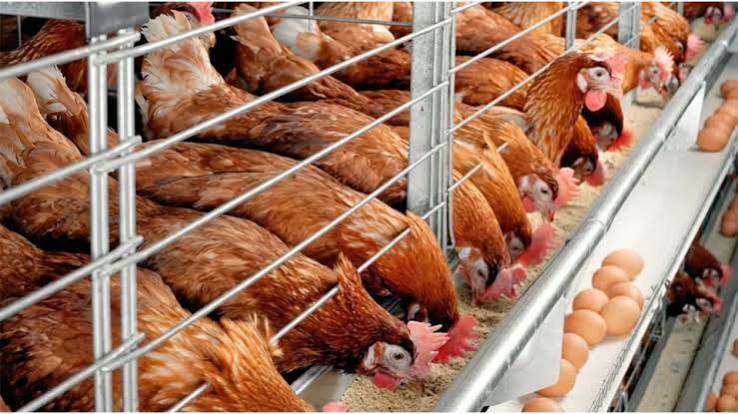
The Kano State Poultry Farmers’ Association has urged federal and state governments to strengthen support for poultry producers to increase output, improve food security and make poultry products more affordable.
The association's Chairman in Kano, Dr Usman Gwarzo, made the appeal on Wednesday at the opening of the Northern Nigeria Poultry Conference and Exhibition in Kano.
The conference, themed “Transforming Poultry Production through Innovation, Biosecurity, Investment and Market Access”, brought together farmers, livestock experts, merchants and other industry stakeholders to discuss challenges affecting the sector.
Gwarzo identified inadequate hatchery capacity as one of the factors contributing to the high cost of day-old chicks in Northern Nigeria.
He said increased investment in hatching facilities would help expand the production of chickens and eggs, potentially improving supply and reducing prices.
According to him, poultry farmers also face insecurity, inadequate slaughterhouses and poor transportation networks, which affect production, processing and the movement of agricultural products.
He called on governments to address these constraints and work with the association to improve supply chains and curb smuggling.
Hatchery shortages and feed costs threaten production
Access to affordable day-old chicks is essential to poultry production, particularly for small and medium-scale farmers who depend on regular supplies to maintain their businesses.
Gwarzo said inadequate hatchery facilities in the region had contributed to the high cost of chicks, increasing the financial burden on producers.
The federal government's livestock development agenda also faces pressure from rising feed costs, limited access to financing and weak market connections.
Dr Muhammad Kamaludden-Bashir, who represented the Minister of Livestock Development, Dr Idi Mukhtar Maiha, acknowledged these challenges at the conference.
He described poultry as one of Nigeria's most organised and commercially viable livestock value chains, while assuring stakeholders that the Federal Government was pursuing measures to strengthen food security and value addition.
However, increased production will depend not only on hatchery expansion but also on access to affordable feed ingredients, veterinary services, reliable electricity, finance and efficient distribution networks.
Kano plans modern hatchery and feed milling programme
The Kano State Government has reaffirmed its commitment to developing the poultry industry through investments in hatchery facilities and small-scale feed production.
The Commissioner for Livestock Development, Dr Isa Aliyu-Isa, who represented Governor Abba Yusuf, said the ministry, established in October 2025, had prioritised improved livestock services and support for commercial enterprises.
He disclosed that the state had empowered 1,000 women involved in poultry production, providing each beneficiary with 50 day-old chicks, a cage, feed, veterinary medicines and ₦5,000.
An additional 600 women, he said, had been scheduled to receive similar support.
The commissioner also announced approval for a small-scale feed milling programme targeting 250 livestock farmers.
He added that the state was working with Kano Invest on plans to establish a major hatchery project to improve the availability of day-old chicks.
The proposed facility could help address one of the supply constraints identified by poultry farmers, although the government did not provide a completion timetable, project cost or expected production capacity.
Processing facility offers market opportunities
Aliyu-Isa also highlighted the Al-Wadi Poultry Processing facility in Kano, which he described as the largest of its kind in Northern Nigeria.
According to him, the facility has the capacity to process approximately 48,000 chicks daily.
The facility could expand processing opportunities and strengthen market access for poultry producers, particularly if farmers can supply it consistently and access reliable distribution channels.
However, its actual contribution to the industry will depend on utilisation levels, supply arrangements, operating costs and the extent to which small-scale farmers can participate in its value chain.
The commissioner assured stakeholders that the state would continue collaborating with poultry associations and local government councils to promote sustainable livestock development and transparent management of empowerment programmes.
Insecurity and infrastructure remain major concerns
Beyond production costs, Gwarzo warned that insecurity in parts of Northern Nigeria was affecting livestock activities and threatening the movement of agricultural products.
He also identified inadequate slaughterhouses and poor transportation networks as obstacles to collecting, processing and preserving poultry-related products across Kano's 44 local government areas.
These constraints can increase operating costs, create losses and limit farmers' ability to reach consumers.
His call for stronger government intervention therefore extends beyond direct financial assistance to investment in infrastructure, security and coordinated market systems.
From government promises to measurable outcomes
The proposals and interventions announced at the conference highlight the growing importance of poultry production to Nigeria's food security and household spending.
However, the impact of the Kano government's programmes will need to be assessed through measurable outcomes, including the number of beneficiaries who remain in business, increases in poultry output, access to affordable feed and changes in the prices of eggs and chicken.
The proposed hatchery project also requires clear information on financing, construction timelines and expected capacity, while the feed milling initiative will need to demonstrate that participating farmers can obtain feed at more affordable rates.
For consumers, increased production will matter most if it translates into more reliable supplies and lower prices. For farmers, sustainable growth will depend on whether government support addresses the structural costs and risks affecting their businesses.
Atlantic Reports: Voices. People. Facts.
Written by
Atlantic Reports Admin
Comments
- Be the first to comment.