Kebbi’s Edible Grasshoppers Turn Seasonal Harvest into Nutrition and Livelihood Opportunities
By Atlantic Reports
As the rainy season gives way to the dry season in Kebbi State, an insect commonly associated with agricultural destruction is creating an unexpected economic opportunity for rural harvesters, women traders and households.
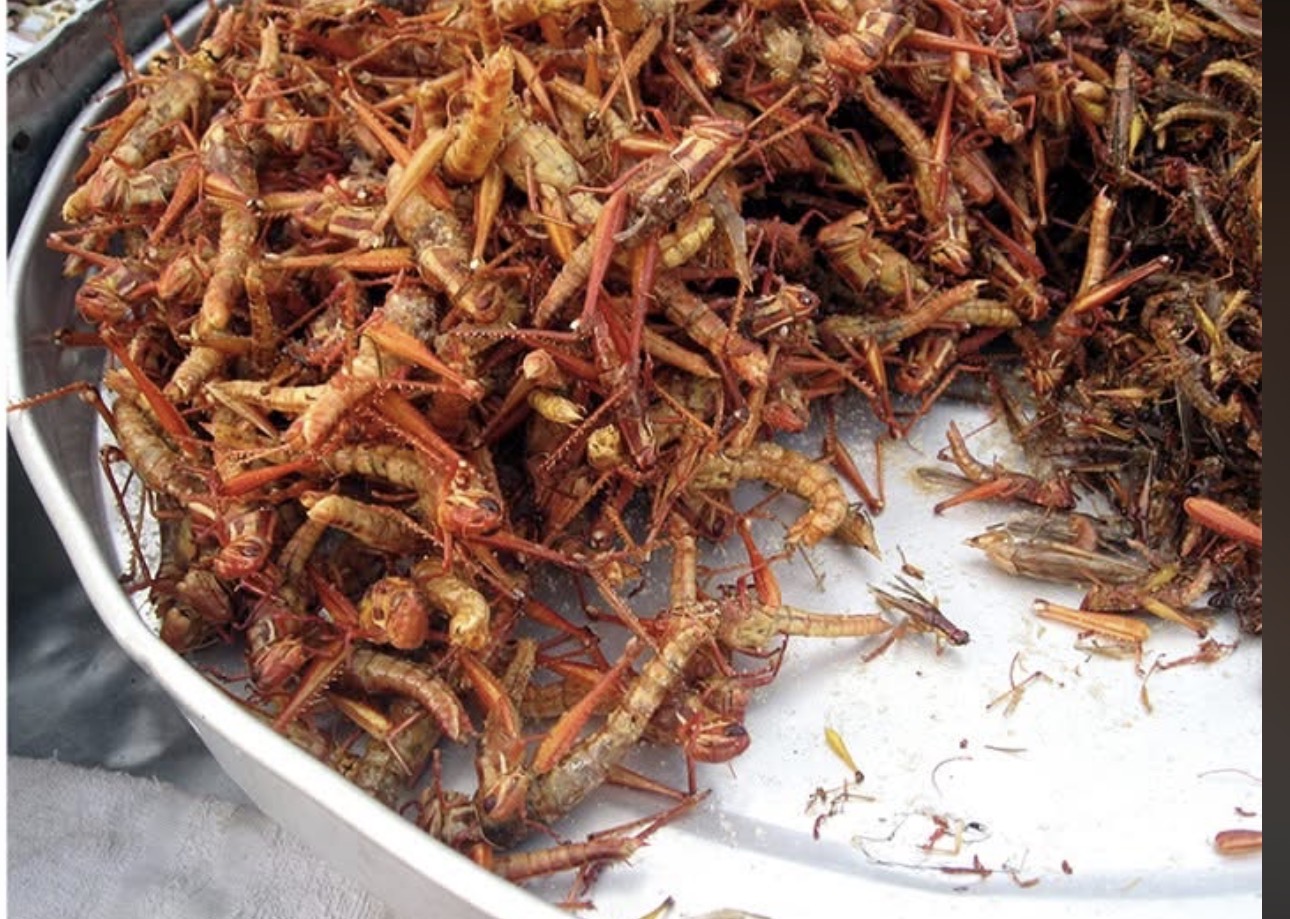
The giant grasshopper, popularly known as Fara in Hausa, is harvested, dried, fried and sold across parts of the state, providing a seasonal source of income and a traditional food delicacy for consumers.
Beyond its commercial appeal, scientific research suggests that some edible grasshopper and locust species contain substantial amounts of protein, minerals and essential amino acids.
For traders in Birnin Kebbi, however, the value of Fara is already evident in the income it generates and the families it helps support.
A seasonal business connecting villages to urban markets
The trade follows a seasonal pattern, with rural residents harvesting and drying the insects before selling them in bulk to traders who travel between villages.
The arrangement resembles the seasonal cashew trade, where village collectors supply produce to commercial buyers for distribution in urban markets.
One trader benefiting from the business is Mrs Safa Umar, who said she began frying Fara in Birnin Kebbi about 10 years ago.
Her roadside stall, located behind the Cabinet Office opposite the stadium, attracts customers who visit at night to purchase dried or freshly fried grasshoppers.
Umar explained that she travels to different villages during the dry season to buy the insects in sacks from residents who harvest and dry them.
She described herself as the first woman to establish the frying business at her location in Birnin Kebbi.
According to her, the enterprise has provided a reliable source of daily income to support her household and care for her children.
The business, however, is seasonal. When the rainy season begins and the insects become scarce, she turns to other small-scale enterprises, including frying masa and bean cakes.
Umar estimated that more than 50 women were now involved in the trade at different roadside locations across Birnin Kebbi.
Women traders seek financial support
Another trader, Mrs Umar Maryam, said she had been selling dried grasshoppers for four years after inheriting the business from her mother.
She recalled accompanying her mother to villages to purchase the insects when she was younger, an experience that introduced her to the trade.
Maryam said inadequate capital remained her biggest challenge, limiting the quantity of grasshoppers she could purchase during the harvesting season.
She appealed for financial assistance that would enable small-scale traders to increase their stock, purchase more produce from rural harvesters and improve their earnings.
Her experience illustrates the importance of affordable financing for women operating seasonal businesses, particularly those dependent on agricultural products with limited availability.
Access to working capital could help traders purchase larger quantities during peak harvesting periods and maintain supplies for longer.
A familiar delicacy for local consumers
Although some people may find the idea of eating insects unusual, Fara is an established delicacy for many residents in parts of northern Nigeria.
Customers purchase it dried or fried, consume it as a snack or incorporate it into household meals.
One consumer, Usman Abdullahi, said his sister introduced him to the delicacy several years ago.
He explained that she used to grind dried grasshoppers into powder and mix it with tea.
After repeatedly purchasing the product for her, he developed a taste for it and began buying it for himself.
Another customer, Shehu Muhammad, said he had eaten Fara since his primary school days.
He described it as a protein-rich food that could be prepared with pepper and onions, eaten as a snack or used as a meat substitute in soups.
Riliwan Rili, another regular customer, said he had patronised the traders for about three years and often purchased fried grasshoppers to take home for his children.
These accounts reflect the place of edible insects in local food culture and the growing market created by consumer demand.
What scientific research says about its nutritional value
The nutritional potential of edible grasshoppers and locusts has attracted scientific attention because some species contain considerable amounts of protein and other nutrients.
A 2022 Nigerian study published in Scientia Africana examined two locust species and two grasshopper species sampled in Kano metropolis.
The researchers recorded protein levels ranging from 53.23 to 67.88 per cent, fat content of 7.55 to 18.77 per cent and carbohydrate levels of 10.71 to 16.01 per cent.
The study also identified essential amino acids, including threonine, valine, methionine and leucine.
These nutrients are associated with body growth, tissue repair, muscle development and other biological functions.
However, the findings relate to the specific species examined in Kano and do not establish the precise nutritional composition of the giant grasshoppers harvested and sold in Kebbi.
Mrs Victoria Bankole, a health worker in Kebbi, said edible locusts could provide protein and dietary fibre as part of a balanced diet.
Providing further insight, Mrs Amina Musa-Gabi, Deputy Provost (Academic) of Kauran Gwandu College of Nursing and Midwifery Sciences, Ambursa, said edible insects contained nutrients that could contribute to human health.
In her paper, titled The Nutritional Value of Giant Locusts (Fara): Their Nutrients and Contributions to the Human Body, she examined the nutritional potential of the insects.
Musa-Gabi explained that edible locusts and grasshoppers could contain proteins, fats, essential amino acids and minerals such as iron, zinc, calcium, phosphorus, magnesium and potassium.
She said these nutrients contribute to blood formation, bone development, muscle function, tissue repair and energy production.
According to her, protein content in many edible locust and grasshopper species ranges between 50 and 65 per cent on a dry-matter basis, although the composition varies according to species, age, environment and processing methods.
She cautioned that further laboratory research was necessary to determine the precise nutritional composition of the brownish giant grasshoppers harvested in Kebbi.
Food security and the search for alternative protein
The potential nutritional contribution of edible insects is particularly relevant to communities facing food insecurity.
The 2024 Nigeria Demographic and Health Survey reported that 66 per cent of the population in the North-West experienced moderate or severe food insecurity, while 37.8 per cent faced severe food insecurity.
Although edible insects cannot independently resolve the region's nutritional challenges, they could contribute to dietary diversity and provide an alternative source of protein.
The Food and Agriculture Organisation (FAO) has documented more than 1,900 edible insect species worldwide, including grasshoppers, locusts and crickets.
The organisation has also highlighted the role of insects in traditional diets, estimating that they supplement the diets of approximately two billion people globally.
Their nutritional composition and availability have made edible insects an area of growing interest in discussions about sustainable food systems.
Food safety and the need for further research
Despite their nutritional potential, experts say edible insects must be harvested, handled and processed safely.
Musa-Gabi warned that grasshoppers collected from farms treated with pesticides could contain harmful chemical residues.
Food safety research has also identified potential risks associated with edible insects, including microbial contamination, pesticide residues and heavy metals.
These hazards can arise during harvesting, transportation, processing and storage.
She therefore recommended that insects intended for consumption should be collected from safe locations, properly identified, thoroughly cleaned and adequately cooked.
She also called for laboratory analysis of Kebbi's Fara to establish its nutritional composition and distinguish local species from those examined in previous studies.
Such research would provide stronger evidence for assessing its nutritional contribution and developing appropriate food safety standards.
From seasonal delicacy to economic opportunity
For the women selling Fara in Birnin Kebbi, the business represents more than a traditional food trade. It provides income, supports household needs and creates a commercial link between rural harvesters and urban consumers.
With improved access to capital, hygienic processing facilities, better storage and reliable market connections, the trade could offer wider opportunities for rural collectors and small-scale entrepreneurs.
The nutritional potential of the insects also presents an opportunity for further research into alternative protein sources and local food systems.
However, unlocking these benefits will require scientific verification, safe processing practices and practical support for the people whose livelihoods depend on the seasonal harvest.
Atlantic Reports: Voices. People. Facts.
Written by
Atlantic Reports Admin
Comments
- Be the first to comment.