Kwara Partners UNFPA to Strengthen Response to Violence Against Women and Girls
By Atlantic Reports
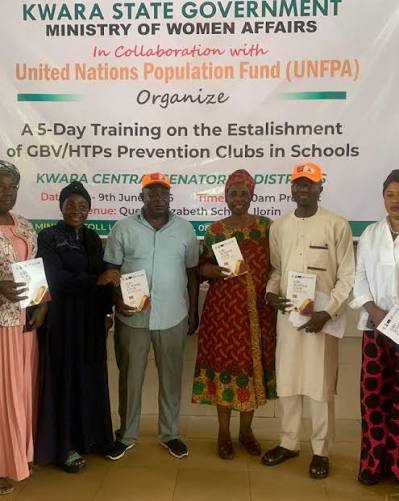
The Kwara State Government has partnered with the United Nations Population Fund (UNFPA) to strengthen its response to gender-based violence (GBV), focusing on technical support, funding and improved services for women and girls.
The Commissioner for Women Affairs, Chief Afolashade Opeyemi, disclosed this on Friday, November 27, during a rally in Ilorin marking the 2026 16 Days of Activism against Gender-Based Violence.
Opeyemi, represented by the ministry's Director of Personnel, Finance and Supply, Alhaji Baba-Rasheed Ubandawaki, said the collaboration was aimed at strengthening the state's response system and promoting accountability for violence against women and girls.
The campaign is being implemented under the European Union-supported Strengthening Access to Reproductive and Adolescent Health (EU-SARAH) initiative.
This year's theme, “Unite to End Violence Against Women and Girls, Ensure Justice, Protect Survivors and End Impunity”, calls for stronger action beyond public awareness campaigns.
Government highlights economic empowerment
The commissioner described violence against women and girls as a widespread human rights violation requiring coordinated action from government institutions, communities and individuals.
She said women in Kwara had increasingly assumed leadership responsibilities in government, public institutions and decision-making positions.
Opeyemi also highlighted the state government's interventions in women's economic empowerment, including grants, vocational training and agricultural support.
According to her, enterprise development initiatives have helped thousands of women improve their economic circumstances and reduce their vulnerability to poverty.
However, the long-term contribution of such programmes to preventing gender-based violence will depend on their reach, sustainability and ability to provide women with meaningful economic independence.
The commissioner said the ministry, working with the European Union, UNFPA and civil society organisations, would extend the campaign to markets, schools, traditional institutions, places of worship and digital platforms across the state.
She also called on traditional rulers, religious leaders, men and boys to participate actively in challenging violence and protecting the dignity of women and girls.
UNFPA calls for action beyond awareness
The UNFPA State Programme Coordinator, Dr Gloria Enueze, said efforts to end gender-based violence required sustained leadership, investment and practical interventions.
Enueze, represented by UNFPA Programme Support Officer Mrs Adedayo Olayinka, stressed that awareness alone could not adequately address the problem.
She noted that nearly one in three women worldwide experienced violence, with consequences for their physical and mental health, personal wellbeing and participation in society.
She also highlighted the difficulties survivors often encounter when seeking assistance, accessing essential services and pursuing justice.
According to her, significant gaps remain between legal commitments and the actual experiences of survivors, while progress in reducing violence has been too slow.
Survivors need healthcare, protection and justice
Enueze said gender-based violence took different forms, including physical, sexual and psychological abuse, reproductive coercion and technology-facilitated violence.
She called for timely access to quality healthcare, psychosocial support, protection and safe referral services for survivors.
She further emphasised the importance of treating survivors with dignity, protecting their privacy and respecting their decisions throughout the process of seeking assistance.
These services are essential because survivors may face multiple barriers, including stigma, financial limitations, fear of retaliation and inadequate access to specialised support.
Implementation will determine impact
The Kwara-UNFPA partnership presents an opportunity to strengthen the state's response to gender-based violence. Its effectiveness, however, will depend on whether commitments translate into accessible and properly funded services.
Key issues include the availability of functional referral centres, trained personnel, affordable medical and psychological care, effective investigations and access to justice.
The government and its partners will also need to demonstrate how funding is allocated, which communities benefit and whether survivors can access support without discrimination or unnecessary delays.
As the 16 Days of Activism campaign continues, the central challenge remains ensuring that women and girls experience meaningful protection beyond public declarations and annual awareness activities.
Ending violence requires more than condemnation. It demands institutions that respond effectively, communities that reject abuse and a justice system that holds perpetrators accountable while protecting survivors.
Atlantic Reports: Voices. People. Facts.
Written by
Atlantic Reports Admin
Comments
- Be the first to comment.