Labour Minister Seeks Stronger FG, States, Private Sector Collaboration to Tackle Unemployment
By Atlantic Reports
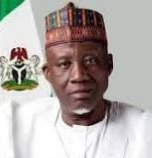
Dingyadi made the call on Saturday in Sokoto at a Citizen Engagement Programme organised by the Federal Ministry of Labour and Employment.
The programme was themed “Renewing Hope, Protecting Workers, Creating Jobs and Building a Resilient Labour Market.”
The minister said the Federal Government remained committed to creating an enabling environment for decent employment, protecting workers' rights, promoting industrial harmony, developing relevant skills and strengthening social dialogue under President Bola Tinubu's Renewed Hope Agenda.
“Policies, programmes and reforms only have meaning when they improve the lives and livelihoods of ordinary Nigerians,” he said.
Ministry Highlights Labour Reforms
Dingyadi identified the review of the National Minimum Wage to ₦70,000, improved industrial relations, skills development, occupational safety and international labour agreements as some of the achievements recorded by the ministry under the present administration.
He said the ministry had continued to rely on dialogue, collective bargaining, mediation and conciliation to resolve labour disputes and prevent prolonged industrial actions.
According to him, the ministry had worked closely with the Nigeria Labour Congress (NLC), Trade Union Congress (TUC), employers' organisations and other stakeholders to address disagreements before they escalated into industrial crises.
“We have worked closely with the Nigeria Labour Congress (NLC), Trade Union Congress (TUC), employers' organisations and other stakeholders to prevent disputes from escalating into prolonged industrial actions,” he said.
FG Engages Health Sector Unions
The minister disclosed that the ministry was undertaking Collective Bargaining Agreements with health sector unions.
He also revealed that it recently signed a Memorandum of Understanding with the NLC to extend some palliatives to civil servants to cushion the effects of rising transportation costs.
On international labour cooperation, Dingyadi said Nigeria had signed bilateral labour agreements with Saudi Arabia and Qatar to promote safe labour migration and protect Nigerians seeking employment opportunities abroad.
Minister Advocates Skills Development for Youths
Dingyadi emphasised the need to harness Nigeria's human and natural resources, particularly its youthful population, through vocational training, entrepreneurship, digital literacy and other employment-generating initiatives.
He maintained that stronger cooperation among public and private sector stakeholders, technical and financial assistance organisations, and labour partners was essential to reducing unemployment.
“The cooperation of public and private sector stakeholders, technical and financial assistance organisations, and the social partners is very germane in scaling down the current unemployment challenges,” he said.
Sokoto Governor Seeks More Employment Opportunities
In his remarks, Sokoto State Governor, Ahmed Aliyu, called for deeper cooperation between the Federal Government and the state to expand employment opportunities, strengthen vocational training and improve workers' welfare.
Aliyu said his administration remained committed to human capital development, youth and women empowerment, support for small and medium-scale enterprises and the promotion of productive economic activities.
“We recognise that government cannot provide all the jobs required by our growing population through direct public-sector employment alone,” he said.
The governor stressed the importance of private-sector investment, agricultural value chains, entrepreneurship and vocational training in creating sustainable employment.
He also called for stronger workers' protection through fair wages, occupational safety, social security and respect for labour rights.
Aliyu urged employers and organised labour to sustain constructive engagement to promote industrial harmony.
He further appealed to the Federal Ministry of Labour and Employment to consider the specific employment and skills development needs of Sokoto State and the wider North-West region when designing national interventions.
Ministry Seeks Citizens' Input on Labour Policies
Earlier, the Permanent Secretary of the ministry, Mr Kamil Shoretire, said the engagement was designed to strengthen citizens' participation in policy formulation, implementation, monitoring and evaluation.
Shoretire explained that the programme would enable the government to better understand employment and labour-related challenges affecting young people, women, workers, employers and vulnerable groups.
He urged participants to make constructive contributions, identify gaps in existing government interventions and propose practical solutions.
He assured them that recommendations from the engagement would receive attention within the appropriate policy and institutional frameworks.
The discussions highlight the importance of coordinated action between government, employers and organised labour. However, the success of employment policies will ultimately depend on the number of sustainable jobs created, effective enforcement of workers' rights and improved access to skills and economic opportunities.
Atlantic Reports: Voices. People. Facts.
Written by
Atlantic Reports Admin
Comments
- Be the first to comment.