Lagos Residents Demand Stricter Sanitation Enforcement, Better Waste Disposal
By Atlantic Reports
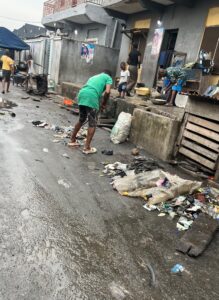
Residents and traders in Apapa, Mushin and Ogba have raised concerns over blocked drainage channels, overflowing refuse collection points and inadequate public waste disposal facilities during the October environmental sanitation exercise.
Their concerns point to a gap between community efforts to keep neighbourhoods clean and the public infrastructure and services required to sustain those efforts.
Apapa residents raise concerns over waste collection
On Apapa Road, residents identified rising waste collection charges and delays in refuse evacuation as major challenges.
Ms Yagazierem Igwe said occupants of her building contributed monthly towards cleaning their surroundings, while traders in a nearby market also funded regular sanitation activities before commencing business each month.
However, she expressed concern that accumulated refuse and delayed evacuation had resulted in unpleasant odours.
Igwe said she had not seen Lagos State Waste Management Authority (LAWMA) Private Sector Participation (PSP) operators in her area for more than two years.
She urged the authorities to deploy waste evacuation vehicles during community sanitation exercises so that collected refuse would not remain on the streets.
Another resident, Mrs Kafayat Adeyemi, said residents participated in monthly sanitation activities but needed more public waste bins, particularly around bus stops.
She blamed some commuters for discarding empty containers and other waste along the roads.
A trader around Apapa Market, Mrs Aramide Adeniyi, said she cleaned the area around her shop daily and depended on LAWMA PSP operators for waste collection.
According to her, the operators visited her area about twice a month. When they failed to come, she sometimes relied on cart pushers to remove the refuse.
She expressed hope that more residents would take part in environmental sanitation activities.
Blocked drains increase flooding concerns
Mrs Roseline Ogbuagu, another Apapa Road resident, said occupants of her building organised monthly cleaning exercises and employed a cleaner twice weekly.
She, however, raised concerns about a blocked drainage channel outside her compound, attributing the problem partly to the dumping of plastic cups and other waste.
Ogbuagu said she spent more than two hours clearing the drainage during Saturday’s exercise, while some nearby shop operators repeatedly declined invitations to participate.
She also alleged that construction activities had obstructed an earlier drainage passage, worsening the blockage and increasing the risk of flooding.
She called on authorities to engage shop operators in drainage maintenance and provide broader support for community sanitation efforts.
On Jones Street, Apapa, Mr Bayo Olowu said monthly sanitation activities took place between 6:30 a.m. and 8:30 a.m. on the last Saturday of each month.
He said he encouraged residents to participate, while PSP operators evacuated the refuse collected during the exercise.
Olowu added that refuse evacuation provided through the local government was free and that markets held separate sanitation exercises on Thursdays.
While commending the council chairman for providing evacuation vehicles, he called for stricter enforcement of sanitation regulations, noting that some residents continued moving around and engaging in other activities during designated sanitation hours.
Mushin residents seek regular evacuation and drainage repairs
In Rasaki and Adeoye streets, Mushin, residents identified irregular waste collection, inadequate disposal facilities and poor drainage as persistent environmental problems.
Mr Godwin Anyaka, an Adeoye Street resident, said residents participated in weekly sanitation exercises between 6:30 a.m. and 8:00 a.m.
He estimated participation at between 60 and 70 per cent, although some residents occasionally failed to take part.
Anyaka identified irregular sewage and refuse disposal as major concerns, claiming that some households evacuated their waste only once every three months.
He urged the government to improve drainage channels and sewage systems, warning that indiscriminate waste disposal could worsen flooding.
On Rasaki Street, Mr Oluchi Ubai said occupants of his compound worked together to maintain a clean environment, carrying out sanitation activities every Saturday, irrespective of government-designated periods.
Another resident, Mr Tochukwu Onyiuke, said residents participated in monthly government-directed sanitation exercises and also cleaned their surroundings every Thursday and Saturday.
He identified inadequate waste disposal facilities as a major problem, explaining that designated collection points filled up quickly when refuse was not evacuated regularly.
According to him, overflowing waste encouraged indiscriminate dumping, while dirty and waterlogged streets affected businesses and attracted flies and mosquitoes.
Onyiuke called for larger waste containers at commercial junctions, more regular refuse evacuation and the reconstruction and widening of major drainage channels to improve water flow and reduce flooding.
Heat and electricity challenges affect participation
On College Road, Ogba, outdoor activities appeared limited during the exercise, with relatively few vehicles passing along the road.
Mr Akala Anaba, who was walking around Estate Bus Stop, attributed some residents’ reluctance to participate in manual sanitation to the hot weather.
He said cleaning gutters and surroundings in the heat was uncomfortable, particularly for residents without electricity to power fans at home.
“I cannot imagine myself cleaning gutters and the surroundings while sweating, only to return home and continue suffering from the heat.
“There is no electricity to power a fan and provide some relief. The weather is just not favourable for this exercise,” he said.
Anaba expressed hope that improved weather conditions would encourage greater participation.
Waste management requires more than community clean-ups
Across the locations, sanitation activities reflected varying levels of public participation, while sanitation officers monitored compliance and encouraged residents and traders to take part.
The concerns raised by residents suggest that regular community cleaning alone cannot resolve the city's waste management challenges.
Effective sanitation also depends on reliable refuse evacuation, accessible disposal facilities, functional drainage systems and consistent enforcement of environmental regulations.
The complaints about irregular collection and blocked drains also raise questions about service coverage, the frequency of waste evacuation and the coordination between local authorities, waste operators, businesses and residents.
For Lagos communities, sustained improvements will require public participation to be matched by dependable waste management services and infrastructure capable of preventing refuse accumulation and reducing flood risks.
Atlantic Reports: Voices. People. Facts.
Written by
Atlantic Reports Admin
Comments
- Be the first to comment.