Lagos Sets $1 Trillion Economic Ambition for 2052, Sanwo-Olu Says
By Atlantic Reports
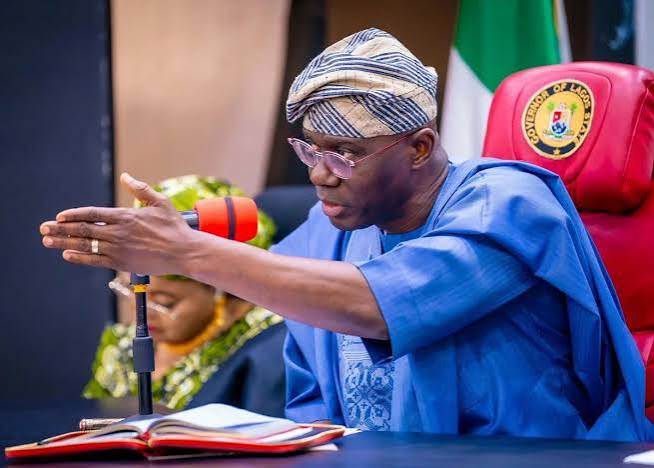
Lagos State Governor, Babajide Sanwo-Olu, has announced an ambitious economic target of between $800 billion and $1 trillion by 2052, saying the state intends to strengthen its position as a major centre for production, trade and exports.
Sanwo-Olu, represented by the Secretary to the State Government, Abimbola Salu-Hundeyin, announced the target on Sunday at the closing ceremony of the 40th Lagos International Trade Fair.
He said the government was working to move Lagos beyond its traditional role as a major commercial centre by expanding manufacturing, promoting value addition and supporting locally produced goods to compete in African and international markets.
Government identifies manufacturing and infrastructure as priorities
The governor said the state planned to support businesses through improved infrastructure, access to affordable finance and a more predictable business environment.
He cited the Lagos State Industrial Policy 2025–2030 and the ₦10 billion Micro Enterprise Cooperative financing arrangement as part of the government's efforts to strengthen enterprise development.
He also identified transportation, electricity reforms and other infrastructure investments as important to improving business productivity.
Sanwo-Olu described Lagos's performance in the 2025 Presidential Enabling Business Environment Council Subnational Ease of Doing Business assessment as encouraging, but acknowledged that further improvements were necessary.
He urged businesses to take advantage of the African Continental Free Trade Area (AfCFTA), noting that access to the continental market would depend on competitive products, reliable infrastructure, affordable finance and stronger business partnerships.
Lagos reports MSME training and investment commitments
The Commissioner for Commerce, Cooperatives, Trade and Investment, Folashade Ambrose-Medebem, said more than 50,000 participants, thousands of exhibitors and business delegations from over 20 countries attended the 10-day trade fair.
She disclosed that more than 2,000 Lagos-based micro, small and medium-sized enterprises had received training in export readiness and market access through partnerships with Afreximbank and other organisations.
The commissioner also announced plans to lead local businesses to China through the state's Export Readiness Programme to explore international markets and establish partnerships.
She said Lagos attracted more than ₦1 trillion in investments in 2025, with commitments spanning technology, healthcare, logistics and port operations.
However, the figure was presented as investment attracted, with no breakdown provided at the event to distinguish completed investments from commitments or indicate the amounts already deployed.
Lagos prepares for 2027 African trade fair
The commissioner announced that Lagos would host the Intra-African Trade Fair from November 5 to 11, 2027.
The event is projected to attract more than 100,000 visitors and 2,500 exhibitors from over 100 countries, with an estimated $50 billion in trade and investment deals.
These figures represent expectations rather than confirmed outcomes.
Ambrose-Medebem said the state was investing in transport and trade infrastructure, including the Blue and Red rail lines, road expansion, Lekki Deep Sea Port and Lekki Free Zone.
She also said Lagos contributed 30 per cent of Nigeria's Gross Domestic Product in the first half of 2024, citing the Lagos State Economic Development Update.
The challenge of turning ambition into measurable growth
The $800 billion to $1 trillion target places manufacturing, exports and investment at the centre of Lagos's long-term economic ambitions.
Achieving it, however, will require more than trade fairs and investment announcements. Businesses will need reliable electricity, efficient transport, access to affordable credit, predictable regulation and infrastructure that reduces the cost of production.
The impact of the state's programmes will also depend on whether smaller businesses can access financing and expand beyond local markets.
For Lagos residents, the ultimate measure of progress will be whether economic growth translates into more productive jobs, stronger household incomes, better opportunities for small businesses and improved living conditions.
Atlantic Reports: Voices. People. Facts.
Written by
Atlantic Reports Admin
Comments
- Be the first to comment.