LAWMA Sets 60-Day Deadline to Clear Illegal Dumpsites Across Lagos
By Atlantic Reports
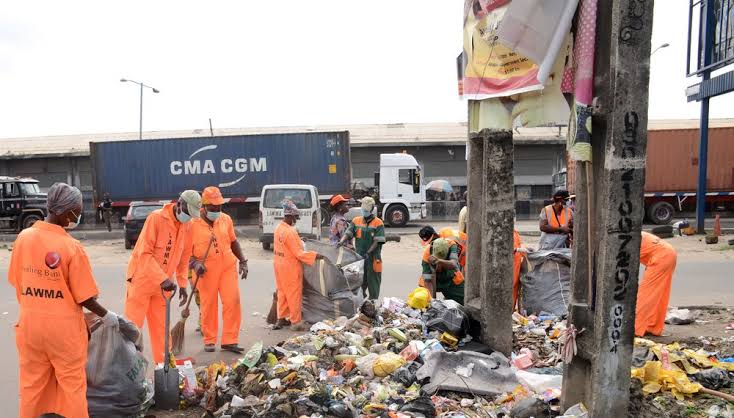
The Lagos Waste Management Authority (LAWMA) has announced a 60-day waste management operation aimed at clearing illegal dumpsites and persistent refuse accumulation points across Lagos State.
The exercise, scheduled to begin on 23 November, is part of a broader effort to improve waste collection, strengthen service delivery and restore public confidence in the state's sanitation system.
LAWMA's Acting Managing Director, Olajuwon Akinyemi, announced the initiative during an interview with journalists in Lagos on Friday.
He said the authority was adopting a new operational approach focused on resilience, improved coordination and closer engagement with residents.
Akinyemi disclosed that Lagos generates between 13,000 and 14,000 metric tonnes of waste daily, a volume he described as a major challenge for a densely populated state with limited available land for waste disposal.
He appealed to residents to cooperate with the authority by disposing of refuse properly and adopting household waste separation.
“We cannot do it alone. We are soliciting for the cooperation of Lagosians,” he said.
LAWMA targets illegal dumpsites and waste black spots
Akinyemi said the authority had secured the cooperation of its workforce and would immediately intensify efforts to remove refuse from illegal dumpsites and identified waste black spots.
He expressed confidence that residents would notice significant improvements before the Christmas festivities.
However, the success of the 60-day programme will depend on the authority's ability to sustain waste evacuation after the initial clearance, particularly in communities where refuse accumulates repeatedly.
Effective enforcement against illegal dumping and reliable household collection will also be important in preventing cleared locations from becoming dumpsites again.
Ten regional operational hubs planned
As part of efforts to decentralise waste management, LAWMA is planning to establish approximately 10 regional operational hubs across the state.
According to Akinyemi, the proposed centres will have offices and regional heads responsible for addressing waste collection and evacuation challenges within their respective areas.
Locations identified for stronger operational presence include Ojo, Amuwo-Odofin, Badagry, Ejigbo, Ijede and Alimosho.
He said the arrangement would improve supervision, coordination and response times when waste management problems arise.
The authority also plans to work with the Lagos State Government, local councils and Private Sector Participants (PSPs) to implement the changes.
Rising operational costs affect waste collection
Akinyemi acknowledged concerns about the performance of private waste collection operators, particularly disagreements surrounding collection tariffs.
He said the rising costs of specialised waste trucks and diesel had increased the financial burden on operators.
According to him, specialised waste collection trucks that previously cost between ₦5 million and ₦10 million now cost between ₦18 million and ₦19 million.
He also put diesel prices at between ₦1,800 and ₦2,000 per litre, adding that the increase had raised the cost of maintaining collection services.
Akinyemi urged residents to recognise the financial requirements of waste collection and support reasonable tariffs that would allow operators to sustain their investments.
He said LAWMA would engage community development associations, market women associations and local governments to improve public understanding and address concerns.
However, the authority will need to ensure that any tariff adjustments are transparent, justified and accompanied by reliable collection services.
Government invests in waste processing infrastructure
LAWMA's Executive Director of Finance, Kunle Adebiyi, said the state government was investing in infrastructure to move Lagos from a traditional linear waste disposal system towards a circular economy.
He disclosed that two transfer loading stations were being developed at Olusosun and Solous III following their groundbreaking ceremonies.
The facilities are expected to be completed before the end of 2027, according to Adebiyi.
He also identified Agbowa-Ikosi and Erekiti as proposed locations for material recovery facilities designed to process waste transferred from the loading stations.
Such facilities are intended to support the recovery and reuse of materials that would otherwise be discarded, reducing pressure on landfill sites while creating opportunities for economic activity.
Adebiyi added that the state government had promised to provide additional waste collection trucks before the end of 2026 to improve evacuation capacity.
The proposed infrastructure will be important in determining whether Lagos can move beyond routine refuse clearance towards a more sustainable waste management system.
Operations department tasked with restoring public confidence
LAWMA's Acting Executive Director of Operations, Dr Olorunwa Tijani, said the department had received instructions to restore public confidence in the state's waste management system within 60 days.
He said the directive came from Governor Babajide Sanwo-Olu through the Commissioner for the Environment and Water Resources and the authority's acting managing director.
Tijani assured residents that LAWMA's management and workforce would intensify field operations to achieve visible improvements.
He said the authority was committed to implementing the governor's directive and strengthening the state's waste management system.
Delivery will matter more than promises
The 60-day operation presents LAWMA with an immediate opportunity to address visible sanitation problems across Lagos. But clearing existing dumpsites is only one part of the challenge.
The longer-term test will be whether the authority can maintain regular refuse collection, improve the performance of private operators, enforce proper disposal practices and deliver the promised infrastructure.
Residents will also need clear information about collection schedules, tariffs and channels for reporting service failures.
With Lagos generating an estimated 13,000 to 14,000 metric tonnes of waste daily, lasting improvements will require consistent investment, effective supervision and cooperation between government, operators, businesses and households.
The real measure of the initiative will be whether cleaner streets and more reliable waste services remain visible after the 60-day deadline.
Atlantic Reports: Voices. People. Facts.
Written by
Atlantic Reports Admin
Comments
- Be the first to comment.