LAWMA Targets 2,000 Waste Marshals to Strengthen Lagos Environmental Enforcement
By Atlantic Reports
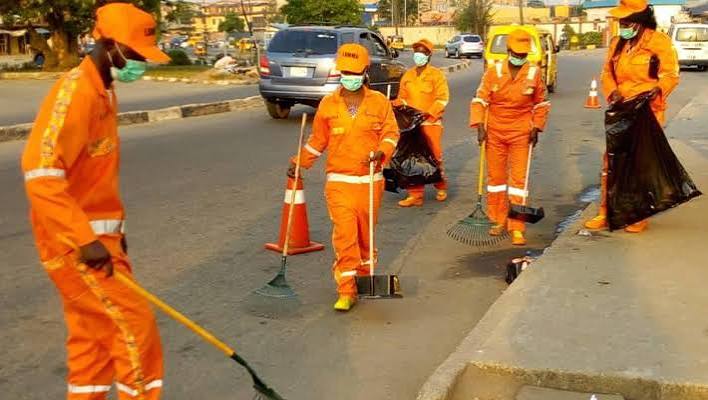
The Lagos Waste Management Authority (LAWMA) says it is strengthening its enforcement capacity and waste collection operations under the state government’s 60-day “Reclaim Lagos” initiative, with plans to deploy up to 2,000 waste marshals across strategic locations.
The Acting Managing Director and Chief Executive Officer of LAWMA, Olawale Akinyemi, disclosed this during an interview with journalists in Mushin on Friday night, November 27.
He said the proposed personnel would be deployed along major roads and other strategic locations to discourage improper waste disposal and help maintain areas cleared during the exercise.
The initiative combines enforcement, public sensitisation and improved waste collection, with the stated objective of restoring Lagos’ environmental standards.
Waste policing and public responsibility
Akinyemi said Mushin was selected for the campaign because of its historical and strategic significance to Lagos. He added that the exercise would also encourage residents to recognise their responsibilities in keeping their communities clean.
He described waste management as a shared responsibility involving residents, Private Sector Participation (PSP) operators, local governments and relevant government agencies.
However, he identified weaknesses in waste collection, transportation and disposal, alongside residents’ reluctance to pay for waste management services, as major obstacles.
He said residents must pay for collection services, PSP operators must evacuate refuse promptly, and operators of disposal infrastructure must ensure that landfill facilities are available.
On the decision to conduct some operations at night, Akinyemi explained that the arrangement was intended to reduce the effect of traffic congestion on waste evacuation and allow sanitation workers and trucks to operate more efficiently.
He also linked the recurrence of refuse in previously cleared locations, particularly around Igando, to inadequate waste policing and residents’ unwillingness to wait for their designated PSP operators.
LAWMA, he said, was reviewing its enforcement arrangements and preparing to re-engage additional personnel.
Akinyemi promised that those recruited would be adequately paid, although he did not disclose the proposed remuneration, recruitment criteria or deployment timetable.
Government acquires more than 100 trucks
The LAWMA chief executive also disclosed that the Lagos State Government had procured more than 100 waste collection trucks in collaboration with local governments.
He said the government was exploring financial support arrangements with the Bank of Industry and other financial institutions to help PSP operators acquire additional vehicles and improve service delivery.
However, he stressed that residents’ willingness to pay for waste collection remained important to sustaining the investments.
He urged residents to assess the authority’s performance through visible sanitation activities, including the deployment of street sweepers, waste marshals and collection operations.
Waste managers identify disposal infrastructure gaps
The National President of the Association of Waste Managers of Nigeria, Dr Olubenga Adebola, said PSP operators were committed to supporting the clean-up campaign.
He said the association had discussed strategies with LAWMA management to improve waste collection and strengthen Lagos’ environmental management system.
However, Adebola cautioned against placing the entire responsibility for the state’s waste challenges on PSP operators, explaining that waste management covers several stages, including generation, collection, transportation and final disposal.
According to him, PSP operators are primarily responsible for collection and transportation, while inadequate disposal infrastructure has increasingly affected their ability to operate efficiently.
He noted that facilities originally designed to serve a much smaller population were struggling to cope with Lagos’ estimated 25 million residents.
The shortage of functional transfer loading stations and delays at landfill sites, he said, had reduced the number of trips operators could complete.
Adebola disclosed that some operators who previously made about 12 or more disposal trips weekly were now managing only one or two trips, while some weeks passed without a successful disposal trip.
He said the association had engaged the state government on reopening additional disposal facilities to improve operational capacity.
Call for recycling and cost recovery
Beyond increasing the number of trucks and waste marshals, Adebola advocated a shift from conventional waste management to a circular economy that encourages recycling and the recovery of reusable materials.
He urged residents to separate waste at source into organic, inorganic and recyclable categories, saying proper sorting could improve collection efficiency and support recycling activities.
He also raised concerns about the rising operational costs facing PSP operators, including expenditure on diesel, tyres, hydraulic equipment and other essential materials.
According to him, waste collection tariffs have not been reviewed since 2022, despite increases in operating costs.
The association president said continued collaboration with LAWMA and local governments would be necessary to improve service delivery and establish a more sustainable waste management system.
Infrastructure and accountability will determine success
The proposed recruitment of up to 2,000 waste marshals and acquisition of more than 100 trucks could strengthen Lagos’ sanitation operations. However, enforcement alone may not prevent refuse from returning to cleared locations if collection and disposal systems remain inadequate.
The concerns raised by waste managers point to a wider challenge: the effectiveness of the clean-up campaign will depend not only on residents’ behaviour and compliance but also on the availability of functional transfer stations, accessible landfill facilities and sufficient collection capacity.
Important details, including the recruitment process, funding arrangements, operational targets and plans for expanding disposal infrastructure, were not provided in the statement.
As the 60-day exercise progresses, its lasting impact will be measured by whether cleaner streets can be maintained beyond the campaign period and whether the underlying weaknesses in Lagos’ waste management chain are addressed.
Atlantic Reports: Voices. People. Facts.
Written by
Atlantic Reports Admin
Comments
- Be the first to comment.