Lola Cater Foundation Targets 5,000 Nigerian Girls for Menstrual Health Education by 2027
By Atlantic Reports
The Lola Cater Foundation has announced plans to reach 5,000 girls across Nigeria with menstrual health education, books and hygiene support by May 28, 2027, in an initiative aimed at promoting girls’ health, confidence and dignity.
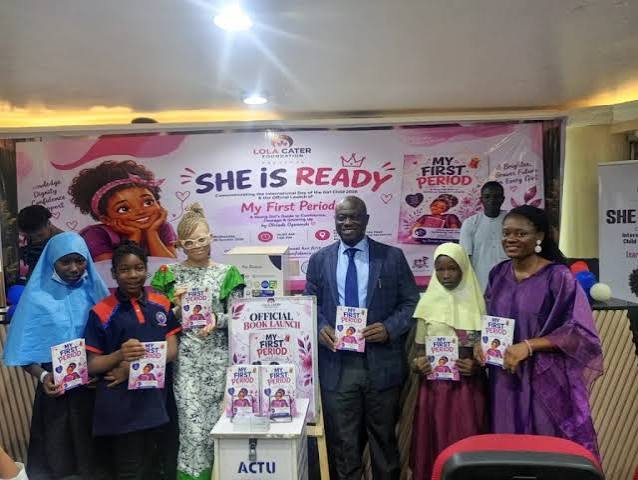
The foundation’s Chief Executive Officer, Ololade Ogunnubi, announced the target at the She Is Ready 2026 event held in Abuja on Wednesday to commemorate the 2026 International Day of the Girl Child.
The event also featured the launch of her book, My First Period: A Young Girl’s Guide to Confidence, Courage and Growing Up, designed to help girls understand menstruation and puberty and approach these changes with greater confidence.
Ogunnubi said many girls experienced fear, confusion and embarrassment during their first menstrual period because they lacked reliable information, access to hygiene products and trusted adults who could guide them.
“Some lack reliable information. Some struggle to access menstrual products and appropriate facilities. Others have no trusted adults to turn to when they need reassurance,” she said.
Foundation Highlights Gaps in Menstrual Health Education
Ogunnubi identified inadequate communication between parents and schools as a major obstacle to effective menstrual health education.
She explained that some parents expected schools to educate their children about menstruation, while teachers believed the responsibility rested primarily with families.
The lack of coordination, she said, could leave girls relying on misinformation and advice from peers rather than receiving accurate, age-appropriate guidance.
“Parents are not teaching, and schools are saying it is the parents’ responsibility. So, what do you think the students are going to get their information from?” she asked.
She said the newly launched book would provide girls, parents, teachers and other trusted adults with a practical resource for discussing menstruation and puberty openly.
According to her, the publication is intended to help girls understand bodily changes, build confidence and develop healthy attitudes towards menstruation.
Ogunnubi called for stronger partnerships among government agencies, schools, healthcare professionals, community leaders, civil society organisations and corporate bodies to achieve the foundation’s target.
She emphasised the importance of reaching girls in underserved communities, where access to menstrual health information and essential hygiene resources may be limited.
Federal Government Calls for Greater Support
The Permanent Secretary of the Federal Ministry of Youth Development, Dr Maryam Keshinro, commended the foundation for its work on menstrual health education and girls’ empowerment.
Keshinro, represented by Emmanuel Essien, Director of the Youth Health, Mental and Psychosocial Affairs Department, said menstrual stigma, misconceptions and inadequate access to hygiene products and facilities continued to affect girls’ confidence, school attendance and participation in society.
“We must ensure that every girl has access to accurate information, essential hygiene resources and a supportive environment where menstruation can be discussed openly without shame,” she said.
She reaffirmed the ministry’s commitment to promoting young people’s well-being, inclusion, leadership and empowerment, particularly among adolescent girls and young women.
“Girls are not merely beneficiaries of development. They are active contributors to national progress. Their rights must therefore be protected, their voices heard and their opportunities expanded,” she said.
Keshinro urged stakeholders to invest in girls’ education, menstrual health, life skills and mentorship, while strengthening efforts to protect them from gender-based violence, harmful practices and child marriage.
Health Ministry Urges Open Conversations
Joy Kalu, Head of the Adolescent and School Health Branch of the Federal Ministry of Health and Social Welfare, described the initiative as timely and important.
Kalu, represented by Charity Okala, an assistant director in the ministry, said menstruation should no longer be treated as a subject that must be discussed in silence.
She urged government institutions, parents, schools, development partners and young people to work together to improve menstrual health education.
“We all have a role to play. We need to bring that together to ensure that our roles complement each other,” she said.
Kalu said accurate health information would help young people make informed decisions about their well-being and prepare for adulthood.
Traditional Institutions Urged to Challenge Menstrual Stigma
Patricia Narai, wife of the Sakari of Karu, who spoke on behalf of the Association of Wives of FCT Traditional Rulers (WOFCTTRA), highlighted the difficulties women can experience when they enter puberty without adequate information.
Narai recalled that her first menstrual experience left her confused because she did not understand the changes taking place in her body.
She said the experience underscored the importance of preparing girls before their first period through timely information, reassurance and emotional support.
“Menstruation is not a source of shame. It is a natural biological process that deserves understanding, care and respect,” she said.
Narai called on traditional institutions, parents and community leaders to encourage open discussions about girls’ health and improve access to reliable information, menstrual hygiene products and safe sanitary facilities.
She also encouraged girls to ask questions and seek guidance from trusted adults instead of allowing shame or misinformation to undermine their confidence.
Reaching 5,000 Girls by May 2027
The foundation’s target places menstrual health education, access to books and hygiene support at the centre of its planned outreach over the coming months.
Achieving the goal will require sustained coordination among schools, families, healthcare providers, government institutions and community organisations.
The initiative also highlights the connection between menstrual health and broader questions of education, dignity and equal opportunity. When girls lack accurate information or access to appropriate hygiene facilities, their ability to participate confidently in school and community life can be affected.
However, the foundation’s announcement did not specify how the 5,000 girls would be selected, how the beneficiaries would be distributed across Nigeria or how progress towards the target would be measured.
These details will be important in assessing the programme’s reach and its impact on girls’ access to menstrual health information and support.
The Abuja event combined the launch of My First Period with health education, empowerment activities and discussions aimed at challenging menstrual stigma and encouraging a more supportive environment for adolescent girls.
Atlantic Reports: Voices. People. Facts.
Written by
Atlantic Reports Admin
Comments
- Be the first to comment.