Macky Sall Withdraws Bid for UN Secretary-General After Security Council Vote
By Atlantic Reports
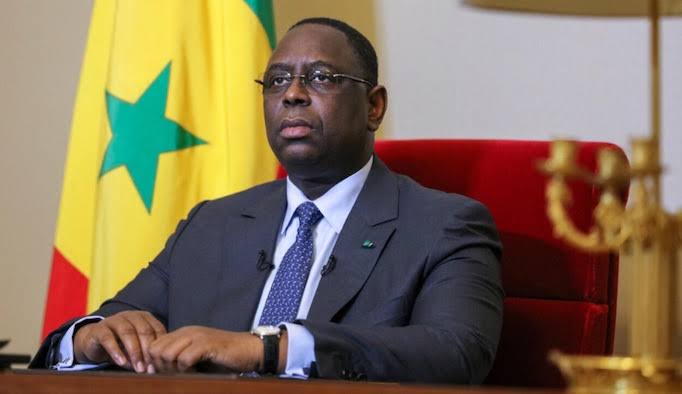
Former Senegalese President Macky Sall has withdrawn from the race to become the next United Nations Secretary-General following an informal Security Council vote that exposed significant opposition to his candidacy.
Sall announced his decision after the Council’s informal ballot on 16 October, which assessed support for candidates seeking to succeed Guterres when his second five-year term ends on 31 December.
In a statement, the former Senegalese leader said he had consulted Burundi’s President Évariste Ndayishimiye and Senegalese President Bassirou Diomaye Faye before deciding to withdraw.
Ndayishimiye currently chairs the African Union, while Faye chairs the Economic Community of West African States (ECOWAS).
Sall said he had withdrawn in the interest of facilitating the emergence of a consensus candidate within the Security Council.
Security Council Vote Exposes Opposition
According to the reported ballot results, Sall received five encouraging votes and 10 discouraging votes.
Three of the negative votes reportedly came from permanent members of the Security Council, whose opposition could prove decisive because any one of the five permanent members can block a candidate’s recommendation through a veto.
The informal ballots form part of the process through which Council members assess candidates before making a recommendation to the General Assembly.
Sall acknowledged that successive ballots had indicated support for a candidate from Latin America and the Caribbean, potentially a woman.
His withdrawal removes his candidacy from the contest and could influence subsequent negotiations over the next Secretary-General.
African Representation Debate Continues
Despite withdrawing, Sall maintained that Africa should continue advocating for stronger representation in international governance.
He also called for substantial reforms to the United Nations’ working methods, citing escalating conflicts, geopolitical divisions and economic difficulties.
His candidacy had generated controversy over efforts to secure collective African Union backing, with disagreements emerging over the proposed endorsement process.
Nigeria was among the African Union member states that objected to the proposed procedure, questioning its legitimacy and consistency with established diplomatic practice.
Nigeria also argued that the next Secretary-General should come from Latin America and the Caribbean under the informal principle of regional rotation.
The disagreement highlighted competing considerations within African diplomacy, including the pursuit of representation for an African candidate and the convention of rotating the position among geographical regions.
Uganda’s Olara Otunnu Remains in the Race
Following Sall’s withdrawal, Uganda’s Olara Otunnu was identified in the report as the remaining African candidate among those publicly named in the selection process.
However, the withdrawal does not determine who will ultimately become Secretary-General. The selection requires negotiations among Security Council members before a recommendation can be submitted to the General Assembly.
The Council’s permanent members hold particular influence because a candidate must avoid a veto to secure a recommendation.
UN Leadership Transition Approaches
Guterres’ second term is due to end on 31 December, making the succession process consequential for the organisation’s future leadership and its response to international conflicts, economic pressures and institutional reform.
The next Secretary-General will face the challenge of navigating divisions among major powers while coordinating the UN’s work on peace and security, development and humanitarian affairs.
Sall’s withdrawal adds another development to the selection process, while discussions continue over regional representation and the candidate capable of securing sufficient support within the Security Council.
Atlantic Reports: Voices. People. Facts.
Written by
Atlantic Reports Admin
Comments
- Be the first to comment.