Malnutrition Admissions Rise 18% at ICRC-Supported Facilities in North-East
By Atlantic Reports
Malnutrition admissions at selected health facilities supported by the International Committee of the Red Cross (ICRC) in north-east Nigeria rose by 18 per cent in the first nine months of 2026, the organisation has reported.
Nearly 20,000 admissions were recorded between January and September, compared with about 17,000 during the same period in 2025, according to an ICRC statement issued in Abuja on Thursday.
The figures cover six health centres and four hospitals supported by the organisation. They describe admissions at those facilities rather than the total number of people experiencing malnutrition across the region.
The statement, signed by ICRC Public Relations Officer Aliyu Dawobe, identified young children, pregnant women and breastfeeding mothers as particularly vulnerable as conflict, climate shocks and economic hardship undermine families’ access to food.
Rising Pressure in Mubi
In Mubi, Adamawa State, admissions increased by nearly 24 per cent, from approximately 4,600 between January and September 2025 to about 5,700 over the corresponding period in 2026.
At the Mubi Stabilisation Centre, mothers bring children for nutritional assessments and treatment, while some collect specialised food to support their recovery, the organisation said.
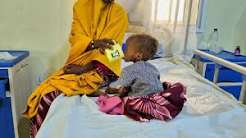
The statement described the experience of Zulaihatu Mohammed, who brought her six-month-old daughter, Huseina, one of twins, for assessment and food collection. Mohammed said the child had been unwell since birth.
“When I gave birth to them, this one was tiny,” she said, according to the ICRC.
Her account illustrates the care needs confronting families already struggling to secure adequate food. The statement did not provide a clinical diagnosis or treatment outcome for her daughter.
Insecurity Keeps Farmers Close to Home
The ICRC said insecurity and explosive devices were preventing farmers from safely reaching fields beyond residential areas, restricting cultivation and household food production.
Farmer Saminu Ijaduwa told the organisation that he had been forced to cultivate a small plot near his home because travelling farther was dangerous.
“Due to the conflict, going one kilometre out of town to farm could be highly risky. You might not return,” he said.
Restricted access to farmland, combined with disrupted markets, makes it harder for households to obtain sufficient food, the organisation said. For families dependent on farming, the loss affects both what they eat and the income available to buy other necessities.
Treatment and Support for Household Food Production
The ICRC said its broader response, delivered with the Nigerian Red Cross, supports 15 primary healthcare centres and four hospitals, alongside work in more than 200 communities.
That support network is wider than the six health centres and four hospitals covered by the reported admissions increase.
Interventions include supplying seeds suited to drought and flooding, promoting crop diversity and teaching mothers to prepare nutritious meals with locally available ingredients.
One initiative promotes Tom Brown, a mixture of sorghum, millet, soybeans, groundnuts and moringa. The ICRC said the programme had helped more than 13,000 young children recover from moderate acute malnutrition.
The statement did not specify the period covered by that recovery figure or provide details of how outcomes were assessed.
Mothers also learn to prepare the mixture at home, with the aim of sustaining children’s nutritional recovery after treatment.
Wider Hunger Concerns
Citing United Nations analysis, the ICRC said more than 34 million people in Nigeria were projected to face insufficient food in 2026. That national projection is separate from the admissions recorded at its supported facilities.
The organisation issued its statement ahead of World Food Day, observed annually on October 16.
Its account points to a challenge extending beyond treatment centres: families need reliable access to food, functioning markets and farmland they can cultivate safely if nutritional recovery is to last.
Atlantic Reports: Voices. People. Facts.
Written by
Atlantic Reports Admin
Comments
- Be the first to comment.