Maritime Lawyer Urges FG to Cut Cargo Delays, Improve Port Efficiency
By Atlantic Reports
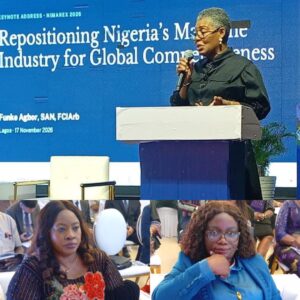
Agbor made the call on Tuesday, November 17, 2026, while delivering a keynote address at the 2026 Nigerian Maritime Conference and Exhibition (NIMAREX) in Lagos.
She warned that prolonged cargo dwell time at Nigerian ports increased production costs, weakened business competitiveness and placed local manufacturers at a disadvantage against their counterparts in other African countries.
According to her, although the blue economy is driven by natural resources, a country's competitiveness depends largely on operational efficiency, reliability and the cost of doing business.
Agbor noted that Nigeria had significant maritime advantages, including its strategic location along the Gulf of Guinea, an 850-kilometre coastline, major seaports and a population of more than 200 million people.
However, she said the country needed to improve its port operations and logistics infrastructure to maximise these advantages.
Cargo delays undermine Nigeria's trade competitiveness
The maritime lawyer said cargo dwell time in Nigeria ranged between 18 and 21 days, adding that prolonged delays and high operating costs were affecting the competitiveness of Nigerian businesses.
She noted that the African Continental Free Trade Area (AfCFTA) offered access to a market of approximately 1.4 billion people, but achieving its objectives would depend on efficient shipping, ports and logistics networks connecting African economies.
Agbor also claimed that Nigeria lost about $29 billion annually through freight payments to foreign shipowners because the country transported almost none of its own cargo.
She argued that strengthening indigenous shipping capacity would help retain more value within the Nigerian economy and reduce dependence on foreign operators.
Agbor questions management of Cabotage Fund
Agbor expressed concern over the management of the Cabotage Vessel Financing Fund (CVFF), questioning the industry's ability to account for the funds more than two decades after its establishment.
She called for greater transparency and accountability in the administration of the fund, which was established to support indigenous vessel acquisition and strengthen local participation in maritime operations.
The lawyer also advocated guaranteed sea-time agreements for maritime cadets, insisting that aspiring seafarers should have clear placement arrangements before commencing their training.
She further called for increased participation of women in seafaring and urged the government to adopt consistent long-term maritime policies that would survive changes in political administration.
WIMAfrica advocates greater opportunities for women
In her goodwill message, the President of Women in Maritime Africa (WIMAfrica), Mrs Theodora Nwaeze, said the blue economy extended beyond the exploitation of marine and water resources.
She described it as an interconnected sector involving transportation, ports, fisheries, energy, logistics and technology.
Nwaeze identified collaboration as a major priority of her administration, urging industry stakeholders to create meaningful opportunities for women and young professionals.
She said greater participation and cooperation would help strengthen the maritime industry and expand access to opportunities across the blue economy.
WISTA urges women to embrace innovation
Also speaking, the President of the Women in Shipping and Trading Association (WISTA) Nigeria, Dr Odunayo Ani, urged women in the maritime industry to improve their professional standards, embrace innovation and strengthen their business operations.
Ani warned that mediocrity could limit professional growth, calling on women to prioritise digital compliance, diligence and effective communication.
She encouraged maritime professionals to invest in capacity development, build stronger professional networks and prepare for leadership responsibilities.
According to her, improved professional standards and innovation would help women attract business opportunities and contribute more effectively to the industry's development.
Nigeria's maritime potential faces operational challenges
The concerns raised at NIMAREX 2026 highlight longstanding issues affecting Nigeria's maritime competitiveness, particularly cargo clearance delays, indigenous shipping capacity, financing and workforce development.
Reducing cargo dwell time will require coordinated action among port authorities, customs, shipping companies, terminal operators and other regulatory agencies.
Similarly, resolving questions surrounding the CVFF and improving access to sea-time opportunities could strengthen local participation in maritime transportation.
For Nigeria to translate its maritime advantages into economic benefits, policy commitments will need to produce measurable improvements in port efficiency, shipping capacity, investment and employment opportunities.
Atlantic Reports: Voices. People. Facts.
Written by
Atlantic Reports Admin
Comments
- Be the first to comment.