Morocco Welcomes UN Security Council Failure to Renew Western Sahara Peacekeeping Mission
By Atlantic Reports
Morocco has welcomed the failure of the United Nations Security Council to renew the mandate of its peacekeeping mission in Western Sahara, describing the development as a significant diplomatic step towards ending the longstanding territorial dispute.
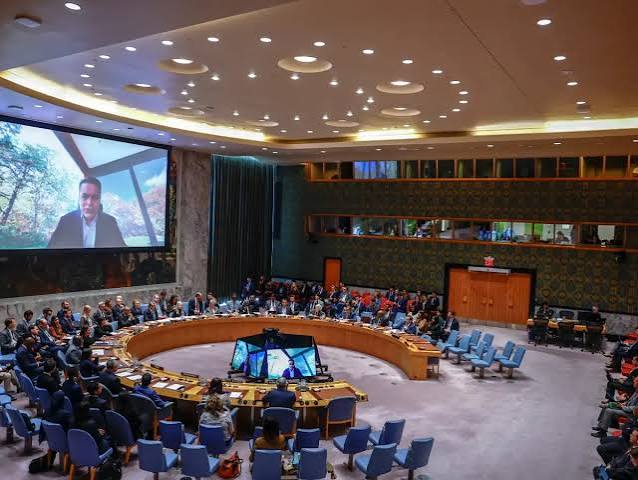
The Moroccan Royal Office made its position known in a statement issued on Friday, following the Security Council's failure to adopt two competing draft resolutions seeking to extend the mandate of the United Nations Mission for the Referendum in Western Sahara (MINURSO).
The development followed a diplomatic disagreement between Russia and the United States over the proposed terms for renewing the mission.
Russia vetoed a US-sponsored draft resolution that proposed a one-year extension while making Morocco's autonomy proposal the basis for negotiations.
The Security Council subsequently rejected a Russian-sponsored alternative seeking a straightforward one-year extension of the existing mandate.
The Russian proposal received three votes in favour, one against and 11 abstentions, falling short of the nine affirmative votes required for adoption.
Morocco Describes Development as Diplomatic Turning Point
Reacting to the outcome, Morocco's Royal Office described the failure to renew MINURSO's mandate as the closure of a 35-year chapter in the international handling of the Western Sahara dispute.
“A 35-year chapter has now come to a close,” the statement said.
The Moroccan government criticised the mission's continued presence, describing it as established within an outdated context and arguing that it had contributed to internationalising the dispute over Morocco's control of the territory.
The statement called for the withdrawal of MINURSO personnel, vehicles, equipment and other mission symbols from what Morocco describes as its southern provinces.
It also argued that the development should end the Security Council's periodic consideration of the issue, including regular meetings and reports by the UN Secretary-General.
Morocco further indicated that it would pursue similar steps within other United Nations bodies.
However, the failure to adopt either resolution does not amount to a formal Security Council decision terminating MINURSO. Its existing mandate is due to expire on October 31, 2026, unless the Council agrees on an extension.
Morocco Reaffirms Commitment to Ceasefire
Despite welcoming the Security Council's failure to reach an agreement, Morocco reaffirmed its commitment to maintaining the ceasefire in Western Sahara.
The Kingdom said its actions would continue to be guided by its position on territorial integrity, national security and the protection of its citizens.
The United States-sponsored resolution had proposed making Morocco's autonomy plan the central basis for negotiations, while also changing the structure and designation of the existing UN mission.
Russia opposed the proposal, arguing that it favoured Morocco's position and prejudged the outcome of negotiations over the territory.
How the Western Sahara Dispute Began
MINURSO was established in 1991 following a United Nations-brokered ceasefire between Morocco and the Polisario Front.
The mission was mandated to monitor the ceasefire and facilitate preparations for a referendum on the future status of Western Sahara.
However, the proposed referendum has never taken place because of disagreements between the parties over voter eligibility and other aspects of the electoral process.
Western Sahara, a former Spanish colony, has remained at the centre of a territorial dispute since Spain withdrew in 1975 and Morocco took control of most of the territory.
Morocco maintains that Western Sahara forms part of its sovereign territory and advocates autonomy under Moroccan sovereignty.
The Polisario Front, backed by Algeria, rejects that position and seeks an independent Sahrawi state.
The competing positions have prevented a mutually acceptable political settlement despite decades of diplomatic engagement.
Uncertainty Over Future of UN Mission
The failure of the two competing resolutions has created uncertainty over the future of the United Nations presence in Western Sahara.
While Morocco considers the development a diplomatic breakthrough, the Polisario Front has opposed efforts to make Morocco's autonomy proposal the exclusive basis for negotiations and continues to insist on the right to self-determination.
The immediate question is whether the Security Council will reach a last-minute agreement to extend MINURSO's mandate or allow it to expire.
The outcome could have significant implications for ceasefire monitoring, diplomatic engagement and security in the disputed territory.
Atlantic Reports: Voices. People. Facts.
Written by
Atlantic Reports Admin
Comments
- Be the first to comment.