NAFDAC Plans Drug Wholesale Centres in Lagos, Anambra to Tackle Fake Medicines
By Atlantic Reports
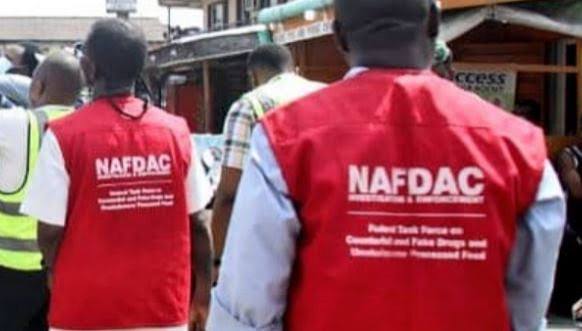
The National Agency for Food and Drug Administration and Control (NAFDAC) has announced plans to establish Coordinated Wholesale Centres (CWCs) in Lagos and Anambra states as part of efforts to sanitise Nigeria's pharmaceutical distribution system.
A member of the agency's Federal Taskforce and Investigation, Enforcement Directorate, Mr Musa Godiya, disclosed this on Thursday, November 26, 2026, at the 10th annual conference of the Association of Nigerian Health Journalists (ANHeJ) in Abuja.
He explained that the initiative would move open drug markets into designated locations, making it easier for regulators to monitor pharmaceutical products, identify their sources and prevent dangerous medicines from entering the supply chain.
“With the CWC, we will be able to trace where the bad products are coming from and have strong regulatory oversight over the distribution of these products in our supply chain,” Godiya said.
NAFDAC builds on Kano wholesale centre pilot
Godiya said the proposed centres would build on the agency's Coordinated Wholesale Centre pilot project unveiled in Kano in February 2023.
He disclosed that NAFDAC had shut down Idumota Market in Lagos, Bridge Head Market in Onitsha, Anambra State, and a pharmaceutical market in Aba, Abia State, as part of its enforcement efforts against the distribution of substandard and falsified medicines.
According to him, traders in the affected markets had signed irrevocable undertakings to relocate to designated wholesale centres.
The initiative is intended to establish a more organised pharmaceutical distribution system in which the movement and origin of medicines can be monitored.
However, the success of the proposed centres will depend on effective implementation, regulatory supervision and the willingness of pharmaceutical traders to comply with the relocation arrangements.
NAFDAC begins second phase of sachet alcohol enforcement
Godiya also announced the commencement of the second phase of enforcement against sachet alcohol and alcoholic beverages packaged in containers below 200 millilitres.
He explained that the first phase involved visits to manufacturing facilities, while the current phase would focus on markets and streets.
“We have concluded the first phase of the ban, which involved visiting manufacturing factories.
“We are now going to markets and streets for a total mop-up and enforcement action on sachet alcohol,” he said.
He disclosed that enforcement operations had commenced in several markets, including a raid on Zuba International Market on Thursday.
The exercise forms part of NAFDAC's efforts to enforce restrictions on the affected alcoholic products.
CAPPA raises concerns over children's access to vaping products
Also speaking at the conference, Ms Shade Osi, Policy and Legal Officer of Corporate Accountability and Public Participation Africa (CAPPA), raised concerns about children's access to electronic cigarettes, vaping products, shisha and nicotine pouches.
Osi disclosed that a CAPPA survey found that some primary school pupils in Abuja had access to these products.
She urged President Bola Tinubu to withhold assent to a proposed amendment to Nigeria's tobacco control law, arguing that certain provisions required further scrutiny.
According to her, some proposed changes could weaken existing restrictions by allowing product sampling at points of sale and public places, as well as online tobacco sales.
She also warned that attractive flavours and fragrances used in vaping products could make it difficult for parents to recognise when children were using them.
“You may come back home and your house smells very nice. You think somebody turned on incense or a diffuser, not knowing that your child has vaped something and left before you came back,” she said.
Osi called on the National Assembly to reconsider the proposed amendment and urged the Attorney-General of the Federation to examine its provisions.
“Strong laws, weak enforcement is as good as paper,” she said, emphasising that effective implementation was essential to tobacco control.
IHVN expands cancer screening through existing health facilities
In another presentation, Dr Victoria Igbinomwanhia, Programme Manager and Oncology Lead at the Institute of Human Virology Nigeria (IHVN), explained how the organisation was using existing HIV service platforms to expand cancer prevention and treatment.
She said cervical cancer screening had been integrated into antiretroviral therapy clinics and one-stop centres serving key populations to improve access for women.
According to her, the programme had activated services in 158 health facilities and 12 key population one-stop shops.
She disclosed that 50,205 women had undergone screening, with 682 testing positive and 642 receiving treatment, representing a reported treatment uptake of 94 per cent.
Igbinomwanhia said existing public health infrastructure could be used more effectively to address other health challenges, including cancer prevention and care.
High costs and limited facilities remain barriers to cancer care
The IHVN programme manager identified distance to health facilities, transportation expenses, treatment costs, inadequate screening centres and late presentation as major obstacles preventing Nigerians from accessing timely cancer services.
Citing estimates from the Global Cancer Observatory, she said Nigeria recorded 152,261 new cancer cases and 90,795 cancer-related deaths in 2024.
She also highlighted the National Cancer Control Plan 2026–2030, which targets a 50 per cent reduction in cancer incidence and mortality by 2030.
She stressed the importance of strengthening cancer registries, improving the reliability of health data and sustaining public awareness campaigns to support prevention and early detection.
Health experts call for stronger regulation and public awareness
The discussions at the conference highlighted several public health concerns, ranging from unsafe pharmaceutical distribution and alcohol regulation to children's exposure to nicotine products and the growing burden of cancer.
While NAFDAC's proposed wholesale centres could improve oversight of medicine distribution, their effectiveness will depend on transparent implementation, consistent monitoring and compliance by pharmaceutical traders.
Similarly, concerns about vaping and tobacco regulation underline the need to protect children and ensure that public health safeguards are not weakened.
For cancer prevention, expanding screening through existing healthcare facilities could improve access, but sustained funding, affordable treatment and reliable data will remain essential.
The News Agency of Nigeria reported that the conference brought together health professionals, policymakers, development partners, civil society organisations and media practitioners.
Atlantic Reports: Voices. People. Facts.
Written by
Atlantic Reports Admin
Comments
- Be the first to comment.