NAFEST 2026: Culture Minister Urges Nigerian Youths to Preserve Indigenous Heritage
By Atlantic Reports
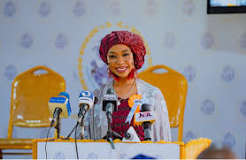
The Minister of Arts, Culture, Tourism and Creative Economy, Hannatu Musawa, has urged Nigerian youths to preserve and promote their indigenous cultural heritage rather than abandon their traditions in search of foreign identities.
Musawa made the call on Saturday, November 21, 2026, during the opening ceremony of the 38th National Festival of Arts and Culture (NAFEST) at Okpara Square, Enugu State.
The festival, hosted by the Enugu State Government, has the theme, Connected Culture, and features cultural delegations from participating states across the country.
Represented by the ministry's Permanent Secretary, Abdulkarim Ibrahim, the minister encouraged young Nigerians to embrace their languages, traditional dances, crafts and other cultural expressions while exploring opportunities in technology, innovation and entrepreneurship.
“To our young people, I have this message for you. Do not abandon your culture in search of identity.
“Learn your language, learn your dance, learn your craft, and then use technology, innovation and enterprise to take that culture to the world.
“The world is waiting for Nigeria, and you are the ambassadors,” she said.
Culture as a driver of national development
Musawa described culture as an important instrument for national unity, employment generation and economic prosperity.
She said NAFEST had evolved beyond an annual cultural celebration to become a platform for national integration, cultural exchange and the promotion of Nigeria's diverse heritage.
According to her, the country's more than 250 ethnic groups, 5,000 languages and different cultural traditions should be recognised as national assets rather than sources of division.
She added that the Federal Government was repositioning the cultural sector as a contributor to national development rather than treating it merely as entertainment.
The minister noted that Nigeria's creative economy was creating employment opportunities for millions of young people across industries such as music, fashion, gastronomy, crafts, gaming, content creation, tourism, festivals and carnivals.
She also called on investors and development partners to support Nigeria's creative economy, particularly in tourism, festivals, traditional crafts and local talent development.
Musawa commended Governor Peter Mbah and the people of Enugu State for hosting the festival, alongside the Director-General of the National Council for Arts and Culture (NCAC), Obi Asika, and other stakeholders.
Mbah highlights economic potential of cultural heritage
Declaring the festival open, Governor Peter Mbah, represented by the Secretary to the State Government, Professor Chidiebere Onyia, said cultural preservation could strengthen national unity while creating economic opportunities.
Mbah described the return of NAFEST as evidence of the resilience of Nigeria's cultural institutions.
He highlighted activities scheduled for the festival, including boat games, archery, tug of war, dance competitions, children's storytelling and traditional wrestling, noting their potential to promote tourism and economic activities.
The governor said Enugu was honoured to host the festival as part of its broader efforts to position culture as a pillar of economic growth.
“The greatest beauty of Nigeria is not that we are all the same, but that we can be different and still belong to one another.
“Our diversity should never be a source of division. It should remain our greatest reservoir of strength,” he said.
NAFEST creates opportunities for cultural exchange
Earlier, the NCAC Director-General, Obi Asika, welcomed participating states and the Federal Capital Territory (FCT), describing Enugu as a home for all Nigerians.
He said the theme, Connected Culture, reflected opportunities for cultural exchange, collaboration, business partnerships and knowledge sharing among participants.
According to Asika, the festival would allow young people, artists, designers, craft practitioners and festival organisers to establish relationships and explore opportunities beyond the event.
The Enugu State Commissioner for Culture and Tourism, Ugochi Madueke, also expressed appreciation to the Federal Government, Governor Mbah and other stakeholders for supporting the state's hosting of the festival.
She said Enugu had overcome several challenges during preparations but remained committed to delivering a successful event.
Madueke emphasised that the gathering represented more than the hosting of a cultural festival, describing it as a celebration of Nigeria's identity, shared heritage and common values.
She invited visitors to experience the state's cuisine, music, dances and cultural traditions.
States showcase Nigeria's cultural diversity
Participating states at the festival include Abia, Adamawa, Anambra, Bayelsa, Cross River, Delta, Ekiti, Ondo, Rivers, Yobe and Enugu.
Highlights of the opening ceremony included cultural dance parades by participating states and the FCT, as well as a performance by students of Enugu Smart Green School, Owo.
The festival provides a platform for communities to showcase their traditions while creating opportunities for cultural tourism, creative enterprise and inter-state collaboration.
However, sustaining the economic benefits of such gatherings will depend on continued investment in cultural institutions, support for local practitioners and opportunities for young people to turn traditional knowledge and creative skills into viable livelihoods.
Atlantic Reports: Voices. People. Facts.
Written by
Atlantic Reports Admin
Comments
- Be the first to comment.