National Tolerance Programme Urges Early Teaching of Peaceful Coexistence in Nigerian Schools
By Atlantic Reports
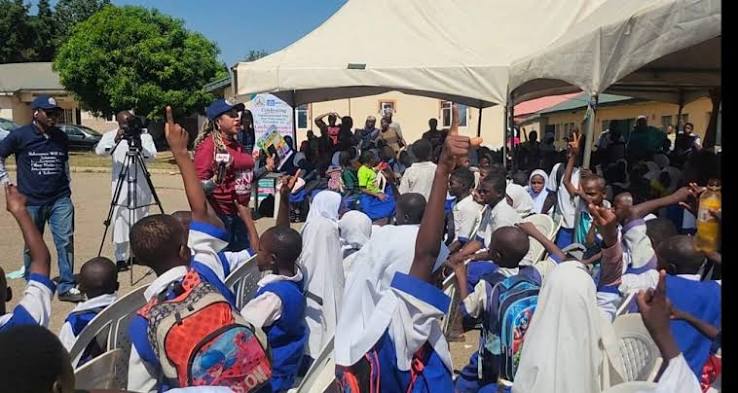
The National Coordinator of the programme, Ijeoma Akwara, made the call on Monday during an event marking the 2026 International Day for Tolerance at Model Primary School, Apo Legislative Quarters, Abuja.
The event, themed “Lawful Tolerance”, featured the distribution of the second edition of the Lawful Tolerance storybook to pupils in Primary 5 and 6.
Akwara explained that the initiative was designed to help children understand the importance of respecting cultural, religious and ethnic differences while recognising the boundaries established by the rule of law.
She noted that Nigeria, as a member of the United Nations Educational, Scientific and Cultural Organisation (UNESCO) and a signatory to the 1995 Declaration of Principles on Tolerance, had a responsibility to promote mutual understanding and peaceful coexistence.
According to her, the declaration encourages people from different ethnic, religious, ideological and social backgrounds to accept their differences and live together peacefully.
“Lawful tolerance is just saying the same thing. It is a simple concept that makes you understand that tolerance is not oppression, but love for culture, which means respecting, appreciating and understanding each other within the boundaries of the law,” she said.
Programme Targets Children Through School Education
Akwara disclosed that the school initiative was one of approximately six components of the National Festival of Tolerance and Peaceful Coexistence Programme.
The component, known as “Adapted School: Read to Me Today”, involves adopting schools and introducing pupils to values such as mutual respect, tolerance and peaceful coexistence.
She said the organisers deliberately started with schools because children needed to understand and appreciate diversity from an early age.
“We started with schools because we believe that it is important for our children to celebrate a wonderful ideology, which is the ability to be each other’s neighbour, irrespective of tribe, religion or status.
“We want to catch them young. They are all from different places and go back to different homes. It is important that the children are carried along while we prepare for the adults,” she said.
The coordinator also announced plans for an academic symposium in December to examine practical approaches to promoting lawful tolerance, from classrooms to the wider society.
She appealed to individuals, corporate organisations and other stakeholders to support the initiative by adopting schools and helping ensure that every child has access to the storybook.
UNESCO Commission Highlights Importance of Diversity
Earlier, Mr Ojo Michael, representing the Nigerian National Commission for UNESCO (NACOM-UNESCO), said the International Day for Tolerance was established in 1995 to address divisions arising from differences in religion, language, culture and other aspects of human identity.
He explained that the annual commemoration encourages individuals and communities to recognise their shared humanity and embrace peaceful coexistence despite their differences.
Michael said the selection of Model Primary School was deliberate because of its diverse student population, comprising children from different states, ethnic groups and religious backgrounds.
“When you see any school in this country, it constitutes Nigerians. They are not all from the same state or religion. They come from the East, West, North and South,” he said.
He maintained that educating children about tolerance would prepare them to become ambassadors of peace and contribute to building a more united Nigeria.
“We are doing this in order to preach peace into the lives of our children, who are the greater tomorrow, so that they can learn to live in peace and become peace ambassadors in our country,” he added.
Political Leaders Urged to Demonstrate Commitment to Peace
Michael also called on political leaders to demonstrate genuine commitment to peaceful coexistence by fulfilling promises made to Nigerians during election campaigns.
He stressed that building a peaceful society required shared responsibility between citizens and political leaders entrusted with public office.
According to him, promoting tolerance should not be limited to public celebrations and educational campaigns but should also reflect in the conduct of those exercising political authority.
Beyond Classroom Lessons: Building a Culture of Tolerance
Nigeria's ethnic, religious and cultural diversity presents opportunities for national development, but it also requires sustained efforts to promote mutual understanding and respect.
Teaching children to appreciate differences while respecting the rights and freedoms of others can help establish a foundation for peaceful relationships in schools, families and communities.
However, the success of initiatives such as the Lawful Tolerance programme will depend on consistent school engagement, access to educational materials, teacher participation and the willingness of adults to demonstrate the values being taught.
The planned December symposium could provide an opportunity to extend the conversation beyond classrooms and examine how families, institutions, community leaders and political authorities can contribute to a culture of peaceful coexistence.
Atlantic Reports: Voices. People. Facts.
Written by
Atlantic Reports Admin
Comments
- Be the first to comment.