NGO Calls for Early Cancer Detection, Expanded Insurance for Women in North-East
By Atlantic Reports
The Cancer Consciousness Initiative has called for early cancer detection, expanded health insurance coverage and increased research to improve women’s access to cancer diagnosis and treatment in Nigeria’s North-East.
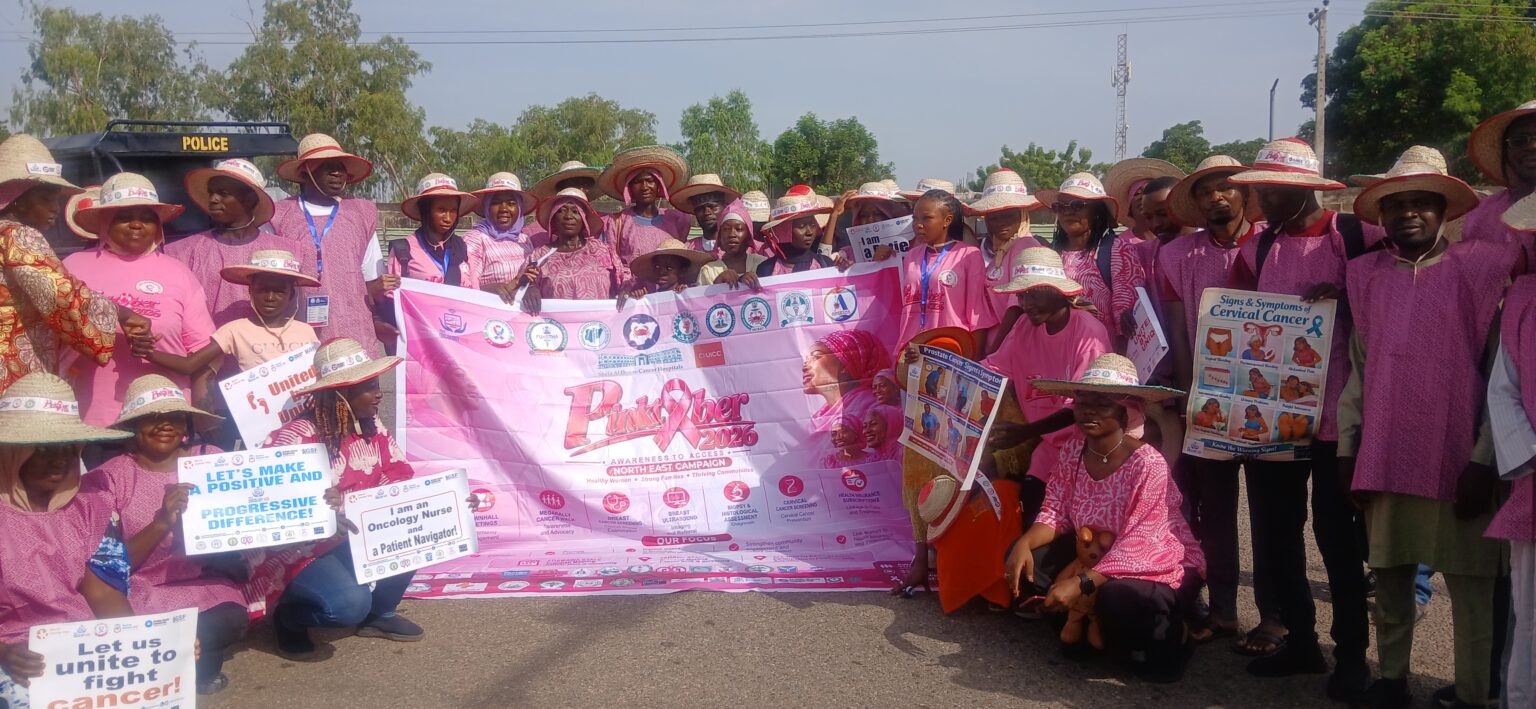
The Chief Executive Officer of the organisation, Dr Hannatu Ayuba, made the call on Saturday in Yola during the Mega Rally Cancer Walk, organised as part of the 2026 Pinktober Cancer Awareness Campaign.
Ayuba, a Consultant Radiation and Clinical Oncologist at the National Hospital, Abuja, said the three-day campaign, held from October 15 to October 17, was themed “Awareness to Access”, highlighting the need to move beyond public awareness towards practical access to healthcare.
She said the campaign began in Adamawa State with a town hall meeting, cancer screening and a community awareness walk, with subsequent activities planned for Borno, Taraba and Bauchi states.
Funding constraints limit screening targets
Ayuba, who also serves as Programme Lead of the Teleoncology Hub, said the initiative had initially planned to screen 500 women in each targeted state but reduced the figure to 300 because of funding constraints.
The reduction highlights the financial challenges facing efforts to expand cancer screening and improve early diagnosis in underserved communities.
She urged governments, philanthropists, private businesses and community leaders to provide financial and logistical support for cancer awareness, diagnosis and treatment.
According to her, the initiative is working with partners and the North-East Development Commission (NEDC) to promote health insurance packages covering cancer investigations, chemotherapy, radiotherapy and surgery.
She commended the wife of the Adamawa State Governor, Hajiya Lami Fintiri, for pledging support for health insurance for women receiving cancer treatment at specialist hospitals.
The extent of the proposed insurance support, including the number of women to benefit, the funding arrangements and the implementation timeline, was not specified.
Referral pathways to improve access to diagnosis
Ayuba said the initiative was establishing referral pathways to help women who discover breast lumps access further medical assessment, including ultrasound scans, biopsies, histological examinations and biomarker tests.
She explained that samples collected from patients would undergo additional investigations, including immunohistochemistry and polymerase chain reaction tests, where appropriate, to identify tumour characteristics and guide treatment decisions.
Such investigations can help clinicians determine the nature of a tumour and select suitable treatment options.
Ayuba said improving access to diagnostic services was particularly important for women who faced financial difficulties, language barriers or limited access to specialised healthcare facilities.
She also called for greater collaboration with traditional and religious leaders to encourage women to seek medical attention promptly rather than depend on traditional remedies for cancer treatment.
“Cancer is a community problem; it is not just a hospital problem. No one should be left to face cancer alone rather there should be compassion and an end to stigmatisation,” she said.
The campaign’s emphasis on access reflects a wider challenge in cancer care: awareness alone cannot guarantee early diagnosis if patients cannot afford investigations, reach specialist facilities or complete prescribed treatment.
Survivor recounts delayed diagnosis and financial hardship
A cancer survivor, Mrs Sarah Sarki, shared her experience to encourage women to take unusual breast changes seriously and seek appropriate medical assessment.
Sarki said she discovered a lump in her right breast in 2019 but was initially told at a hospital that it was not cancerous.
She said the lump later returned, prompting her to seek traditional remedies before further hospital investigations confirmed cancer in 2021.
According to Sarki, the diagnosis brought years of treatment and financial difficulties.
Her experience underscored the importance of follow-up medical assessment when a breast lump persists, returns or changes, even after an initial examination.
She encouraged women to become familiar with their breasts and seek prompt medical attention whenever they notice unusual changes. She also warned against relying on traditional remedies as a substitute for evidence-based cancer treatment.
Breast awareness can help people recognise changes that require assessment, although self-examination alone cannot rule out cancer. Clinical evaluation and appropriate diagnostic tests remain important when symptoms arise.
Sustained support needed beyond awareness campaigns
The Cancer Consciousness Initiative’s campaign seeks to connect public education with screening, diagnosis, referral and treatment support across the North-East.
However, the reduced screening target and the need for expanded insurance coverage point to continuing questions about funding, specialist services and the long-term support available to women diagnosed with cancer.
For the initiative to achieve its stated goals, sustained partnerships will be needed to help patients progress from initial screening to confirmed diagnosis and, where necessary, treatment.
The campaign also places responsibility on communities and public institutions to reduce stigma and ensure that women facing cancer are not left to navigate the financial and healthcare challenges alone.
Atlantic Reports: Voices. People. Facts.
Written by
Atlantic Reports Admin
Comments
- Be the first to comment.