Nigeria Amputee Football Captain Calls for National League, Athletes’ Welfare Programme
By Atlantic Reports
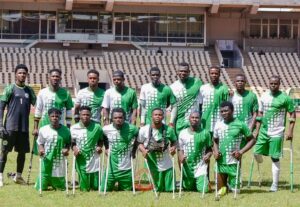
Captain of Nigeria’s Amputee Football National Team, Sarafadeen Oyeleke, has called for increased government investment in amputee football, stressing that regular domestic competitions, improved funding and structured welfare support are essential to the sport’s long-term development.
Oyeleke made the appeal in an interview ahead of the 2026 World Amputee Football Cup in Mexico.
The captain, who also represents athletes on the Nigeria Amputee Football Federation (NAFF), said the country had made progress despite persistent challenges facing players and the sport.
He described Nigeria’s qualification for the 2026 World Cup as evidence of the determination and potential of its athletes but argued that international participation alone could not sustain development.
Having represented Nigeria for more than 18 years, Oyeleke said the sport needed stronger domestic structures to provide players with regular competition, financial stability and opportunities for professional growth.
Players struggle with financial and welfare challenges
Oyeleke said many Nigerian amputee footballers struggled to balance their sporting careers with personal and family responsibilities because they lacked regular income from football.
According to him, some players depend on personal businesses, employment and other activities to support themselves while maintaining their commitment to the national team.
He identified healthcare, rehabilitation, transportation and mobility support as additional financial pressures confronting athletes with disabilities.
Specialised equipment, including crutches, is essential for players' performance, but the cost of maintaining or replacing such equipment can be burdensome.
He therefore called for a structured welfare programme covering medical insurance, financial assistance, educational opportunities and career development.
Oyeleke also emphasised the need to prepare athletes for life after retirement from competitive sports.
“Our players are not asking for special treatment. We are asking for opportunities and support systems that recognise our contributions as national athletes,” he said.
Turkey offers an example of organised development
The national team captain cited Turkey as an example of a country that had strengthened amputee football through organised domestic competitions, institutional support and consistent investment.
He argued that Nigeria could improve its own structure by establishing a national league that would provide players from different states with regular opportunities to compete and develop their abilities.
According to him, a structured competition would also create a stronger pathway for identifying emerging talents and preparing players for international tournaments.
Oyeleke said development should not be limited to periods immediately preceding major competitions but should continue throughout the year.
Nigeria's international achievements
Oyeleke recalled that Nigeria reached the final of the 2019 African Amputee Football Cup of Nations in Angola.
He added that the national team subsequently qualified for the 2026 World Cup through its performance at the 2024 African championship in Egypt.
The achievements, he said, demonstrated the players' commitment despite limited resources and inadequate support structures.
However, he maintained that recognition should extend beyond medal-winning performances and appearances at international competitions.
He urged media organisations, corporate institutions and sporting authorities to give amputee football more consistent attention through coverage, sponsorship and national sporting awards.
He said greater visibility would help attract investment while encouraging younger persons with disabilities to participate in sports.
Proposed national development and welfare programme
Oyeleke called on President Bola Tinubu to support the establishment of a National Amputee Football Development and Athletes’ Welfare Programme.
He proposed that the initiative be implemented through the National Sports Commission (NSC), in collaboration with NAFF and other relevant stakeholders.
He identified three major components of the proposed programme:
-
A structured national amputee football league.
-
Comprehensive welfare support for athletes.
-
Post-retirement opportunities in coaching, sports administration and other careers.
He also called for increased investment in grassroots development, coaching education, accessible training facilities and medical support.
Oyeleke said partnerships with corporate organisations could provide additional funding and strengthen the sport's institutional capacity.
He further urged sporting authorities to create pathways for former players to remain involved in the game after their competitive careers, particularly through coaching and administration.
Building a sustainable future for amputee football
The captain said Nigeria had the talent and determination to develop a stronger amputee football structure but needed sustained investment to translate that potential into lasting progress.
“As someone who has proudly represented Nigeria for over 18 years, my greatest desire is not simply to see our generation succeed, but to help establish a stronger foundation for those who will represent the country after us,” he said.
His appeal highlights a wider challenge in disability sports: ensuring that athletes receive not only opportunities to represent their country but also the facilities, financial support, healthcare and career pathways required to sustain their participation.
For Nigeria's amputee footballers, the proposed national league and welfare programme would represent an opportunity to move beyond temporary tournament preparations towards a more consistent system of development and support.
Atlantic Reports: Voices. People. Facts.
Written by
Atlantic Reports Admin
Comments
- Be the first to comment.