Nigeria, Benin and Cameroon Advance Talks on Regional Border Modernisation
By Atlantic Reports
The Nigeria Customs Service (NCS) and the Customs administrations of Benin and Cameroon have stepped up discussions with the African Export-Import Bank (Afreximbank) on a regional border-modernisation programme aimed at improving cross-border trade and supporting the African Continental Free Trade Area (AfCFTA).
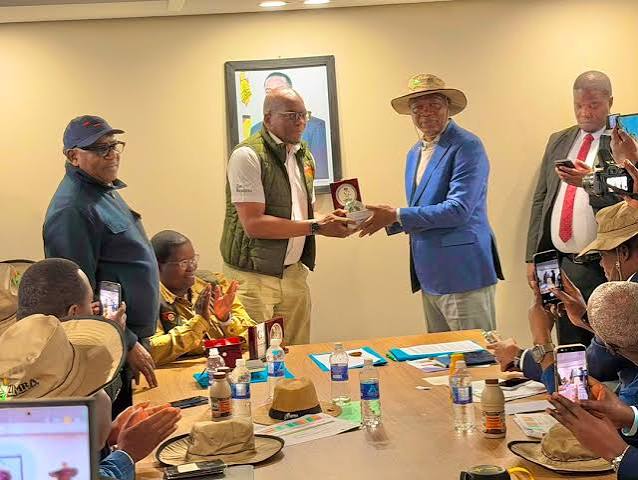
The discussions took place at Afreximbank’s headquarters in Cairo, Egypt, on October 12, following a benchmarking mission to Zimbabwe’s Beitbridge Border Post and technical assessments of the Mfum–Ekok and Sèmè–Kraké border corridors.
In a statement issued in Abuja on Sunday, NCS spokesperson Abdullahi Maiwada said the engagement brought together representatives of the three Customs administrations, Afreximbank and technical partners.
The meeting, led by Comptroller-General of Customs Bashir Adeniyi, reviewed findings from the assessments, identified priority interventions and considered options for developing an integrated regional border-modernisation programme.
Digital integration at the centre of the proposal
Participants examined ways to combine improvements in digital infrastructure, harmonised Customs procedures, secure data exchange and institutional capacity development.
A key component is the proposed Customs Declarations Exchange System (CDES), designed to facilitate secure information exchange among Nigeria’s B’Odogwu platform, Benin’s Customs Webb and Cameroon’s Customs Information System (CAMCIS).
Maiwada said the system would use a common data model to allow export information originating in one country to support the advance preparation of import-manifest information in the destination country.
The receiving Customs administration would, however, retain responsibility for validating the information, applying national requirements, conducting risk assessments and authorising cargo clearance.
Although development and technical testing have taken place, further work remains before the system can be deployed. According to Maiwada, this includes country-specific configuration, application programming interface integration, security assurance and pilot acceptance.
The discussions also covered Afreximbank’s potential participation in the next Customs Partnership for African Cooperation in Trade (C-PACT) and progress towards regional and continental transit-guarantee arrangements.
Assessments expose infrastructure and operational gaps
The July 2026 benchmarking mission to Beitbridge and subsequent assessments of the two priority corridors informed the discussions.
Maiwada said the Beitbridge experience highlighted the importance of treating a modern border as an integrated operational system, with separated traffic flows, pre-arrival processing and risk-based controls.
At the Mfum–Ekok corridor between Nigeria and Cameroon, the assessment identified weaknesses in reliable electricity supply, connectivity, information technology equipment, cybersecurity and technical support. Other concerns included scanner commissioning and coordinated single-stop border processing.
At Sèmè–Kraké, which links Nigeria and Benin, the assessment identified incomplete joint procedures, limited live data exchange, non-functional cargo-scanning and weighing facilities, unreliable electricity and traffic congestion.
Inconsistent operating hours and unresolved responsibilities for maintaining shared infrastructure were also cited as challenges.
The findings suggest that digital integration alone will not resolve the problems facing the corridors. Reliable power, functioning equipment, clear operational responsibilities and cooperation between neighbouring authorities will also be necessary.
Afreximbank proposes phased project preparation
Maiwada said Afreximbank outlined a proposed two-stage approach to move the initiative towards implementation.
The first stage would involve independent engineering assessments and investment-cost studies at the two border posts. The second would focus on developing separate bankable project packages for the Nigeria–Benin and Nigeria–Cameroon corridors.
The proposed preparation process would cover transaction advisory services, legal due diligence, financial modelling and the identification of suitable implementation and financing arrangements.
Afreximbank also outlined the potential use of its Project Preparation Facility.
Meanwhile, technical partners TMP and Bergmans Security Consultants and Supplies Limited expressed willingness in principle to consider self-financing the preparatory work.
However, Maiwada stressed that the discussions had not produced a final project cost, lending commitment, designated borrower, financing arrangement or implementation contract.
These distinctions are important because the proposed programme remains at the assessment and project-preparation stage. The scale of investment, funding responsibilities and timetable for physical improvements have yet to be established.
Roadmap planned as talks continue
According to Maiwada, participants agreed on the need for direct site inspections, designated technical focal points and a dated action matrix to guide further engagement.
They also agreed to develop an implementation roadmap covering one-, three- and six-month milestones.
The next steps are expected to help clarify the technical requirements, costs and financing options for the two corridors.
For businesses and traders, the programme's potential value lies in reducing delays, improving cargo visibility and making cross-border procedures more predictable. But those benefits will depend on whether the proposed measures progress beyond technical discussions into funded and operational projects.
The NCS said it would continue working with its counterparts in Benin and Cameroon, Afreximbank and other technical partners to advance the assessments and develop sustainable solutions aligned with AfCFTA objectives.
Atlantic Reports: Voices. People. Facts.
Written by
Atlantic Reports Admin
Comments
- Be the first to comment.