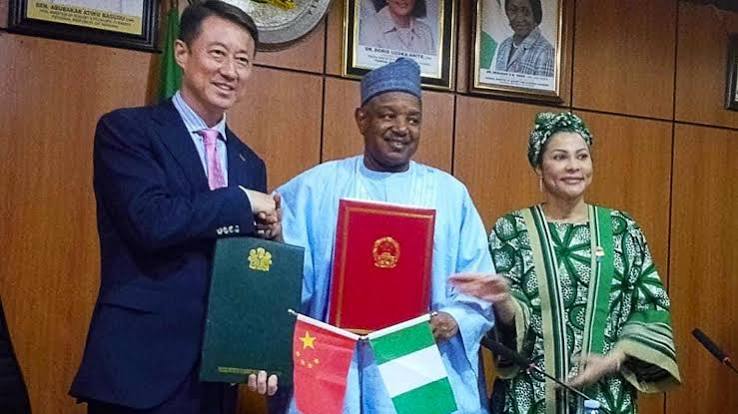
Nigeria, China Sign $30m Grant Agreement for Small-Scale Development Projects
By Atlantic Reports
Grant targets community-level development
The Minister of Budget and Economic Planning, Senator Abubakar Bagudu, disclosed the agreement on Thursday in Abuja during its signing ceremony.
Bagudu thanked the Chinese government for its continued support, describing the grant as part of the wider cooperation between both countries under their comprehensive strategic partnership.
Chinese Ambassador to Nigeria, Yu Dunhai, said the 200-million-yuan grant had been approved to support Nigeria’s economic and social development.
He explained that the funding would be channelled into projects jointly agreed by both governments, with the intention of delivering direct benefits to Nigerians.
Describing the initiatives as “small but beautiful”, Dunhai said they would require relatively modest investment, produce results within a shorter period and improve people's livelihoods.
He expressed confidence that the Nigerian government would manage the funds effectively to achieve the intended objectives.
Government identifies projects proposed by states
Bagudu said the Ministry of Budget and Economic Planning and the Nigeria-China strategic partnership office were identifying development projects proposed by state governments.
He stressed the need to ensure that the grant commitments translated into tangible outcomes for communities rather than remaining diplomatic agreements.
The minister also acknowledged an earlier $1 million Chinese grant intended to strengthen Nigeria’s capacity in technology and knowledge development.
Highlighting the government's grassroots poverty-reduction efforts, Bagudu said 8,809 interventions had been recorded under the lowest level of the economic support programme.
He added that Nigeria could draw lessons from China's poverty-reduction experience to accelerate development across the country.
Bagudu also disclosed that Nigerian officials were participating in training programmes in China to improve their knowledge and capacity in development planning.
China highlights expanding bilateral cooperation
Dunhai said the agreement represented progress towards implementing commitments made by the leaders of both countries and the outcomes of the fourth China-Nigeria Cooperation Forum in Beijing.
He noted that Nigeria and China were marking 55 years of diplomatic relations, which he described as being built on mutual respect, cooperation and support across different sectors.
According to the ambassador, the relationship was elevated to a comprehensive strategic partnership in 2024 following engagements between Chinese President Xi Jinping and Nigeria's President.
He said the partnership had since entered a new phase of high-level cooperation.
Zero-tariff policy and trade opportunities
Dunhai also highlighted China's zero-tariff policy for Nigeria, which took effect on May 1, describing it as an opportunity to expand Nigerian exports and attract investment.
He said bilateral trade reached $18 billion in the first half of 2026, while Nigeria's exports to China increased by 80 per cent.
The ambassador attributed the export growth to the zero-tariff policy, arguing that it could improve Nigerian products' access to the Chinese market and support industrial development.
He urged relevant Nigerian ministries to work towards negotiating an economic development partnership agreement before the preferential policy expires on May 1, 2028.
Such an agreement, he said, would help both countries maximise the benefits of the trade arrangement.
Accountability will determine the grant's impact
The $30 million grant creates an opportunity to support targeted development initiatives, but its practical value will depend on how projects are selected, funds are allocated and implementation is monitored.
The governments have yet to provide details in the supplied announcement on the specific projects to be funded, their locations, implementation timelines or arrangements for public reporting.
For communities expected to benefit, transparency over project selection, expenditure and delivery will be important in determining whether the agreement produces the promised improvements in livelihoods.
Atlantic Reports: Voices. People. Facts.
Written by
Atlantic Reports Admin
Comments
- Be the first to comment.